Street index
The Marais, street by street
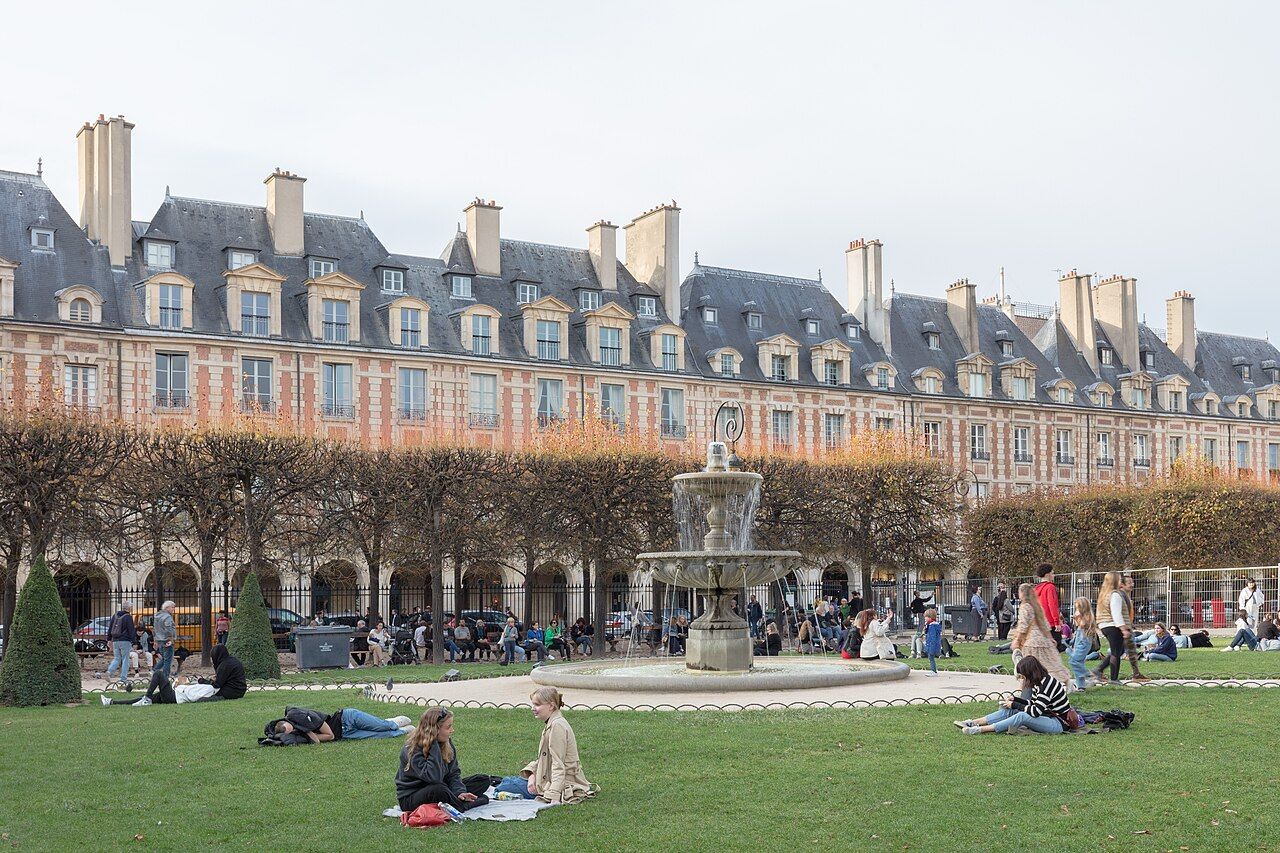
Marais means marsh, an old Seine meander drained from the 12th century. It covers most of Paris’s 3rd and 4th arrondissements on the Right Bank. Place des Vosges, built 1605–1612, is Paris’s oldest planned square. Nobles and financiers built courtyard-to-garden town houses here in the 17th century. Later, many became workshops and warehouses. The 1962 Malraux law made the Marais one of France’s first protected urban sectors, covering about 126 hectares. Public museums in mansions include Carnavalet, Picasso, Cognacq-Jay, and the Archives nationales. Rue des Rosiers anchors the Pletzl. The Marché des Enfants Rouges, founded in 1615, is Paris’s oldest covered market.
The Marais covers most of Paris’s 3rd and 4th arrondissements on the Right Bank. Its streets gather squares, mansion courtyards, markets, and the Pletzl into one close-knit quarter. Place des Vosges and rue des Rosiers offer distinct points within that layered history.
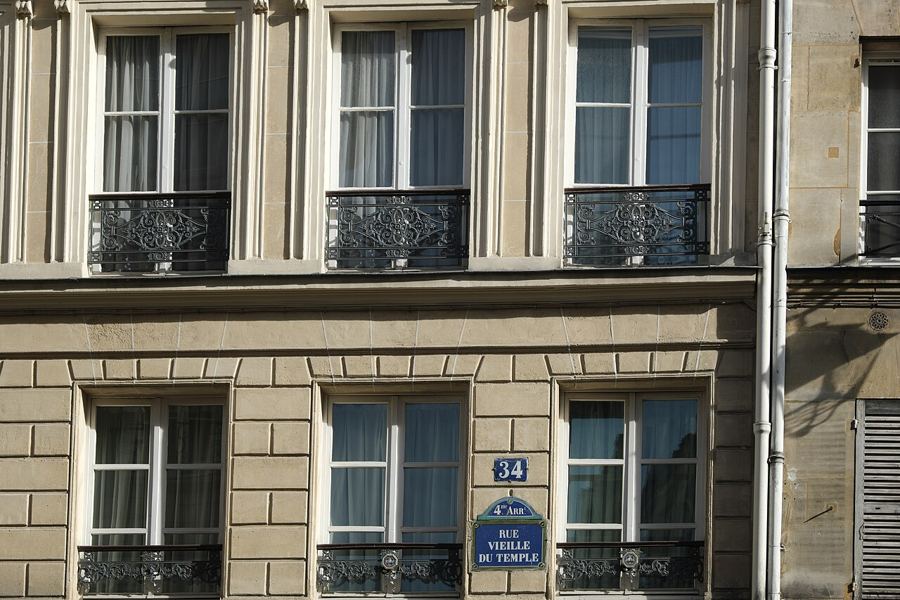 Streets & squaresRue Vieille-du-Temple, five centuries at a corner
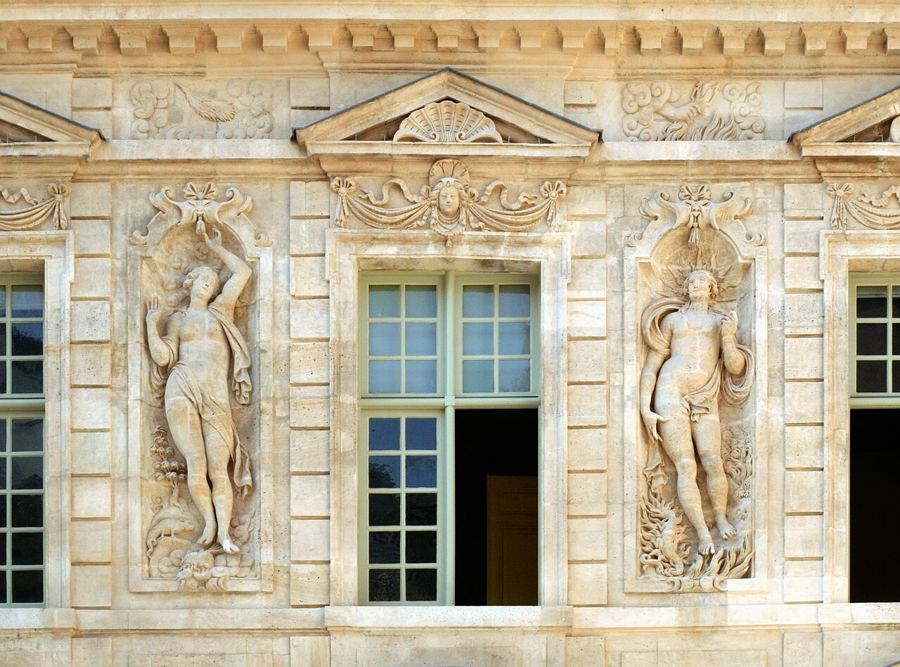 Hôtels particuliersHôtel de Sully, from street to square
 MuseumsMusée Carnavalet, Paris inside the Marais
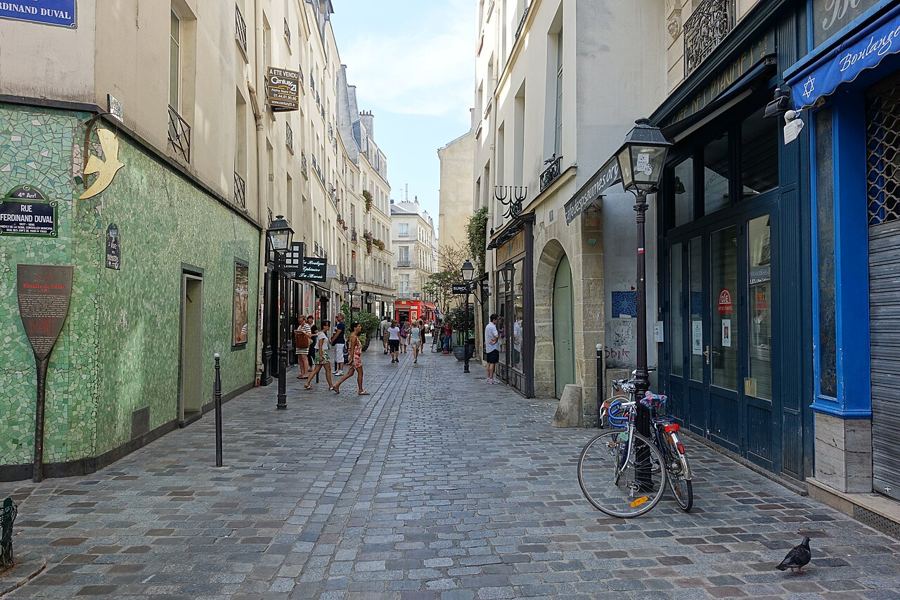 The PletzlThe Pletzl: three arrivals around rue des Rosiers
 ChurchesSaint-Paul-Saint-Louis: Roman Baroque on rue Saint-Antoine
 From marsh to MalrauxThe Templars’ enclosure and its vanished tower
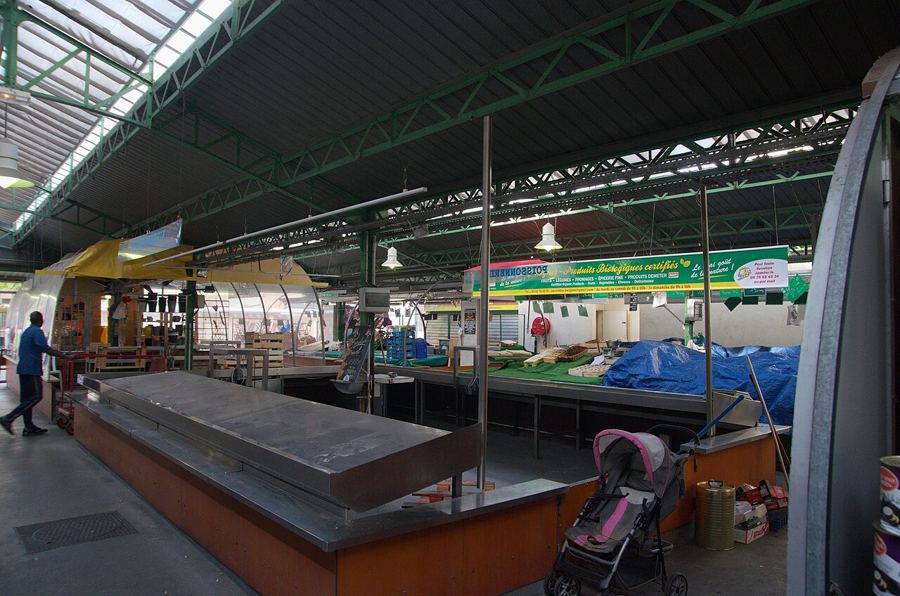 Markets & tableMarché des Enfants Rouges: four centuries behind a gate
 Edges & walksHow did Île Saint-Louis become a planned island?
Contents of the notebook
I
Streets & squares
Place des Vosges is the first planned square of Paris. Francs-Bourgeois, Vieille-du-Temple, Archives, and François-Miron lend streets their names. In the Haut-Marais, province names sit beside carved signs, house numbers, and hidden courtyards. The carved details reward close attention.
- Place des Vosges: how a square set a pattern
- Rue des Francs-Bourgeois, the Marais in one line
- Rue Vieille-du-Temple, five centuries at a corner
- What survived beneath the plaster on rue François-Miron?
- How did the Village Saint-Paul become a walk-through maze?
- What does Rue des Archives hold together?
- What do carved street names still say?
- The square that left its provinces behind
II
Hôtels particuliers
Courtyard-and-garden town houses from the 16th to 18th centuries set the frame. Sully, Soubise, Rohan, Sens, Beauvais, Lamoignon, and Amelot de Bisseuil offer plans and decoration to read. Androuet du Cerceau, Delamair, Le Pautre, and Mansart add architectural names.
- Hôtel de Sully, from street to square
- Hôtel de Soubise: from princely rooms to state archives
- Hôtel de Rohan, where cardinals met Apollo’s horses
- What does the Hôtel de Sens keep?
- How did Hôtel de Beauvais make room for a curve?
- Hôtel de Lamoignon and Paris’s first giant pilasters
- Hôtel Amelot de Bisseuil: Figaro and the secret arms trade
- How can a Marais hôtel particulier be read?
III
Museums
Marais mansions house public museums, including Carnavalet, Picasso, Cognacq-Jay, Victor Hugo, and the Jewish art museum. Arts et Métiers occupies the old priory of Saint-Martin-des-Champs. The section also takes in the hunting and nature museum and European house of photography.
- Musée Carnavalet, Paris inside the Marais
- The Hôtel Salé, where two taxes meet
- A private collection at house scale
- A house whose 1939 residents remain named
- Victor Hugo’s years on Place des Vosges
- Machines in the priory at Saint-Martin-des-Champs
- The Mansart house rescued for animals and art
- An old house fitted for contemporary photography
IV
The Pletzl
Around rue des Rosiers, the Yiddish-speaking quarter holds layered histories. Guimard’s synagogue on rue Pavée, the Mémorial de la Shoah, and the Righteous belong to its account. Street names and Ashkenazi and Sephardi food traditions carry other traces.
V
Churches
Saint-Paul-Saint-Louis and Saint-Gervais frame a history of worship and music. The only medieval cloister in Paris stands alongside Mansart’s round chapel, now a Protestant temple. Delacroix, Vouet, and the Couperin organists bring art and music into view.
- Saint-Paul-Saint-Louis: Roman Baroque on rue Saint-Antoine
- Saint-Gervais: music and tragedy behind the façade
- What does the Billettes cloister keep?
- The church with a borrowed façade
- A temple front on rue de Turenne
- Temple du Marais: Mansart’s chapel of changing faith
- Saint-Nicolas-des-Champs, the Marais’s north-west gate
VI
From marsh to Malraux
A drained marsh and the Templars’ enclosure begin the story. Philippe Auguste’s wall and Charles V’s Hôtel Saint-Pol mark later layers. Seventeenth-century salons gave way to nineteenth-century workshops, before the Bastille, Rambuteau’s streets, and the 1962 Malraux law reshaped the quarter.
- What lies beneath the Marais’s mansions?
- The Templars’ enclosure and its vanished tower
- Where medieval Paris met its wall
- Hôtel Saint-Pol: how a lost palace survives in street names
- The Marais of the salons
- When the mansions became workshops
- How did the Malraux law save the Marais?
- The Bastille at the eastern edge
- Rambuteau and the street that widened the Marais
VII
Markets & table
The Marché des Enfants Rouges is Paris’s oldest covered market. Open-air markets at Bastille and Baudoyer carry the market gardeners’ story. Baguette rules, café customs, and the cheese stall bring everyday rituals into view.
VIII
Edges & walks
Where do these walks meet the Marais? Across the Pont Marie, Île Saint-Louis marks one edge. South and north, two walking routes give the edges shape. The Arsenal brings library, basin, and architecture centre together. The Hôtel de Ville and the old Place de Grève also feature.
- How did Île Saint-Louis become a planned island?
- The Arsenal library, from cannon to books
- The Arsenal basin, where Paris’s moat became water
- How does Paris fit beneath one glass roof?
- How does the southern Marais unfold on foot?
- What does the northern Marais keep?
- Where the Hôtel de Ville meets Place de Grève