Markets & table
When a baguette has a legal definition
From the 1993 decree to Paris’s yearly contest, the baguette’s daily life carries rules, craft and public judgment.
- Period
- 1993 onward
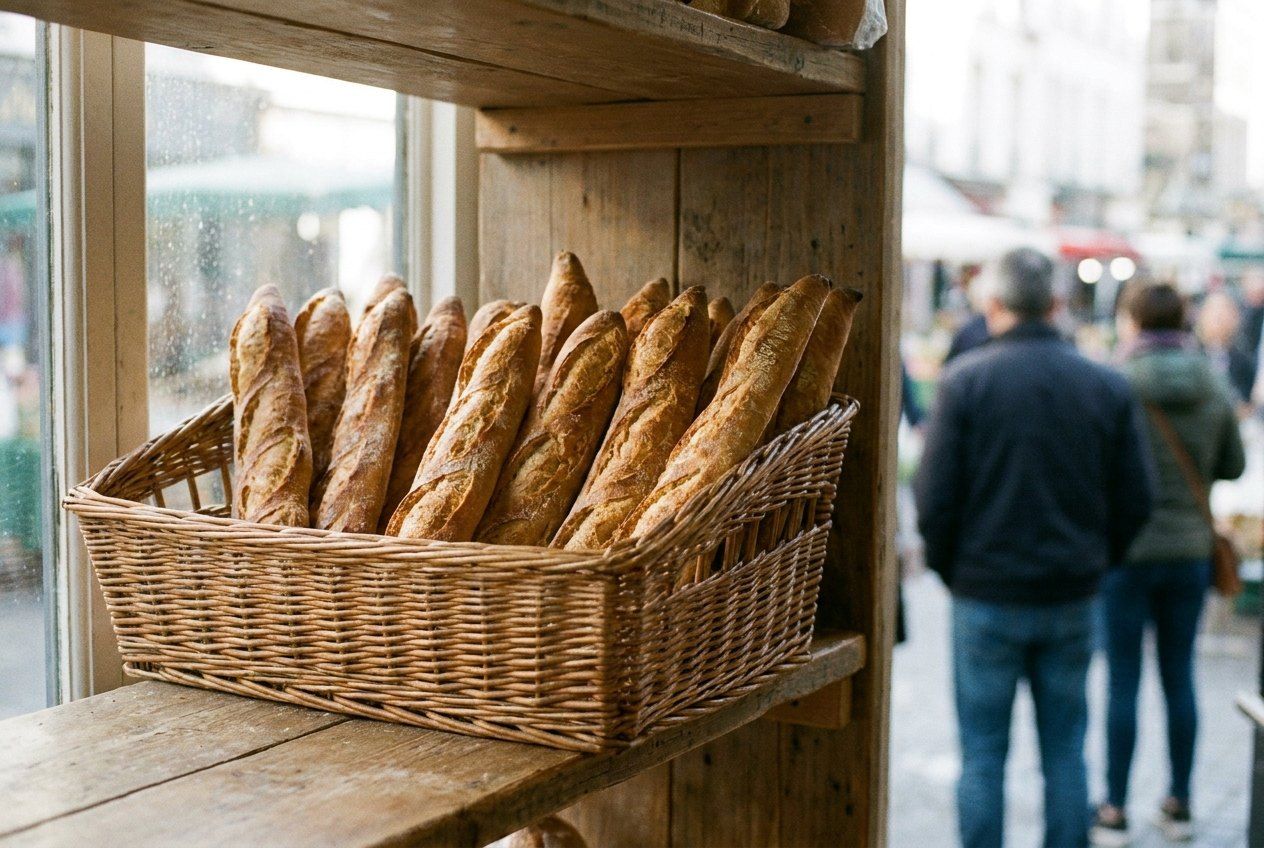
“Bien cuite” names one choice available on request. “Pas trop cuite” names the other, lightly baked. A day with bread can begin with that distinction. The choice sounds small; the loaf carries a definition. In 1993, a French decree defined pain de tradition française. Its recipe permits only wheat flour, water, salt, yeast or leaven. It allows no additives, and no freezing. The phrase marks a boundary around the traditional loaf.
Morning brings the baguette to breakfast, fresh from a batch. Many Paris bakeries make several batches throughout the day. Fresh bread is made available at breakfast, lunch and dinner. That daily rhythm meets the decree’s spare list of ingredients. The dough has its own visible mark before it enters the oven. Bakers score each baguette’s top with a blade. The cut lets the dough open as it bakes. A small incision makes room for the loaf’s expansion. Its place in the day feels ordinary; its definition is exact.
The word above the door has a boundary too. Since 1998, French law has reserved boulangerie for bakers who knead, shape and bake bread on the premises. The name depends on work done there, not simply bread sold there. Kneading, shaping and baking give the word its legal meaning. The rule makes the place part of the loaf’s definition. By breakfast, the language around bread is already doing more than naming it.
By lunch, the loaf moves through another part of the day. A standard baguette weighs about 250 grams. That measure sits lightly beside the decree’s ingredient list. The loaf can also lead toward the habits of the zinc counter, where bread belongs in a broader conversation about eating, alongside cheeses of the Île-de-France. The rules stay close, even as the meal widens. A crust may be well baked, or lightly baked on request. The terms are plain, and the choice remains with the customer.
The day’s public judgment comes through a contest. The City of Paris has held its yearly contest for the best baguette since 1994. Each winner receives more than a title for the loaf. The winner supplies bread to the Élysée Palace for a year. A citywide contest turns a familiar food into a judged one. The decree sets the definition; the contest names a winner. Between those two, the baguette is both a rule and a question of preference.
By dinner, another kind of recognition enters the story. In 2022, UNESCO inscribed the artisanal know-how and culture of baguette bread. The inscription joined its list of intangible cultural heritage. It recognized not only a loaf, but the knowledge and culture surrounding it. The day’s bread now carries a definition, a protected name, public judgment and recognition. None of that changes the simple fact of another batch being made.
Fresh bread returns for dinner, as it did for breakfast. The decree remains close to the dough: flour, water, salt, yeast or leaven. The baker’s blade gives the top room to open. The name boulangerie rests on work done on the premises. The contest and UNESCO listing give the baguette wider meanings. Still, “bien cuite” and “pas trop cuite” leave space for choice. What else can a loaf carry, once its ingredients are named?