Markets & table
How do Marais markets appear and vanish?
A market takes shape, fills with sellers, then clears away. Bastille and Baudoyer show two different rhythms in Paris’s open-air food markets.
- Arrondissement
- 4e and 11e
- Métro
- Bastille
- Period
- today
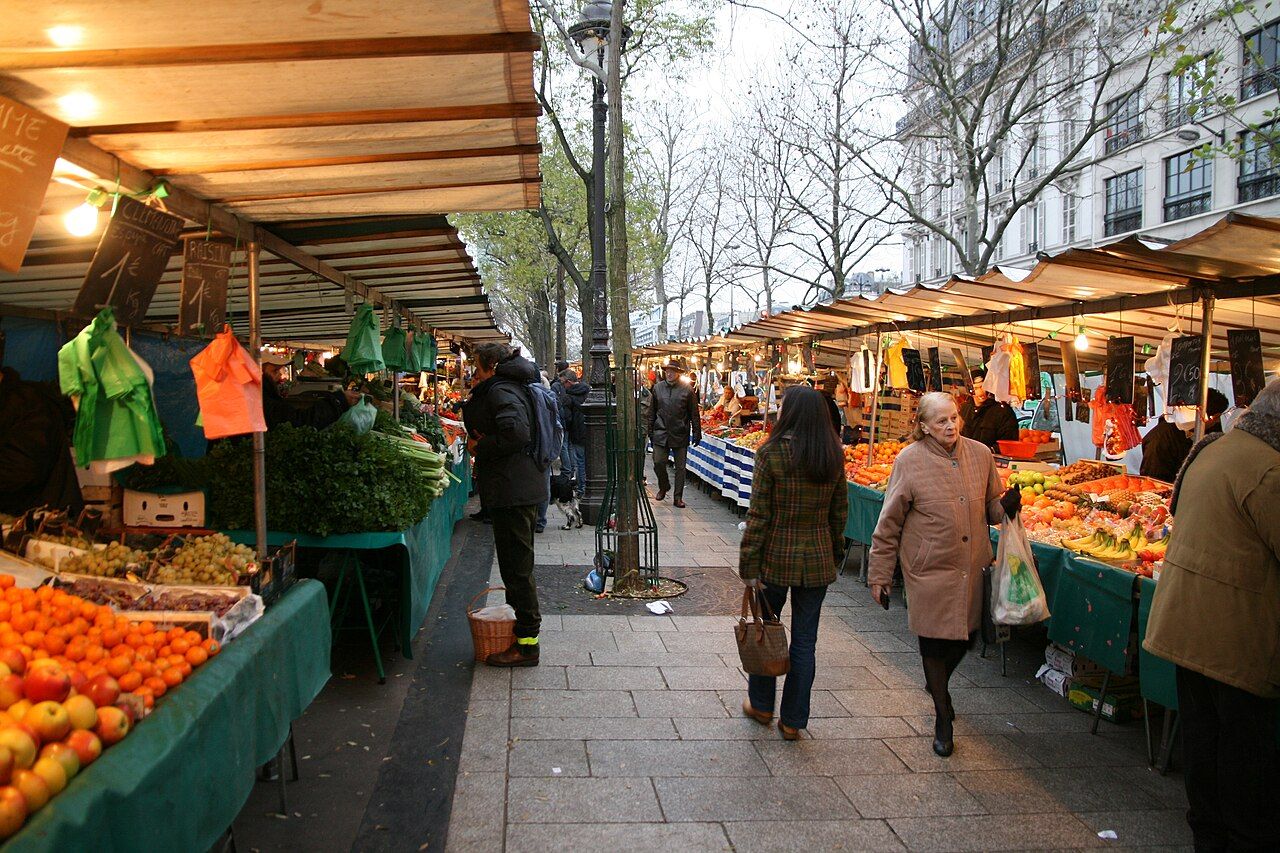
“Stalls are set up on metal frames before dawn and cleared away by early afternoon on morning market days.”
How does the market begin?
First comes the city's scale. Paris has about 70 open-air food markets run under its authority. That system makes the market more than a row of counters. It is a temporary occupation, assembled and cleared within a day. That brief presence gives the form its particular tension.
What gives it shape?
Stalls are set up on metal frames before dawn. The frames make a plain skeleton for the day's trade. On morning market days, the clearing comes by early afternoon. Then the ground is no longer occupied by stalls. The metal clatter belongs to a short-lived arrangement, and its quick ending is part of the scene.
Who fills the stalls?
Next comes the question of who stands behind the produce. Some stallholders are producers, selling their own crops. Others are resellers, buying at the wholesale market of Rungis. Those different paths meet within one public market. Rungis lies south of Paris and replaced the central market of Les Halles in 1969. The wholesale market's history runs through that change. At the counter, the distinction remains part of the market's story. A closer look can turn from the whole market to the cheese stall.
What does Bastille show?
Then comes the broad boulevard market. The Marché Bastille, on boulevard Richard-Lenoir, is one of Paris's largest open-air markets. It is held twice a week. Its scale gives the word market a broad, busy outline. Here, the city's system occupies a boulevard, rather than a hall. The market reads as a gathering of stalls, with a clear beginning and end.
How does Baudoyer change the rhythm?
Finally, Place Baudoyer offers a different tempo. The Marché Baudoyer is held beside the former town hall of the 4th arrondissement. It is one of the few Paris markets held in the afternoon and early evening. That later span changes the day's rhythm, not the market's temporary nature. The former town hall sets a civic frame around the stalls. The city's food life also reaches the Jewish bakeries of rue des Rosiers. Each market has its own brief shape.
When the frames are gone, where does the market's day go?