Markets & table
How did Paris grow harvest after harvest?
Horse manure, glass and careful planning made small Paris plots yield repeatedly; the French intensive method later inspired gardeners abroad.
- Period
- 19th century
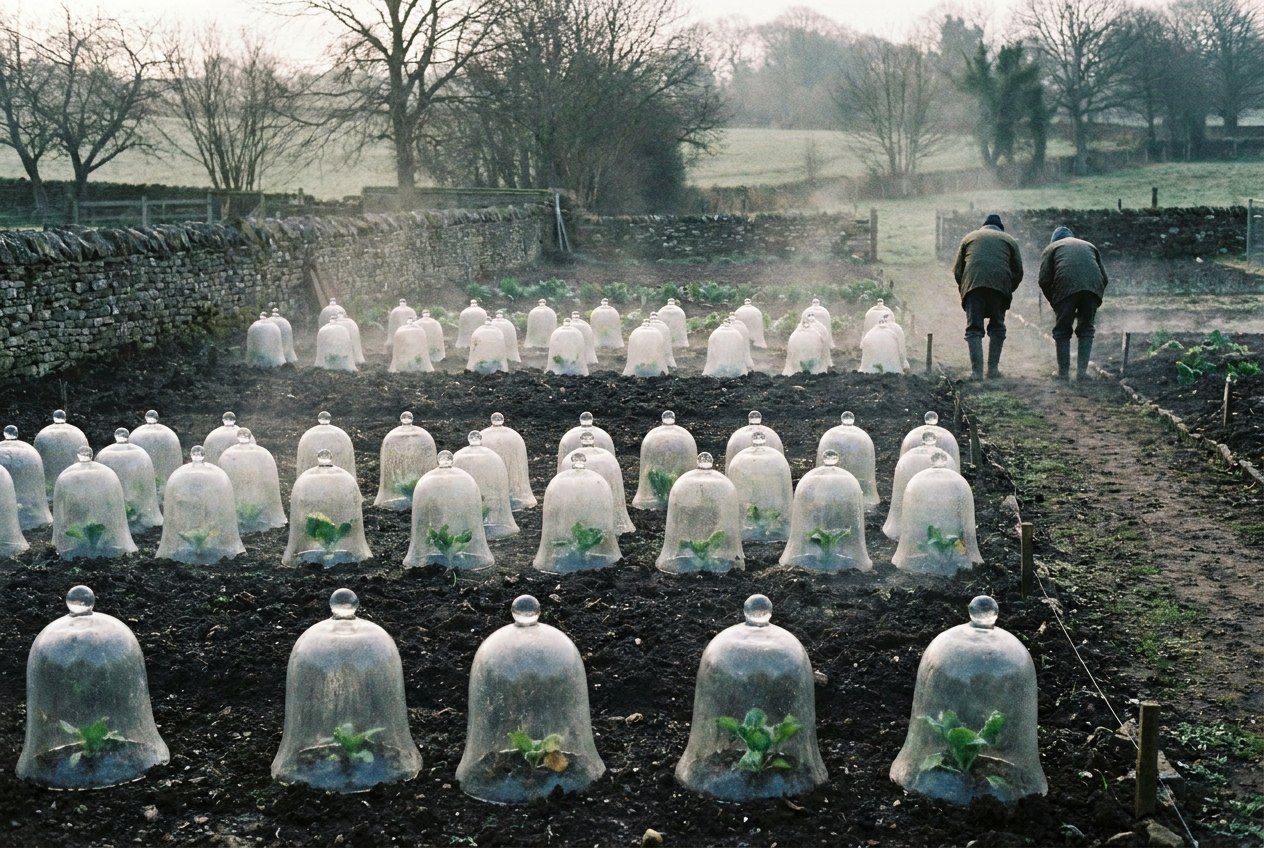
“Fresh horse manure” was the first instrument in this system. In the 19th century, Paris gardeners worked small plots. Those plots sat inside and around the city. Each bed had to produce again, not simply once.
How did a Paris bed become a working system?
Where did the work begin?
Start with a small plot, inside Paris or beyond its edge. These gardens occupied both, making cultivation part of the city. Their plots belonged to a city whose older shape appears in the old meander of the Seine. Other market histories sit nearby, including a market founded under Louis XIII.
How was warmth made?
Build a hotbed with fresh horse manure beneath the soil. As the manure rotted, it warmed the ground above. The city’s tens of thousands of working horses supplied this material. Heat came from decay, not machinery or elaborate equipment.
What sheltered the young plants?
Cover young growth with glass bell jars called cloches. Glazed frames offered another shelter over the beds. Both protections helped force early crops into growth. Glass made a small plot work harder through the season.
How did one bed keep producing?
Plan each planting around what the bed could support next. Careful timing allowed several harvests from the same ground. Lettuces, radishes, carrots and melons all belonged in this sequence. The bed changed crops, while its work continued.
What carried the method beyond the plot?
Paris market gardening became a subject for written instruction. In 1845, J.-G. Moreau and J.-J. Daverne published a manual. The book gave this intensive practice a durable form. Even the phrase “market gardening” sounds brisk beside its labour.
How did the gardens leave Paris?
Haussmann’s works and the growing city pressed against these plots. By the century’s close, most gardens had been pushed out. The system depended on ground that the city increasingly claimed. A method could travel farther than its beds.
Where did the method travel?
The French intensive method later inspired market gardeners in Britain and North America. Its ingredients stayed plain: manure, glass and planned succession. Paris lost most of the gardens, but not their influence. What might the city have grown, had the plots remained?