Markets & table
Marché des Enfants Rouges: four centuries behind a gate
From its founding under Louis XIII to its reopening after a neighbourhood campaign, the market carries four centuries of trade behind rue de Bretagne.
- Arrondissement
- 3e
- Métro
- Filles du Calvaire
- Period
- 1615 to today
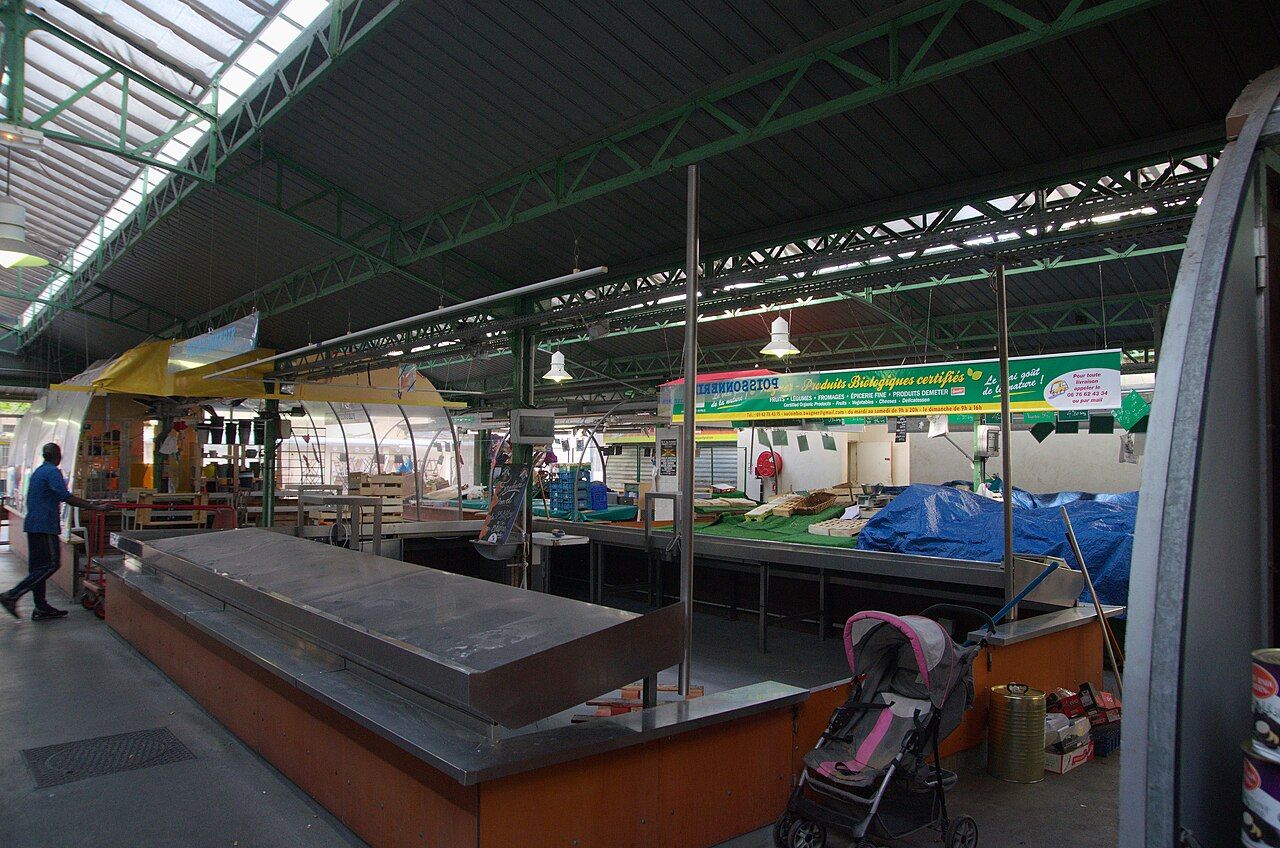
1615: the petit marché du Marais began under Louis XIII. Four centuries later, it still sits behind a gate on rue de Bretagne.
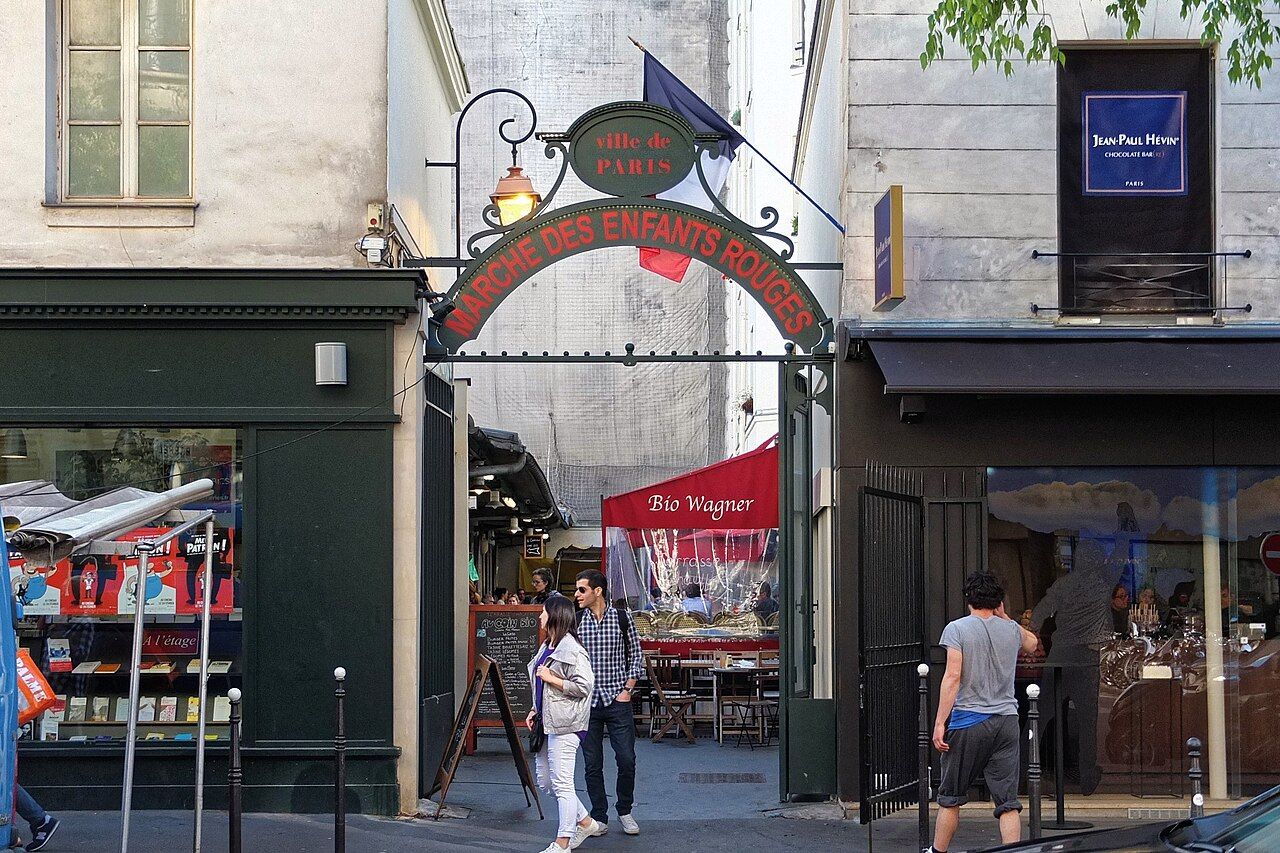
The day starts at 39 rue de Bretagne, where the market stands set back from the street. A narrow gate draws the street inward, then gives way to the covered market.
There is no grand entrance to announce its age. The passage is narrow, the market contained, its long history gathered behind the opening.
What name did the market carry first?
At first, it was known as the petit marché du Marais. The name sounds modest beside the centuries it has outlasted.
The market was created under Louis XIII, and no other covered market in the city has lasted as long. Its beginning belongs to a Paris still shaped by the Marais.
The quarter’s names keep older geographies close. Here, the route can lead towards the streets named after provinces.
But the market’s present name leads somewhere more particular. It comes from the Hospice des Enfants-Rouges, an orphanage founded in 1534.
Marguerite de Navarre, sister of Francis I, founded the hospice. Its orphans wore red, the colour of charity.
Their clothing gave the market its lasting name. The orphanage closed in 1772, but the name remained.
That old name stays audible in the present tense. It holds an institution, a colour, and a market together.
What does the day find behind the gate?
By morning, the narrow entrance has already made its point. The market is not spread along the street; it turns inward.
Inside, the stalls sell fruit, vegetables, cheese, bread, and flowers. Their range makes the market feel both practical and abundant.
Colour gathers without needing a grand display. Produce, flowers, and the remembered red in the name make their own small arrangement.
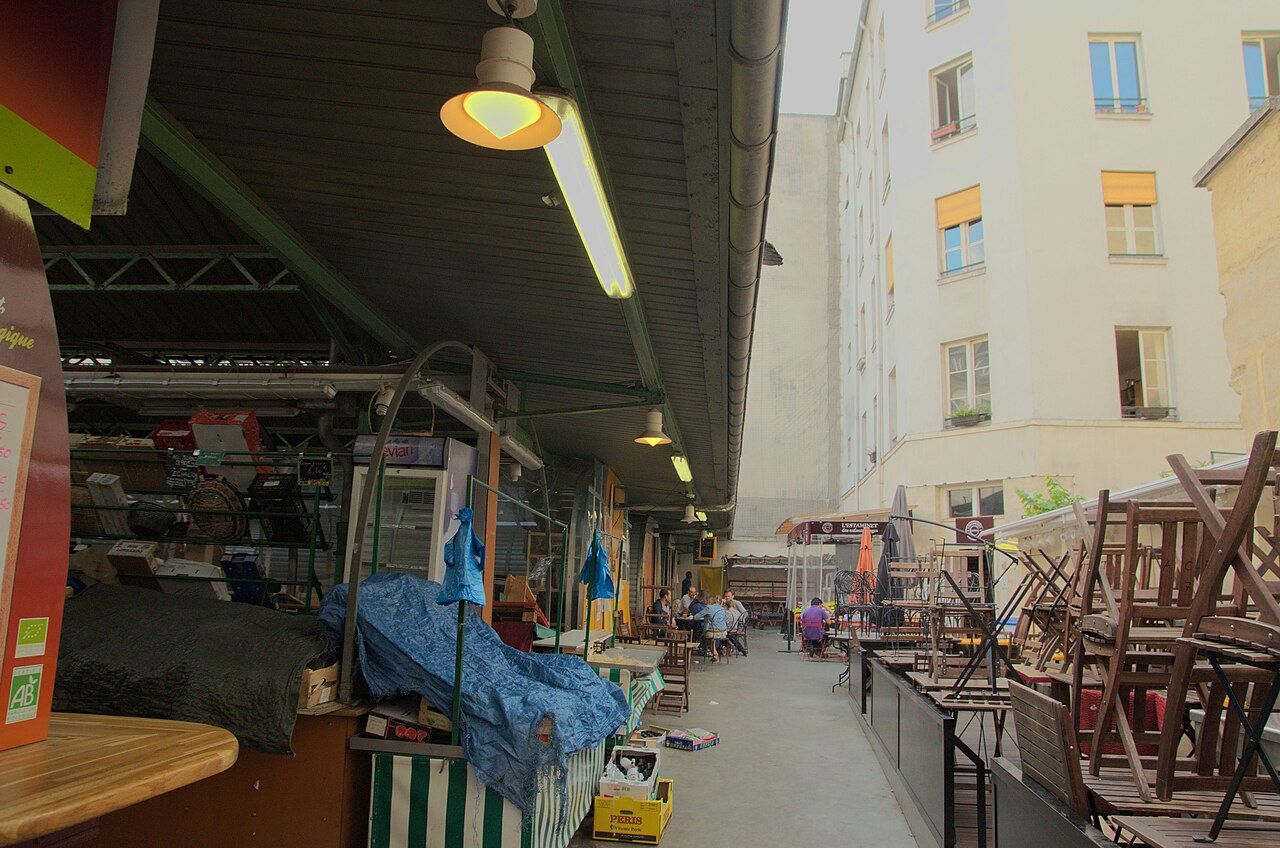
The bread lends the day a familiar scent. The market’s history is not kept apart from its ordinary trade.
Cheese and vegetables belong to the same present as the hospice’s name. Nothing in the gate suggests that history must stand still.
The route can turn from these stalls towards the street markets of the quarter. This market remains distinct, held beneath its own roof.
It is a municipal covered market, belonging to the City of Paris. Its public character rests beside the daily business of selling food.
Where does the day gather around food?
As the day moves on, cooked-food counters bring another kind of trade. Moroccan, Japanese, Italian, Lebanese, and French dishes are served.
The tables are shared. That small fact changes the market’s shape, from rows of stalls into a place of gathering.
Different dishes sit within one covered space. The menu crosses borders without asking the market to lose its own address.
Voices and food scents belong to this part of the day. The counters make the old market feel less like a relic.
There is a useful closeness here: ingredients at the stalls, dishes at the counters, tables shared nearby. The market keeps trade and eating together.
The name still carries its older story, but it does not turn the market into a monument alone. Its daily life keeps interrupting the past.
The gate keeps the market close to rue de Bretagne, but its history opens outward.
The gate keeps the market close to rue de Bretagne, but its history opens outward.
How did the market keep its place?
In 1982, the market was listed as a historic monument. The designation marked its place in the city’s history.
Then came a harder turn. The market closed in 1994, and redevelopment threatened the site.
The gate could have become an ending. Instead, local residents campaigned for the market’s return.
It reopened in 2000. The interval between closure and reopening gives the present market a particular weight.
Its survival was not automatic, nor simply an inheritance from 1615. Neighbours helped keep this piece of public life in place.
By afternoon, that history sits beside the stalls without needing a separate room. Fruit, flowers, bread, and shared tables carry on.
The market’s long life has several layers: a royal-era founding, an orphanage’s name, a municipal present, and a neighbourhood’s campaign.
None erases the others. The narrow gate makes the whole story feel held together, not sealed away.
What remains as evening settles?
As the day gives way to evening, the market’s story returns to its entrance. Rue de Bretagne waits just beyond the narrow gate.
Inside, the stalls and counters belong to the present. Beyond them, the name still remembers red clothing and charity.
The orphanage is gone, but the market kept its name. The market closed, but the neighbours helped bring it back.
Four centuries fit into that small passage from street to roof. They do not make the market still; they make its continuance visible.
Evening leaves the gate between two kinds of time: the city outside, and trade gathered within. What else might endure there?