Streets & squares
Place des Vosges: how a square set a pattern
Henri IV’s planned square took shape on former royal grounds, with thirty-six houses and a name drawn from the first department to pay revolutionary taxes.
- Arrondissement
- 3e and 4e
- Métro
- Chemin Vert
- Period
- 1605-1612
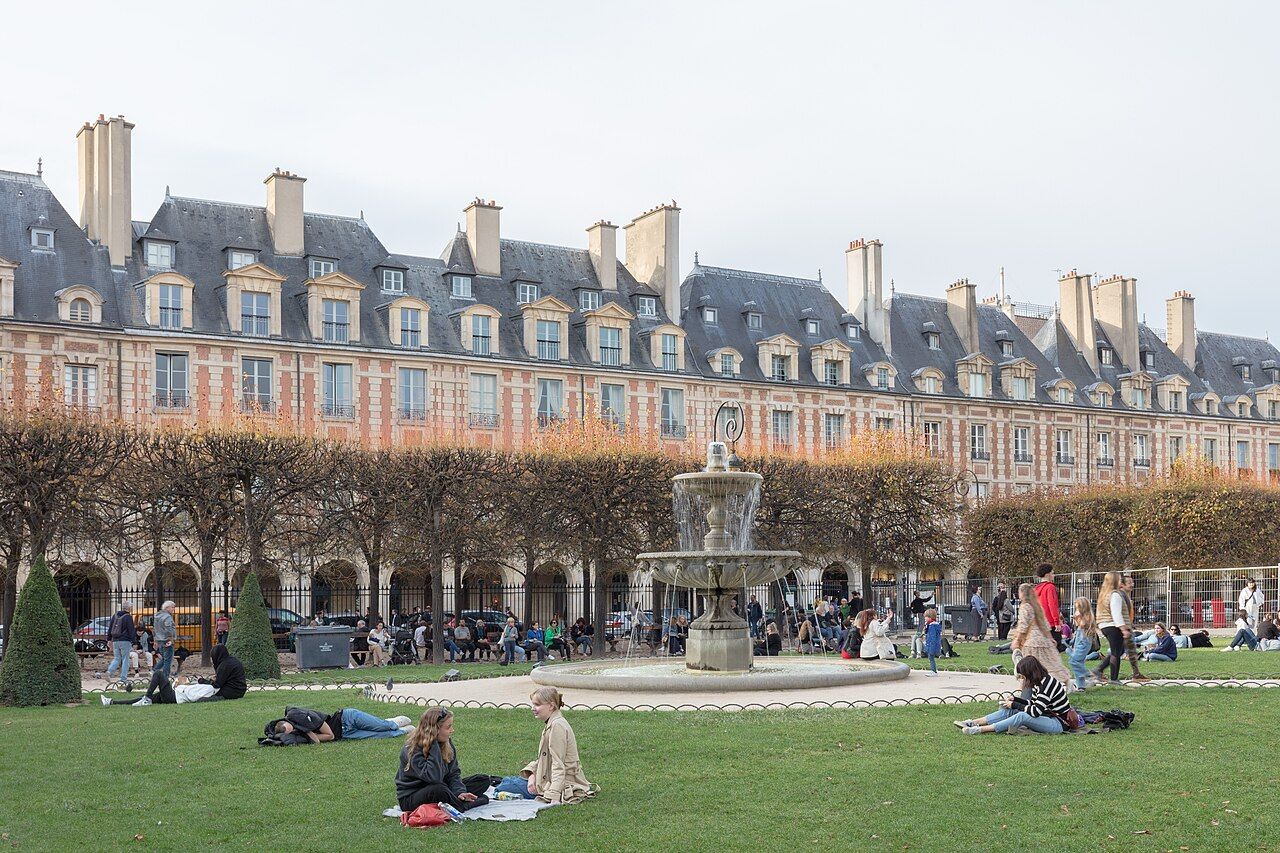
1. Begin with the ground, before the façades arrange it.
What stood here before the square?
Place des Vosges took shape on part of the former Hôtel des Tournelles grounds. The royal residence held a grim place in its own history. Henri II died there in 1559, after a jousting wound. Catherine de' Medici abandoned the residence after her husband's death. Later, the Hôtel des Tournelles was demolished.
The square’s beginning came through removal, then deliberate design. Henri IV ordered its construction between 1605 and 1612. The new space occupied ground once tied to royal residence. That change gives the square its particular tension. It feels composed, yet its foundations carry an earlier story.
How does the plan hold together?
Start with its shape: about 140 metres on each side. The dimensions bring it close to a perfect square. Four sides meet with a rare sense of balance. Thirty-six houses line them, nine along each side. Their repeated fronts make the perimeter read as one design.
Look next at the continuous vaulted arcade beneath the houses. It links the four sides into a shared lower edge. Above it, the façades rise in a steady rhythm. The arrangement is firm without feeling blank. Repetition does the work here, turning separate houses into a single frame.
The pattern reaches beyond the square’s own outline. Its ordered houses and measured sides offer a clear model. The aristocratic Marais found a strong expression in this kind of order. A square can make a neighbourhood’s ambitions legible. Here, the plan does so without needing elaborate ornament.
What makes the façades recognizable?
Red brick sets the main colour across the façades. Pale stone marks the quoins and window surrounds. Steep slate roofs rise above, broken by dormers. The contrast is clear: red, pale stone, dark roof. It gives the houses a crisp, almost graphic character.
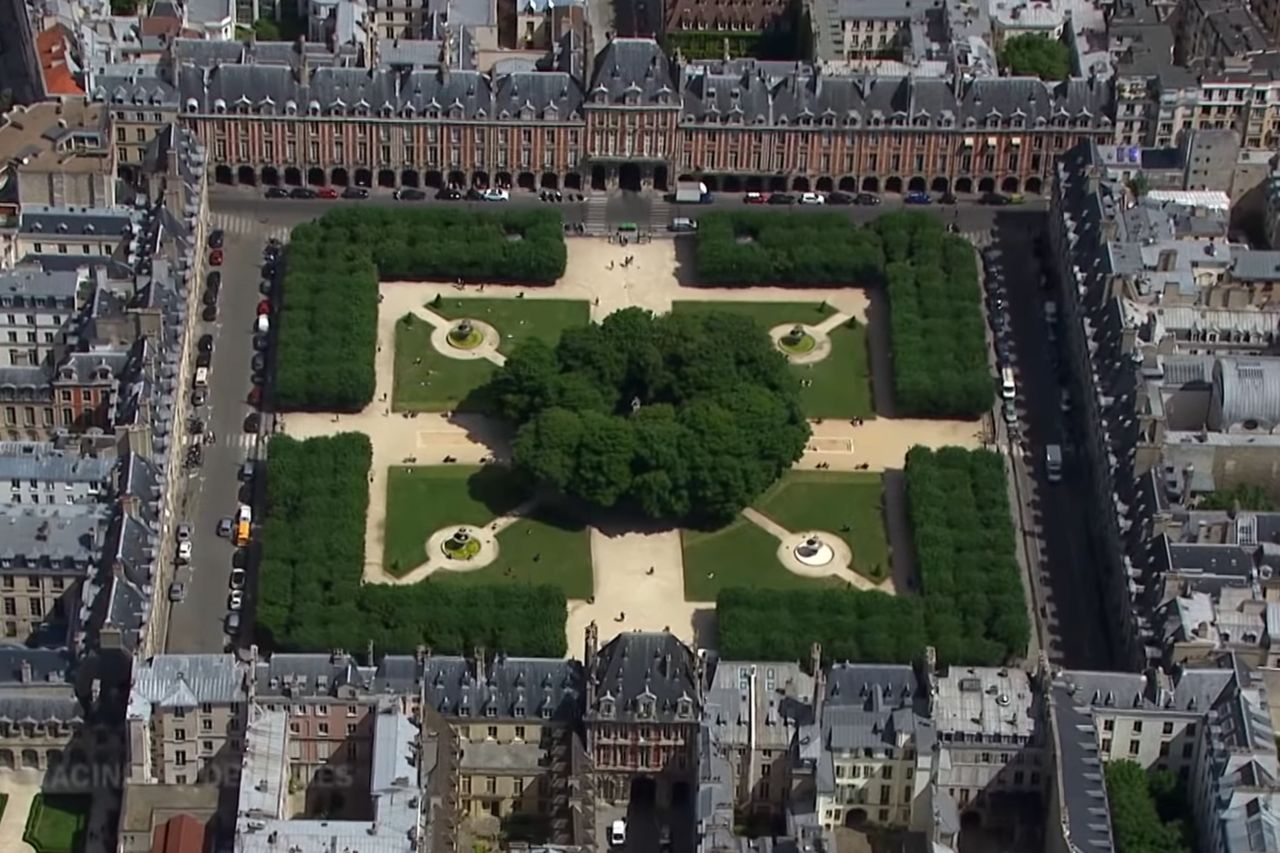
Yet the appearance does not always reveal the construction. On some houses, plaster imitates brick over a cheaper frame. The surface keeps the look of the whole. That small difference complicates the square’s polished uniformity. Even an exact-looking pattern can contain varied means.
The two pavilions give the long sides their focal points. The taller Pavillon du Roi stands midway along the south side. Opposite, the Pavillon de la Reine marks the north side’s middle. Their facing positions clarify the square’s symmetry. The plan feels strongest where these two points answer each other.
What marked the square’s first public moment?
In 1612, the square was inaugurated with a great carrousel. The celebration marked Louis XIII’s engagement to Anne of Austria. It gave the new place a public beginning. Its measured architecture met ceremony in the open square. The event suited a design made to be read from every side.
The first name was Place Royale. It tied the square plainly to royal authority. The houses, pavilions and open centre made that association visible. A name can gather a design’s purpose into two words. Here, the royal title matched the square’s ordered presence.
In 1800, the name changed to Place des Vosges. The Vosges was the first department to pay its taxes to the revolutionary state. The new name carried a different kind of allegiance. Royal naming gave way to a civic distinction. The square kept its form while its public meaning shifted.
What occupies the centre now?
The central garden is called Square Louis-XIII. Lawns, rows of clipped lime trees and four fountains shape its interior. The garden places a softer order within the square’s architectural one. Green rows repeat the discipline of the façades. Water adds another measured note to the centre.
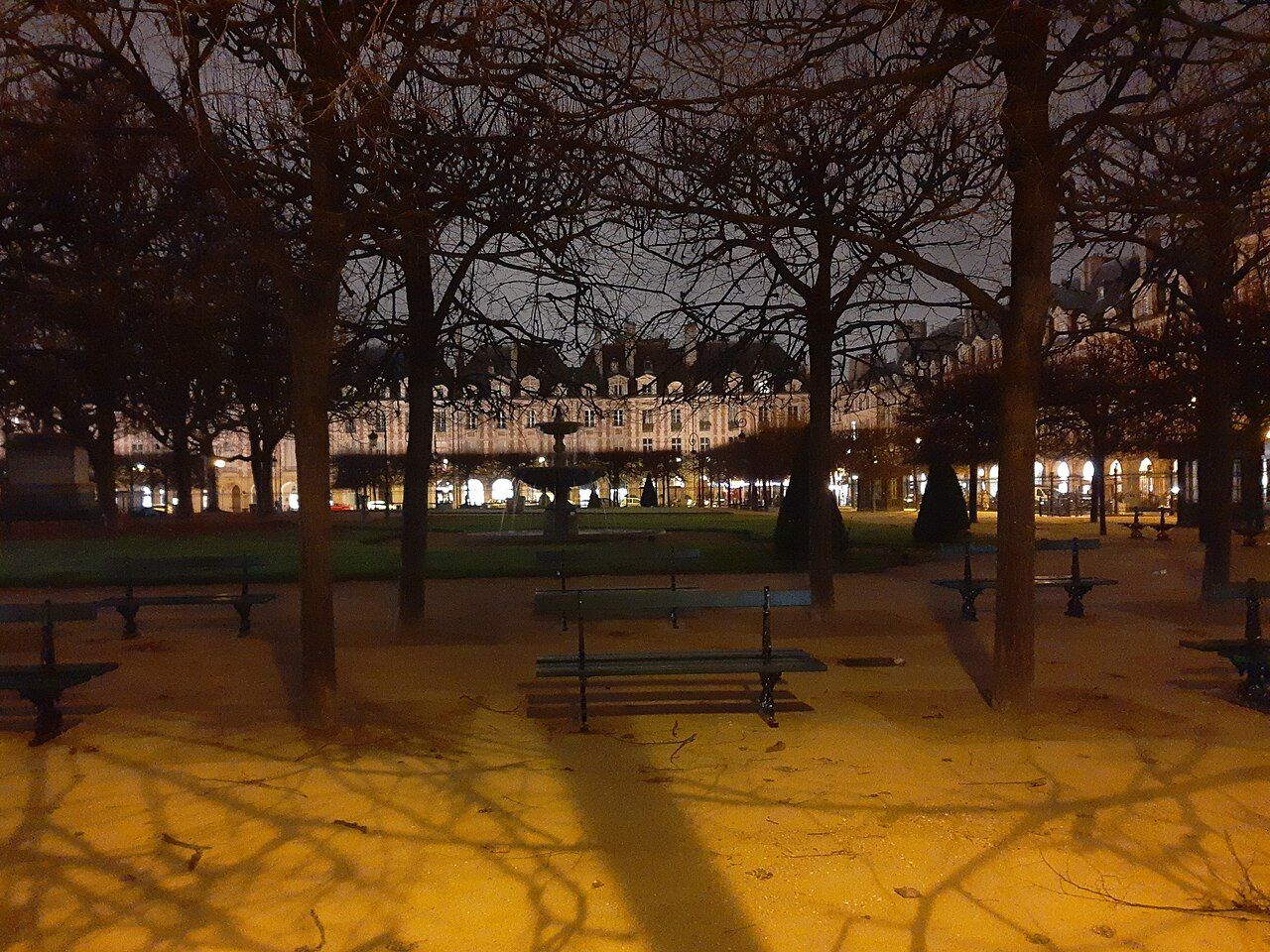
A marble equestrian statue of Louis XIII stands there. It dates from the 1820s and replaced a bronze statue. That earlier bronze had been melted down during the Revolution. The centre therefore holds several turns of memory. Royal image, revolutionary loss and later replacement share one place.
The garden changes the square’s scale without undoing its plan. The houses still make a firm perimeter. Their arcades hold the lower edge; roofs finish the upper one. Between them, the clipped trees and fountains keep the centre composed. The design remains readable from the open middle.
Which histories sit close to the houses?
Madame de Sévigné was born at No. 1 bis in 1626. That address brings a named life into the square’s repeated fronts. The houses look like a collective design, but each holds its own address. The square’s pattern is not anonymous. Individual histories remain folded into its measured line.
Another history belongs to the square’s rules and their breach. Cardinal Richelieu banned duelling in 1626. In 1627, the Count of Montmorency-Bouteville was beheaded after fighting a duel on the square. The sequence is stark: prohibition, defiance, execution. The orderly setting could not keep violence outside its borders.
What does the pattern leave open?
The square can be read as a sequence of decisions. Ground was cleared; sides were measured; houses were made to align. A royal name gave way to one drawn from the revolutionary state. The centre changed too, from melted bronze to marble. Nothing here is only a façade.
Nearby, the vanished royal gardens nearby extend the sense of what has passed. The square holds its lines, but its histories keep moving. Its houses still face one another across the garden. What else can a carefully ordered square contain?
The square kept its form while its public meaning shifted.