Streets & squares
What does Rue des Archives hold together?
A northward walk follows joined lanes, a 14th-century gateway, a Mansart town house and a medieval cloister through the changing shape of the Marais.
- Arrondissement
- 3e and 4e
- Métro
- Rambuteau
- Period
- 1370s-19th century
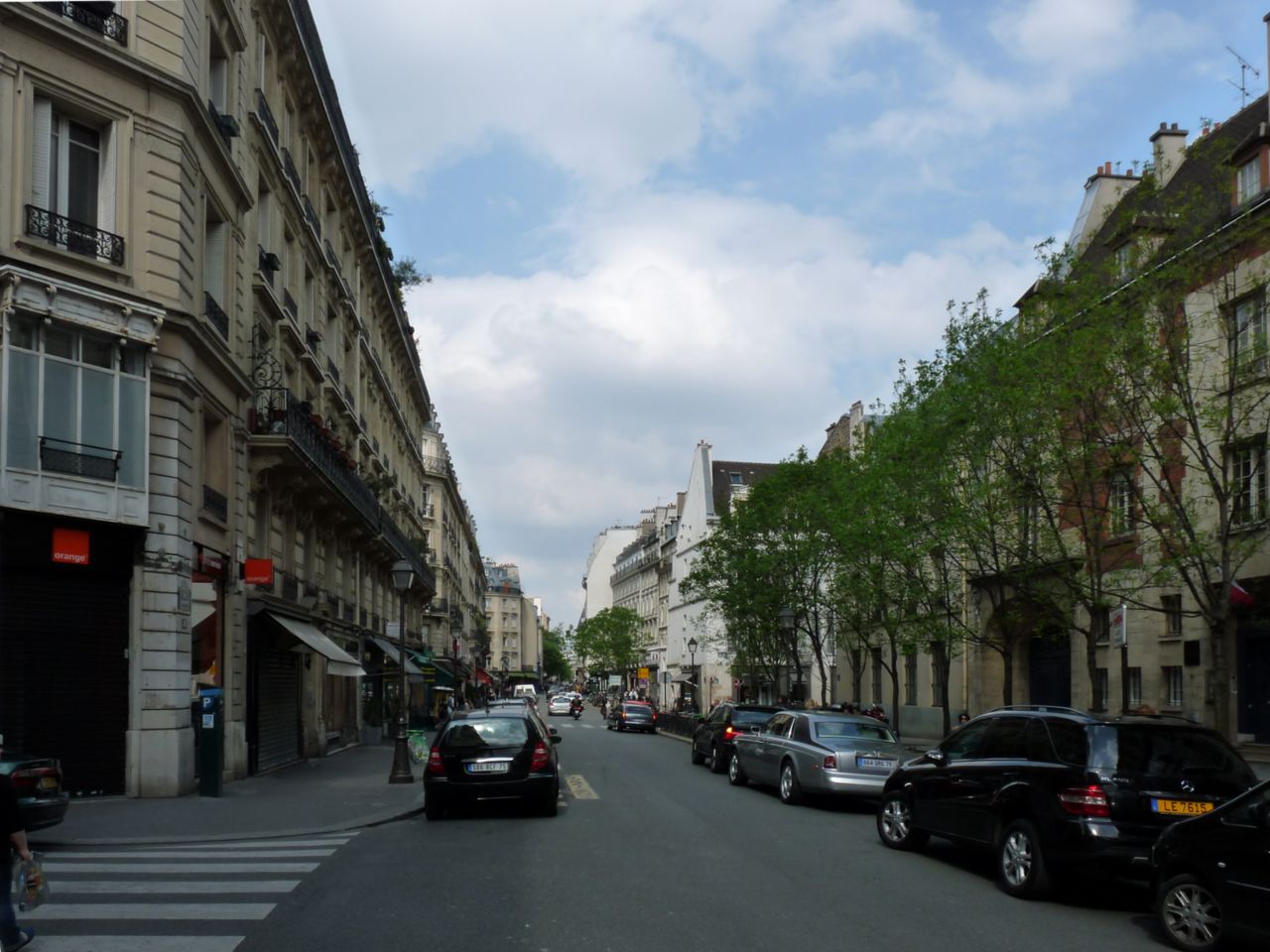
“Rue des Archives” begins the day's walk from rue de Rivoli. The route runs north, into the 3rd arrondissement. Its name sounds singular; its history is less so. The street took shape in the 19th century, joining several older lanes. Rue du Chaume and rue des Billettes were among them. The seams remain part of its character. A straight line on a map gathers lives from different streets.
Morning starts with that act of joining. One street takes the place of several, without erasing their names. Rue des Archives carries an unusual double memory: the lanes beneath it, and the national archives housed along its upper part. The name belongs to that upper stretch. Moving north, the street gradually takes on the weight of its name. The day has barely begun, yet its past already runs in layers.
At No. 24, the cloister of the Billettes brings the walk into the 15th century. Its date gives the street another measure of time. The last medieval cloister in Paris is a quiet hinge in this account. The word “cloister” seems to draw the pace inward. Around it, the joined street keeps moving. The old lane is still legible through a name and a surviving place.
the last medieval cloister in Paris stands close to the street's present-day story, too. From the late 1970s, the lower part of rue des Archives and rue Sainte-Croix-de-la-Bretonnerie became the centre of gay life in Paris. The fact sits alongside the older fabric, not outside it. The street's history does not proceed in a tidy row. Different centuries share the same length of pavement.
By later in the day, rue des Archives crosses rue des Francs-Bourgeois. The crossing falls at the corner of the Hôtel de Soubise. The street changes register here, holding an intersection and an old gateway in one glance. At No. 58 stands the gateway of the Hôtel de Clisson. It was built in the 1370s for Olivier de Clisson, constable of France. Its pointed arch and two corbelled turrets make a crisp shape against the street's long history.
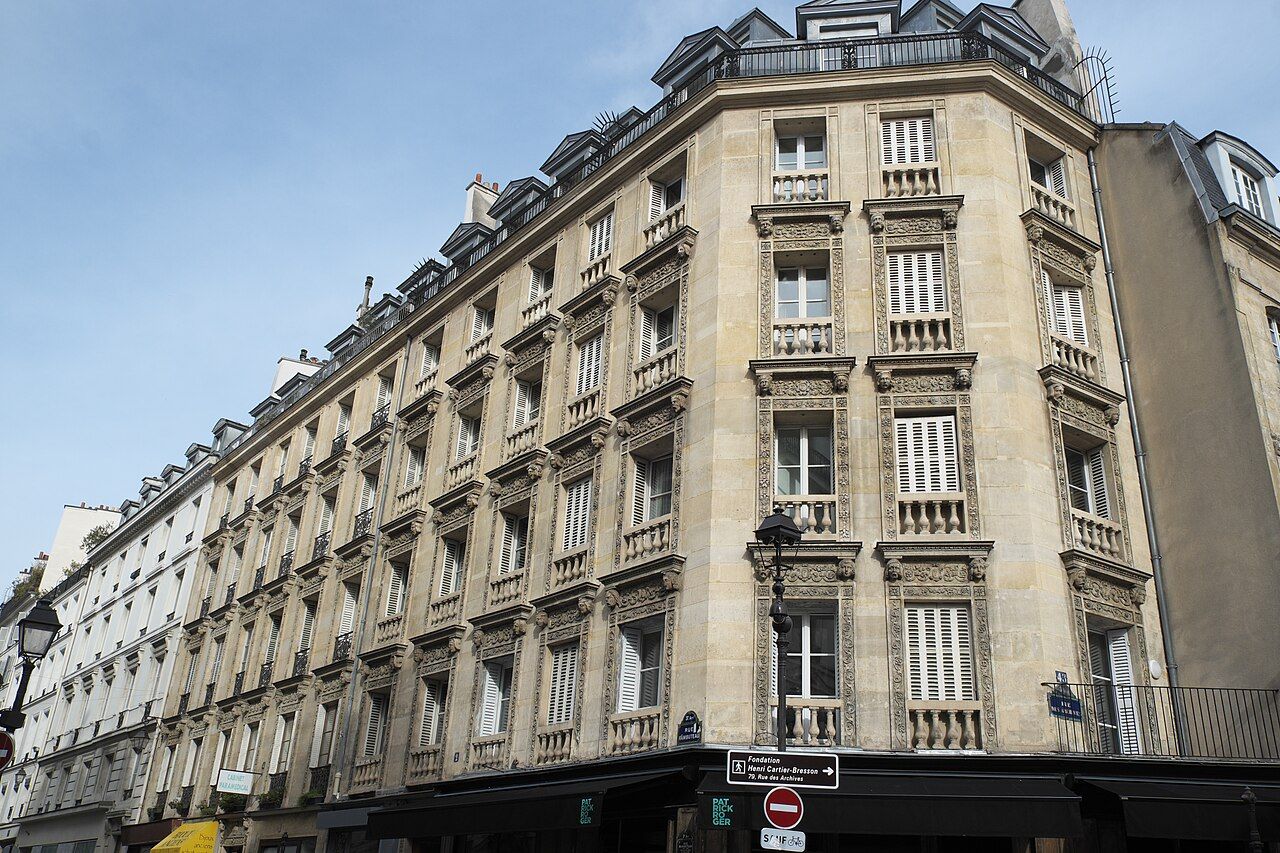
The Clisson gateway is among Paris's last pieces of 14th-century domestic architecture. Its survival feels less like a grand gesture than a stubborn fact. The Hôtel de Soubise was rebuilt, but the gateway was kept. Now it belongs to the archives complex. One can read that passage in the structure itself: a domestic entrance, preserved through rebuilding, held within a later institution. The day slows at this point without needing to stop.
No. 60 brings the Hôtel de Guénégaud, a town house designed by François Mansart. It sits close to the gateway, but marks another architectural moment. The Mansart house of hunting art gives the street a different kind of inheritance. Here, the walk moves from medieval domestic architecture to a designed town house. The centuries do not announce themselves with a border. They accumulate, one façade and one surviving form at a time.
the Mansart house of hunting art gathers that shift into a few words. By evening, Rue des Archives has become less a single street than a meeting of older routes and later uses. The walk began at rue de Rivoli and runs north into the 3rd arrondissement. Along the way, joined lanes, a cloister, a gateway and a mansion share one line. The names remain, even where the streets themselves have changed.
The day closes with no clean break between one period and another. The archives give the street its name; the older lanes still press through it. A pointed arch survives beside a rebuilt hôtel. A cloister keeps its older measure. Rue des Archives carries all these shapes northward, without resolving them into one story. What else might a street keep, simply by continuing?