From marsh to Malraux
Hôtel Saint-Pol: how a lost palace survives in street names
Read the vanished royal residence through its gardens, houses and street names, from Charles V’s palace grounds to the signs that still recall them.
- Arrondissement
- 4e
- Métro
- Sully-Morland
- Period
- 1360s-1540s
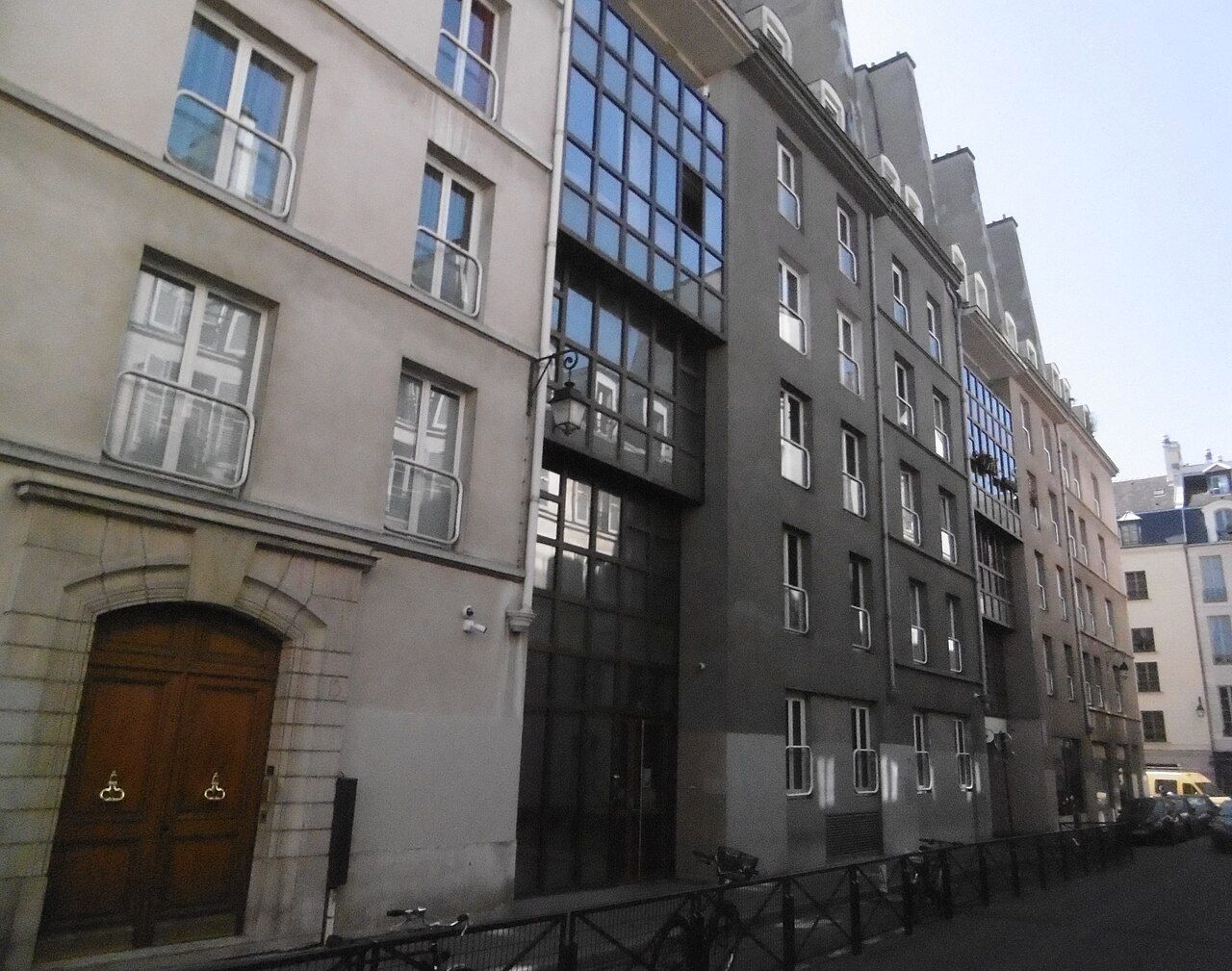
“Charles V assembled the Hôtel Saint-Pol from the 1360s as his main Paris residence.”
Hôtel Saint-Pol survives less as a building than a reading. Its streets preserve the outlines of Charles V’s rambling royal residence. Begin with the names, then follow what each one remembers.
Where does the palace begin?
Start with the space between rue Saint-Antoine and the Seine. Hôtel Saint-Pol lay east of rue Saint-Paul, occupying ground between those markers. This was not one grand building gathered around a single façade. It was a royal residence assembled over time, with its own scattered, almost unruly shape.
Charles V began assembling it in the 1360s as his main Paris residence. The name suggests a single place, but the grounds resist that neat picture. A palace here meant a collection of connected parts, spread across a sizeable patch. The first clue is therefore not a doorway. It is the broad relationship between streets, river and remembered ground.
What kind of palace stood here?
Picture houses joined by galleries, courtyards and gardens. The Hôtel Saint-Pol grew as a cluster, rather than one formal palace. Its parts made a royal residence through connection, not uniformity. That distinction gives the lost place its character: less a single monument than a small world assembled piece by piece.
Follow that idea before looking for grandeur. Galleries linked the houses; courtyards and gardens filled out the grounds. Each element suggests movement between enclosed rooms and open spaces. No surviving outline is needed to understand the arrangement. The palace’s very looseness is part of its history, and its street names offer a finer guide than any imagined façade.
What did the royal gardens hold?
Let the names open onto the grounds themselves. Orchards stood beside vine arbours, with aviaries and a menagerie among them. The palace was not only a residence, but also a place shaped by living things. Fruit trees, trained vines, birds and animals gave its royal setting an unexpectedly varied texture.
The menagerie included lions, a detail that still has force. It lends the old grounds a sharp edge, far from a quiet garden picture. Vine arbours suggest shade and careful growth; orchards suggest seasonal abundance. Those impressions remain impressions, not a complete inventory. The facts are spare, but the names keep the grounds from becoming abstract.
Which street names carry the strongest clues?
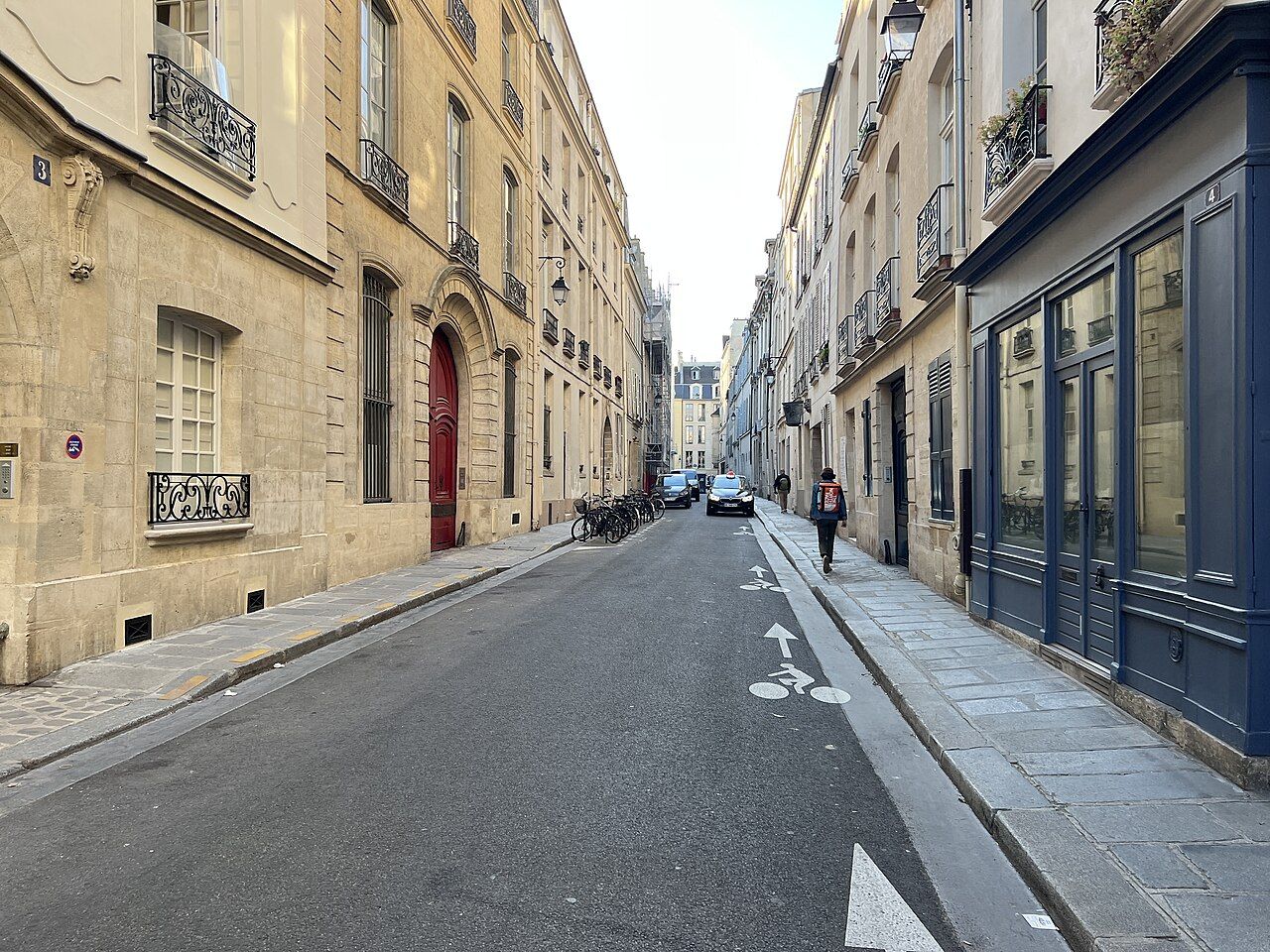
Begin with rue des Lions-Saint-Paul, named for the royal menagerie. The street name makes the palace’s animals part of ordinary geography. Read it slowly: the lions remain in language, even when the enclosure does not. A small name can carry a surprisingly large piece of vanished ground.
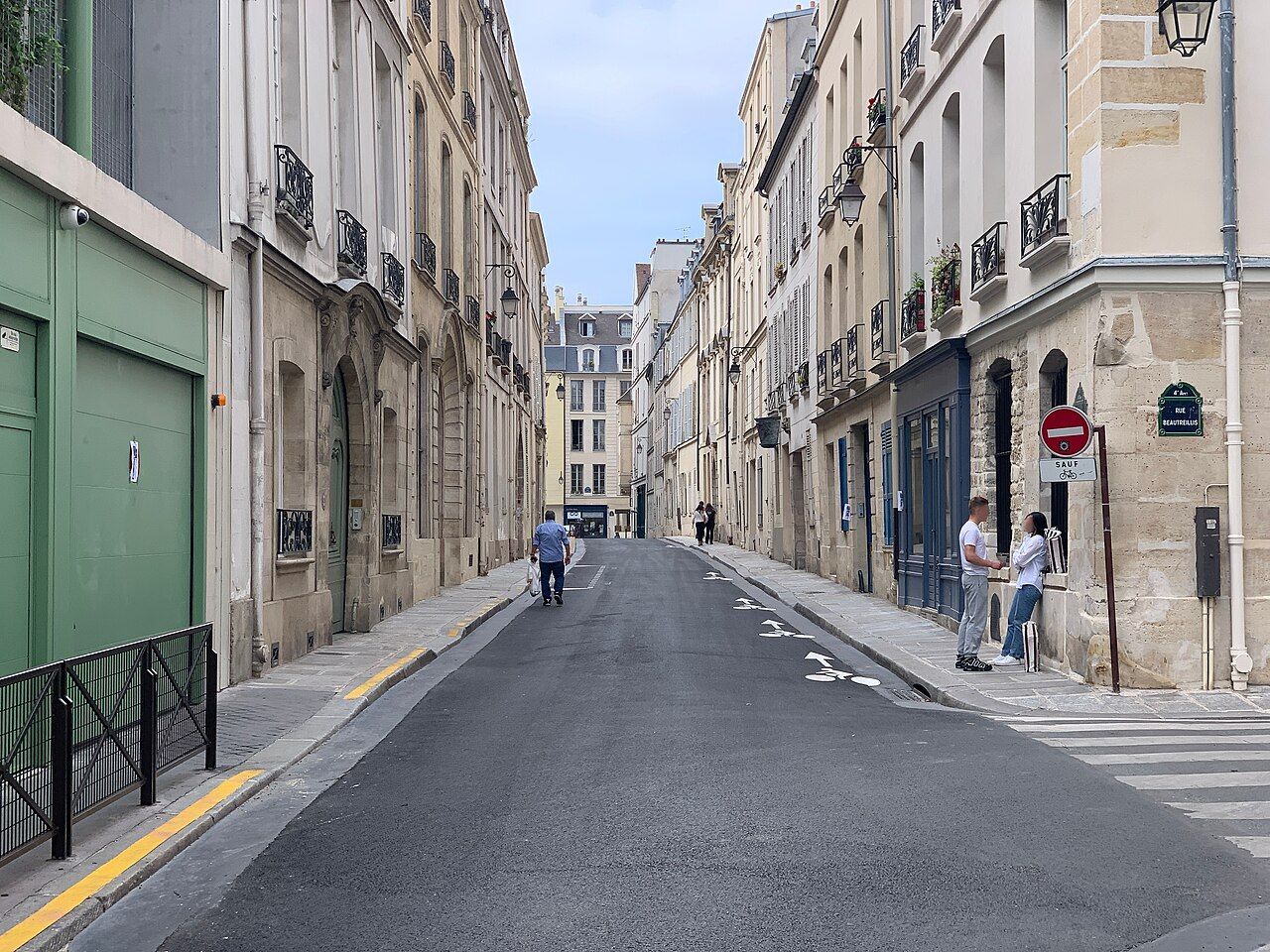
Next, rue Beautreillis recalls a fine trellis of vines in the royal gardens. Its sound retains something of the trained growth it names. Rue de la Cerisaie recalls the cherry orchard. Together, the names turn the old grounds into a sequence: lions, vines, cherries. The palace survives as a set of clues, not a silhouette.
The palace survives as a set of clues, not a silhouette.
That sequence is the clearest way to read Hôtel Saint-Pol. Not as a building waiting to be reconstructed, but as a presence dispersed across names. The streets do not restore its rooms or boundaries. They preserve particular memories, each attached to a name that remains more compact than the place it recalls.
The courtyards built on the old grounds offer another way to read this cluster: the courtyards built on the old grounds.
What happened inside the royal residence?
Charles VI lived at Hôtel Saint-Pol during his long illness. The residence therefore held more than courtly display and cultivated grounds. It also became the setting for a prolonged private life. The contrast matters: the palace could be at once a cluster of gardens and houses, and a place marked by illness.
In January 1393, the Bal des Ardents took place at Hôtel Saint-Pol. Several dancers dressed as wild men were burned to death. The event places a terrible moment within the palace’s history. No garden name can soften it, and no broad description of royal life should blur its severity.
How did the palace become lost?
Later kings preferred the nearby Hôtel des Tournelles. Hôtel Saint-Pol then fell into neglect, its earlier role giving way to another royal residence. The change left the old grounds increasingly vulnerable. What had once gathered houses, galleries and gardens no longer held the same place in royal life.
Francis I had the Saint-Pol grounds sold off in lots in the 1540s. That sale marks the end of the residence as an assembled royal domain. The gardens and connected houses belong to an earlier arrangement; the lots signal its breaking apart. Street names became better carriers of memory than the palace itself.
Why read the palace through its edge?
Charles V also had the Bastille built to guard the eastern approach to his residence. The palace and its defence belonged to the same royal landscape. One sheltered the king; the other guarded the route towards him. That relationship makes the lost residence larger than its gardens, without making it a single monument.
Read the Bastille as the outer clue, then return to the garden names. The fortress that guarded the eastern gate the fortress that guarded the eastern gate points towards the residence’s protected approach. Rue des Lions-Saint-Paul, rue Beautreillis and rue de la Cerisaie draw attention back inside. Together, these names make a scattered map of royal life, assembled from what remains in language.
What can a street sign remember?
Hôtel Saint-Pol cannot be reduced to its lions, vines or cherries. Yet each name holds one part of its character. The palace was a residence built from connected houses, open spaces and royal grounds. Its history also includes illness, a deadly fête, neglect and the sale of its land.
That is the useful order: place, shape, gardens, names, lives, loss. Each step adds another layer without pretending to rebuild the whole. The names leave a partial portrait, not a complete plan. They make the vanished residence readable, though never whole.
The signs keep the palace close, but never quite present. How much of a place can a name hold?