Streets & squares
What survived beneath the plaster on rue François-Miron?
A short walk from Saint-Gervais to Gothic cellars follows the street’s timber façades, and the Paris that once built in wood.
- Arrondissement
- 4e
- Métro
- Saint-Paul
- Period
- late Middle Ages
What does morning reveal?
“Covered with plaster” is the phrase that starts this walk. Rue François-Miron is one of the Right Bank’s oldest routes. It runs east from Saint-Gervais to rue Saint-Antoine. The street carries the name of François Miron, provost of Paris’s merchants. He held that office in the early 1600s. At Saint-Gervais, the church of the Couperin organists marks one end of this old route. The name belongs to the street, but the façades tell another story. Their materials make the past visible in pieces. The route moves east, and its surfaces change. Morning begins with the question of what those surfaces conceal.
What returns at midday?
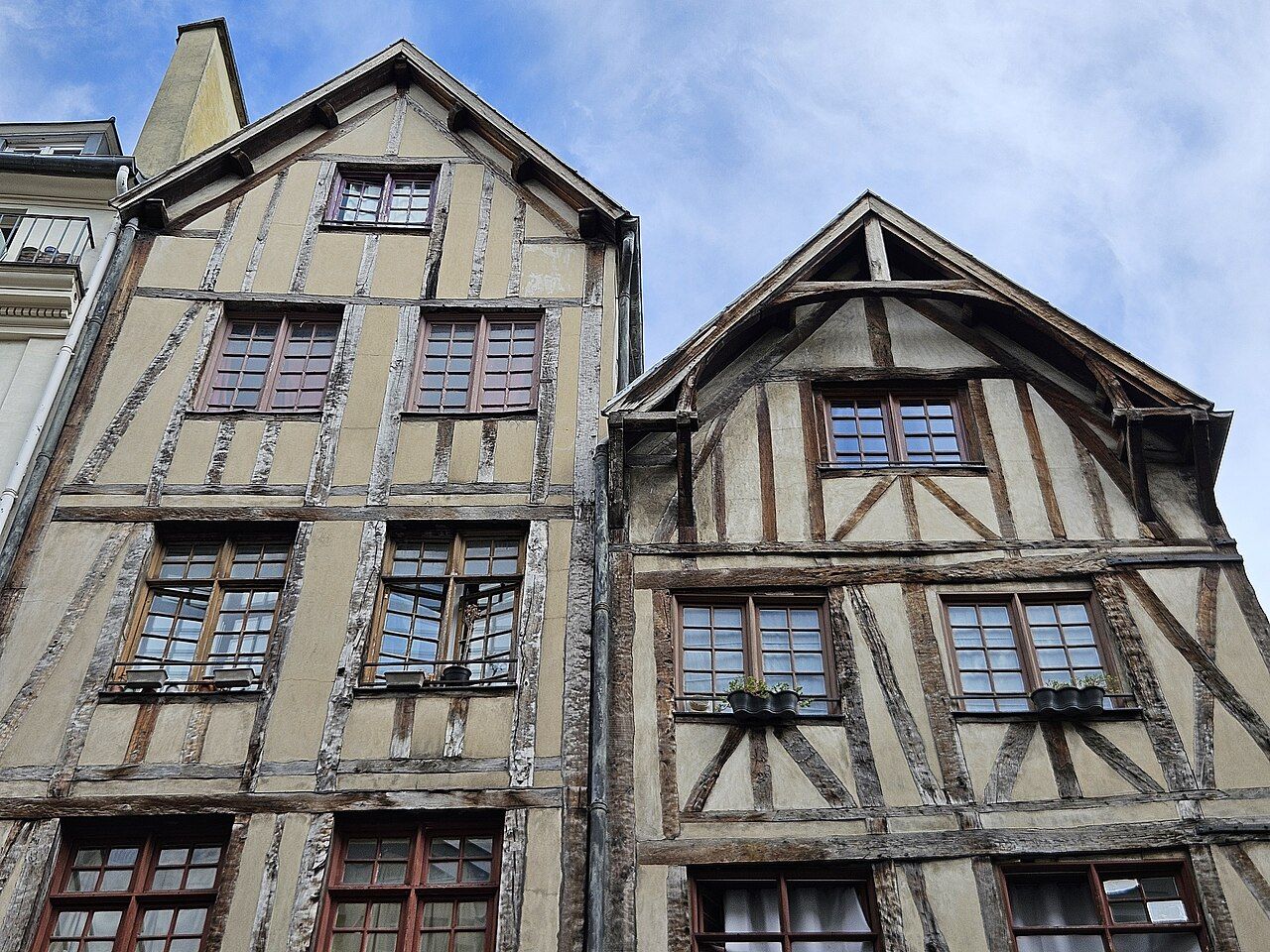
At Nos. 11 and 13, narrow façades expose their timber framing. They are among the very few half-timbered façades left in Paris. The pattern makes the building’s structure feel close at hand. For a long time, however, timber façades disappeared beneath plaster. Royal edicts of the 17th century required that covering. The aim was to limit the spread of fire. Plaster altered the street’s face, even as timber remained underneath. The framing at Nos. 11 and 13 was uncovered and restored in the late 1960s. That work brought the wood back into view. The change is almost tactile: plaster gives way to timber. A façade becomes a record of what was covered, then revealed. Before stone took over, the city’s fronts could show their framework. Here, that earlier language survives in two narrow strips. It is a spare, striking answer to the street’s history.
What waits below in late afternoon?
At Nos. 44-46, the Maison d’Ourscamp keeps Gothic vaulted cellars. They belonged to the town house of the Cistercian abbey of Ourscamp. The street’s story turns downward, from exposed frames to vaulted rooms. The heritage association Paris historique saved and restored the cellars. Its seat is there. Timber above and Gothic vaults below make the route feel layered. Further along, No. 68 is the Hôtel de Beauvais, with the curved courtyard where Mozart stayed. The street holds its different histories close together, without making them identical.
By late afternoon, the timber fronts remain in view. Below them, the cellars keep their vaulted darkness. The walk ends between those two old surfaces, still in place.