The Pletzl
A secret archive, a wall of names
From a clandestine document centre founded in Grenoble to the Wall of Names, rue Geoffroy-l’Asnier holds a history that resists a quiet ending.
- Arrondissement
- 4e
- Métro
- Saint-Paul
- Period
- 1943 onward
76,000 names make a difficult beginning for a day. At 17 rue Geoffroy-l’Asnier, the address holds a long history. It belongs to the 4th arrondissement, but its story reaches beyond the street. Morning begins with the fact of a secret archive. The Centre de documentation juive contemporaine was founded clandestinely. Isaac Schneersohn founded it in Grenoble in 1943. Its beginning was an act of keeping under concealment. The archive came before the memorial, and before its walls of names.
What began in hiding?
The name of the centre is formal, almost measured. Its beginnings carry a different weight. In Grenoble, documents gathered against erasure. The word clandestinely changes the temperature of the history. An archive is made of things kept, sorted, remembered. Here, the keeping began in hiding. The story does not need a grand entrance. It begins with documents, a founder, and a year. The later memorial stands inside that earlier act of care.
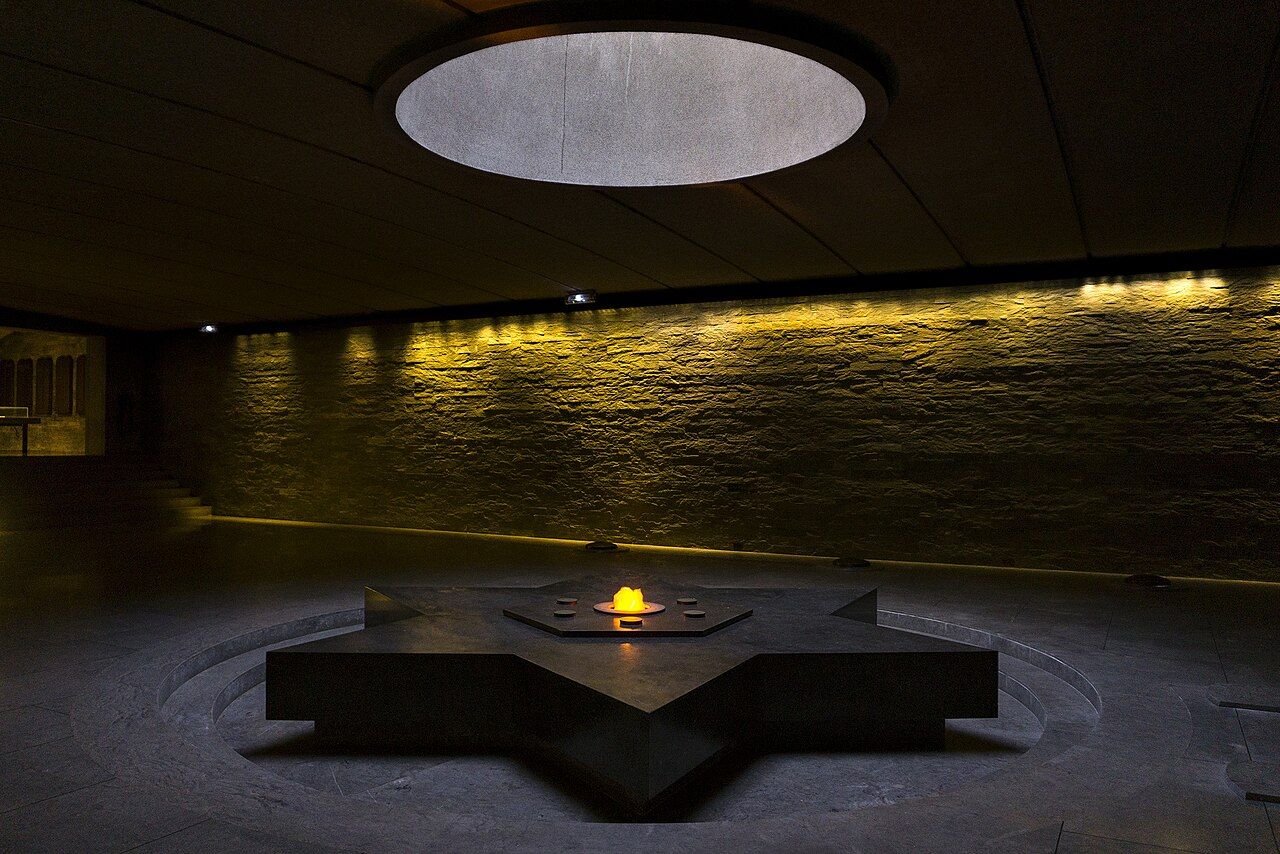
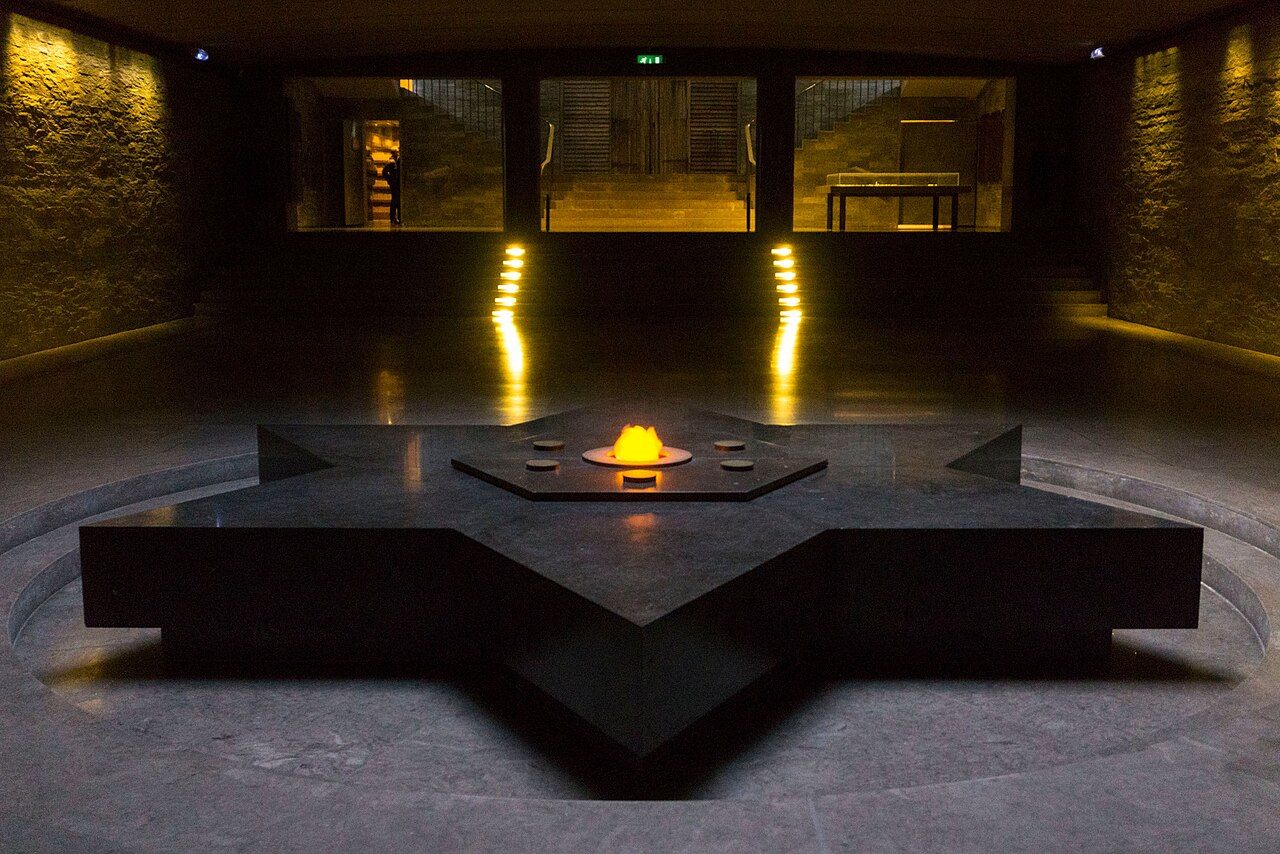
By midmorning, attention moves from the archive to its public form. The memorial to the Unknown Jewish Martyr was inaugurated on the site in 1956. Its name brings the scale of loss close. The crypt holds an urn containing ashes from the death camps and from the Warsaw Ghetto. Those facts resist any easy distance. A name, an urn, and a memorial hold different kinds of memory. Each makes absence present without explaining it away.
A secret archive can become a public wall of names.
A secret archive can become a public wall of names. The thought follows the day from one form of remembrance to another. The building reopened in January 2005 as the Mémorial de la Shoah after a major extension. The exact phrase belongs here, without ornament. Reopening did not erase the earlier chapters. The site now holds memorial, archive, and museum together. History moves from concealment into public remembrance, without becoming simple.
What do the names ask?
Near the middle of the day, the Wall of Names becomes its own measure. It lists about 76,000 Jews deported from France between 1942 and 1944. About 2,500 survived. The figures are rounded, but no rounding makes them light. Names refuse to remain only numbers. The wall gives each a place in a larger record. Looking across that record means facing both its scale and its individual lives. The silence around names is never empty.
The Wall of the Righteous stands in the Allée des Justes-de-France beside the building. It honours people in France who saved Jews. The names there hold a different account of the same history. They do not cancel the losses; they mark acts of rescue within them. The allée’s name carries its own weight. Across the day, remembrance shifts between those deported and those saved. The walls keep these histories near, without making them interchangeable.
Afternoon turns toward the archive and library. They are among the largest in Europe on the Holocaust. Their scale suggests work that continues beyond any single visit. The permanent exhibition traces the persecution of Jews in France and Europe. Its subject is not confined to one city or one period. France and Europe sit together in that account. The exhibition gives the day a wider frame, while the rue keeps the history close.
The street also points outward, by a few streets west, toward the city hall a few streets west. Nearby names and places gather other layers of the Marais. Yet this address keeps its own centre of gravity. A document centre founded in hiding became a memorial, archive, and museum. The transition is striking because the beginning remains visible. What was kept secretly now stands beside walls made for public remembrance.
What remains by evening?
As the day draws toward evening, the story reaches beyond rue Geoffroy-l’Asnier. The Mémorial also runs a memorial site at Drancy. It opened in 2012 opposite the former transit camp. That fact extends the memorial’s work without loosening its focus. The day began with a clandestine archive in Grenoble. It ends with remembrance carried across more than one site. The distance between those beginnings and this address is historical, not merely geographic.
Evening leaves the Wall of Names as the day’s clearest image. About 76,000 names gather there, with about 2,500 survivors among them. The figures cannot contain the lives, but the names resist disappearance. The crypt, the archive, the exhibition, and the walls speak differently. Together, they make remembering an act with many forms. The street grows quieter in thought, if not in fact. What can a wall preserve that an archive began by keeping hidden?