The Pletzl
What do the Pletzl’s street names remember?
Rose bushes, a painted kite, and a royal residence leave their marks on the Pletzl. Its street names make a map that remembers.
- Arrondissement
- 4e
- Métro
- Saint-Paul
- Period
- 13th century onward
“Rue des Juifs”
What does morning remember?
Morning begins with Rue des Rosiers, a name rooted in gardens. Rose bushes grew along the inside of the Philippe Auguste wall. Rue des Rosiers follows the wall’s inner line, keeping its old curve in view. The street name turns that boundary into something living. Gardens meet a wall; a map keeps both. Here, history is not a grand account. It is a word that carries its former landscape. The line of the wall built before the Third Crusade still gives Rue des Rosiers its shape.
What does midday put on a sign?
Rue des Écouffes carries a less obvious memory. Écoufle is an old French word for the kite. The street’s name probably came from a bird painted on a shop sign. A single image may have become a street’s lasting marker. The name keeps that possibility open, without settling it into certainty. Rue des Écouffes, Rue des Rosiers, and Rue Pavée form the Pletzl’s core. Their names make a small map of different kinds: a garden, a boundary, perhaps a bird.
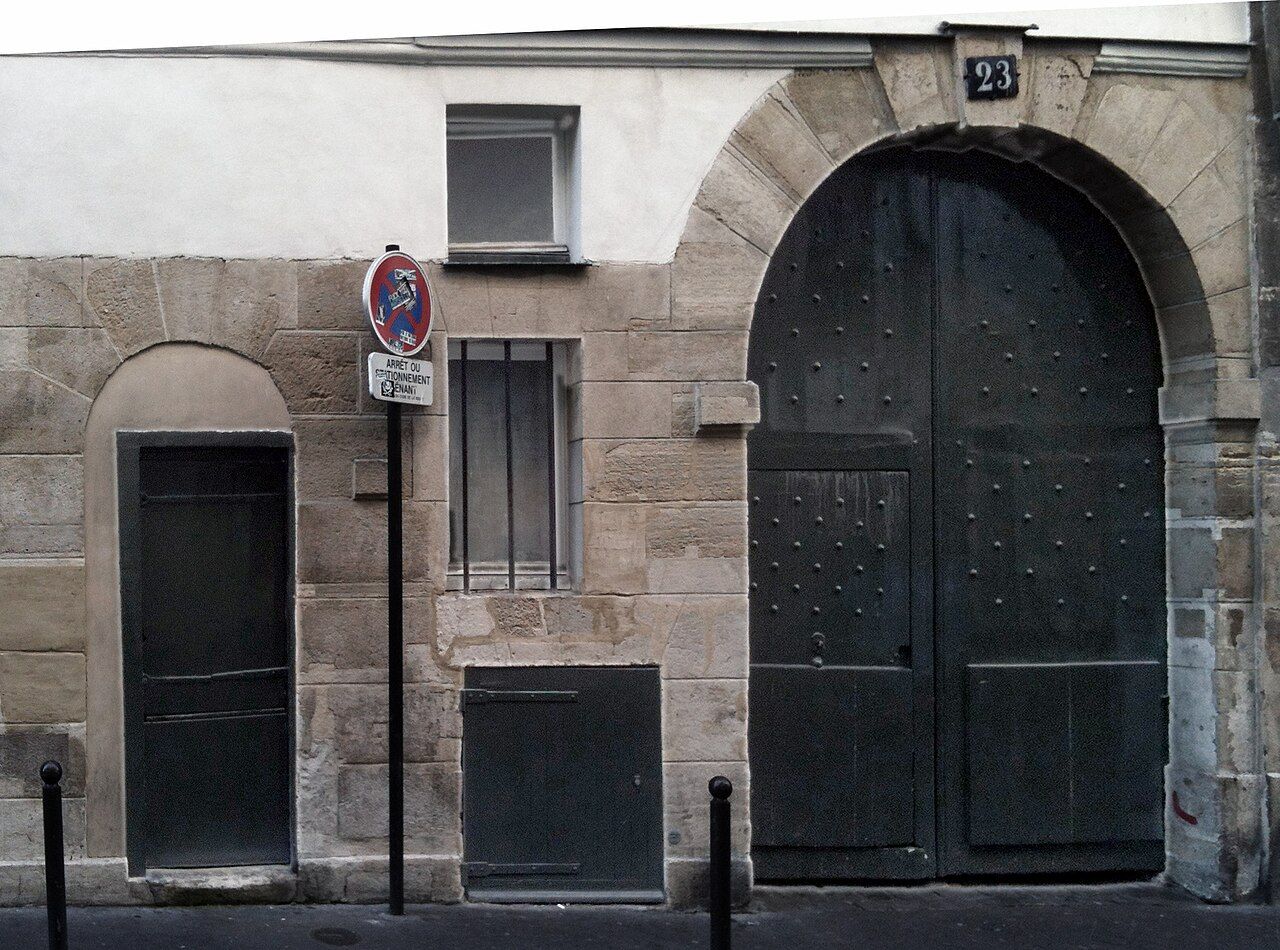
At the heart of that map sits another name. In the 13th century, a Jewish community lived around present-day Rue Ferdinand-Duval. The street was called Rue des Juifs until 1900. Then it was renamed after a prefect of the Seine of the 1870s. Names change; the older one remains legible in the story of the street.
What remains by late afternoon?
Rue du Roi-de-Sicile remembers Charles of Anjou, King of Sicily and brother of Saint Louis. He had a residence there. The name holds a person and a place together, with no long explanation required. Nearby, names cut into corner stones give words another surface. A map becomes more than directions when each name carries a different past. Some names point to gardens; others, to a painted bird or a residence. Some keep an older community present in the street’s history.
By late afternoon, the names sit together without becoming one story. Rue des Rosiers follows the wall; Rue des Écouffes keeps its uncertain bird. Rue Ferdinand-Duval carries both its former name and its later one. The Pletzl’s map gathers these traces, plain and close at hand. The streets remain, and the names keep asking what else a map can remember.