Edges & walks
Where the Hôtel de Ville meets Place de Grève
A morning-to-afternoon passage from a rebuilt city hall to the square where public punishment and job-seeking gave rise to faire grève.
- Arrondissement
- 4e
- Métro
- Hôtel de Ville
- Period
- 1357 to today
“Faire grève” began here as a search for work. The square and city hall hold two public histories together. One belonged to civic power, the other to employment. Their stories remain joined by a name that changed meaning.
What does morning disclose?
Morning begins with the city hall beside the square. Paris’s municipal government has met on this site since 1357. That beginning came when provost Étienne Marcel bought the Maison aux Piliers. Government took root here before its present façade existed.
A Renaissance city hall began in 1533, designed by Domenico da Cortona. He was known as Boccador, a name that survives the building’s story. Those beginnings make the façade feel less like a beginning. Its later history repeats and breaks that first architectural promise.
More than a hundred statues of people born in Paris decorate its façades. Their presence gives the building many faces, all turned outward. The the memorial and archive nearby hold another part of the city’s record. A trace of the 1805 house numbering gives civic history a smaller scale.
The rebuilt hall carries its history through names and likenesses. Its scale makes the square feel like an answering space. Between them, public memory takes more than one form.
What does midday reveal?
By midday, attention falls from the building to the square. Place de Grève was the square’s name until 1803. Grève means a sandy riverbank, and the slope explains it. Here, the ground declined toward a landing place on the Seine.
That descent makes the name more than a label. A bank, a landing, and a gathering place meet here. Even the word carries a rough texture, like sand. Yet the square’s history was never only about movement.
For centuries, public executions took place on the square. Ravaillac, assassin of Henri IV, was executed here in 1610. That fact cuts sharply through the square’s civic scale. Work and public punishment occupied the same shared ground.
These histories sit close without becoming the same story. The square’s name holds a riverbank, but also violence. Its open ground gathers meanings that resist easy comfort. The city hall looks onto that difficult record.
What remains by late afternoon?
Late afternoon turns the story toward the word itself. Unemployed workers gathered here, looking to be hired. They came to Place de Grève in search of work. From that gathering came the French expression faire grève.
The expression means going on strike, though its beginning concerned employment. The shift is small in wording, large in consequence. First, workers sought a job; then the phrase named refusal. The word carries an echo of the hiring place.
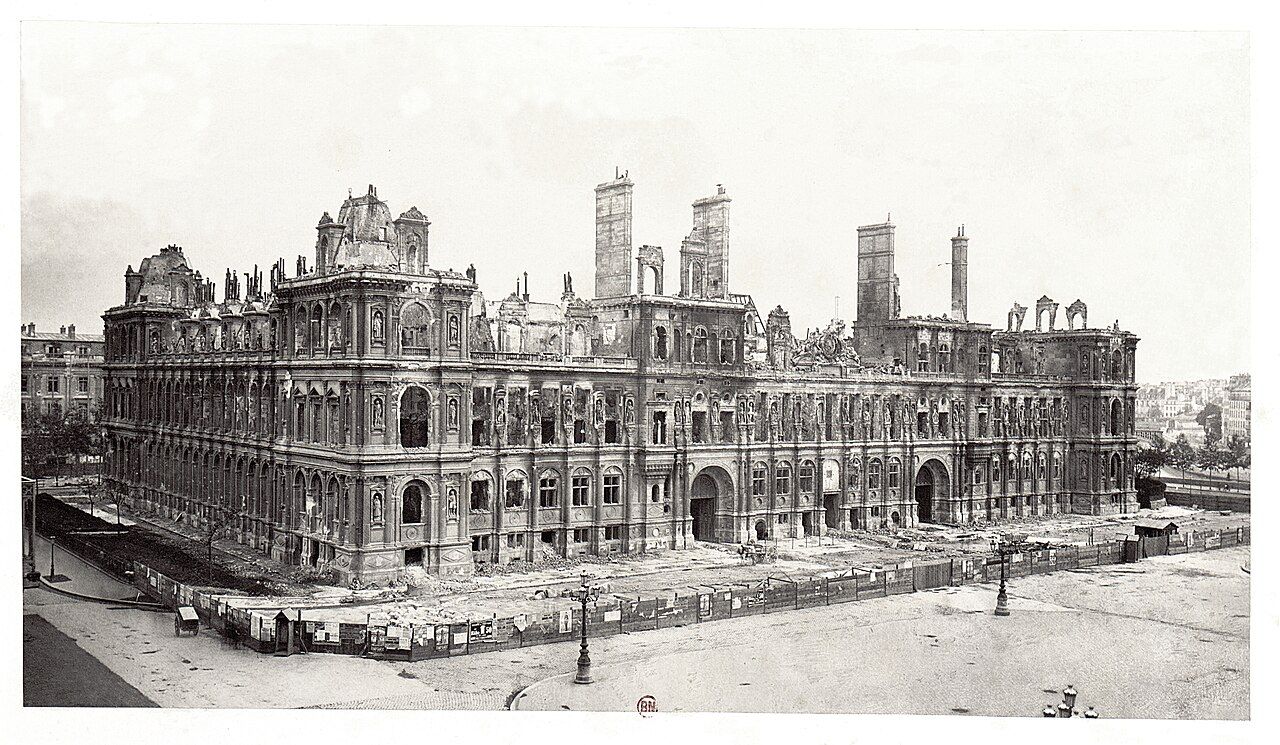
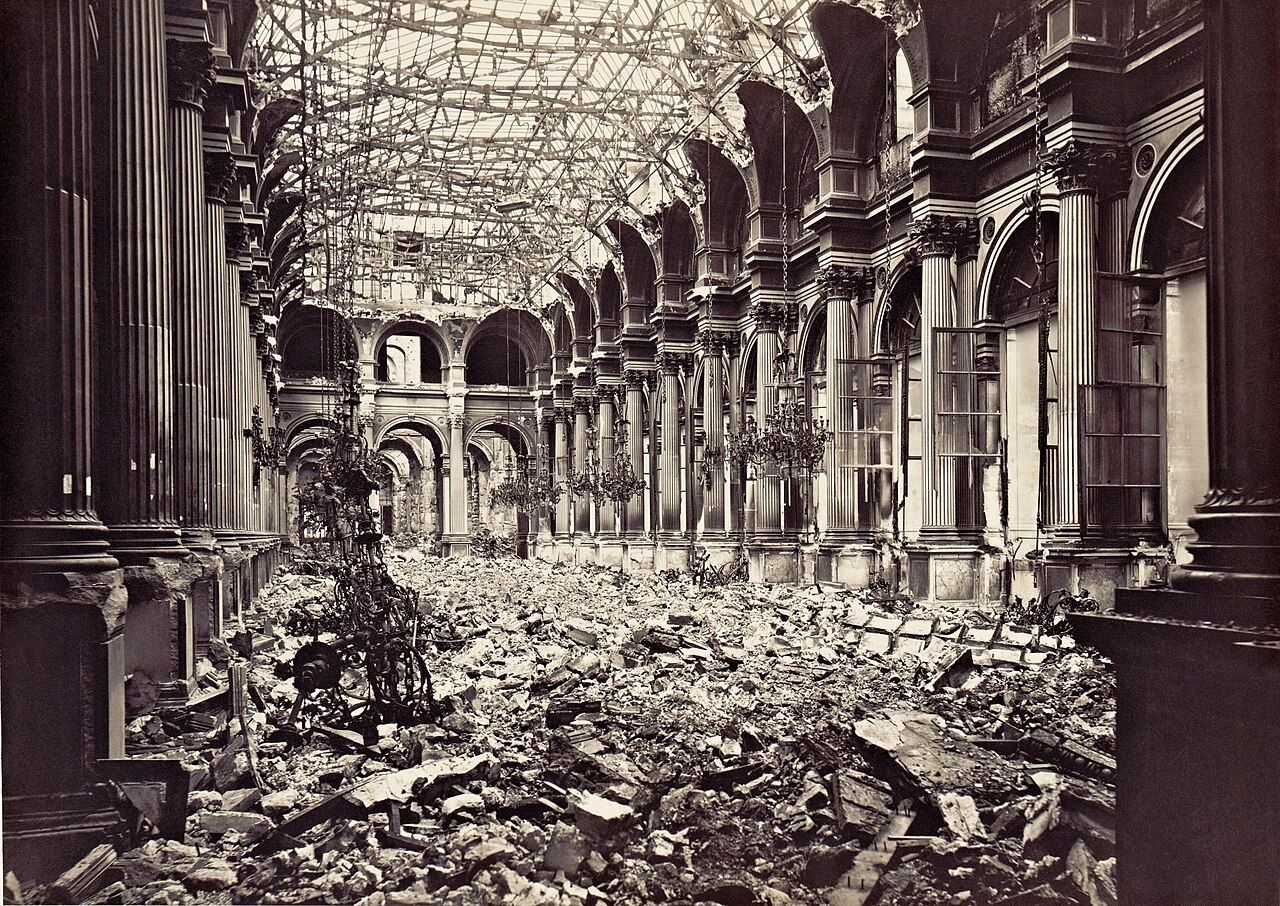
At the square’s edge, the city hall stands larger. The Communards burned it in May 1871. Théodore Ballu and Édouard Deperthes rebuilt it between 1874 and 1882. They made it larger, with a copy of the Renaissance façade.
The copy makes continuity visible, but never simple. Fire broke the sequence; rebuilding chose what returned. Today, the old square and rebuilt hall share a frame. One remembers the riverbank; the other, a city remade.
In the mind, the slope leads down toward the Seine. Above the old bank, the city hall keeps its many faces. Between them, “strike” still carries two histories.