Churches
Saint-Paul-Saint-Louis: Roman Baroque on rue Saint-Antoine
A Jesuit church brings a Roman Baroque façade and an early Parisian dome to rue Saint-Antoine, holding royal hearts, Delacroix, and Victor Hugo’s shells.
- Arrondissement
- 4e
- Métro
- Saint-Paul
- Period
- 1627-1641
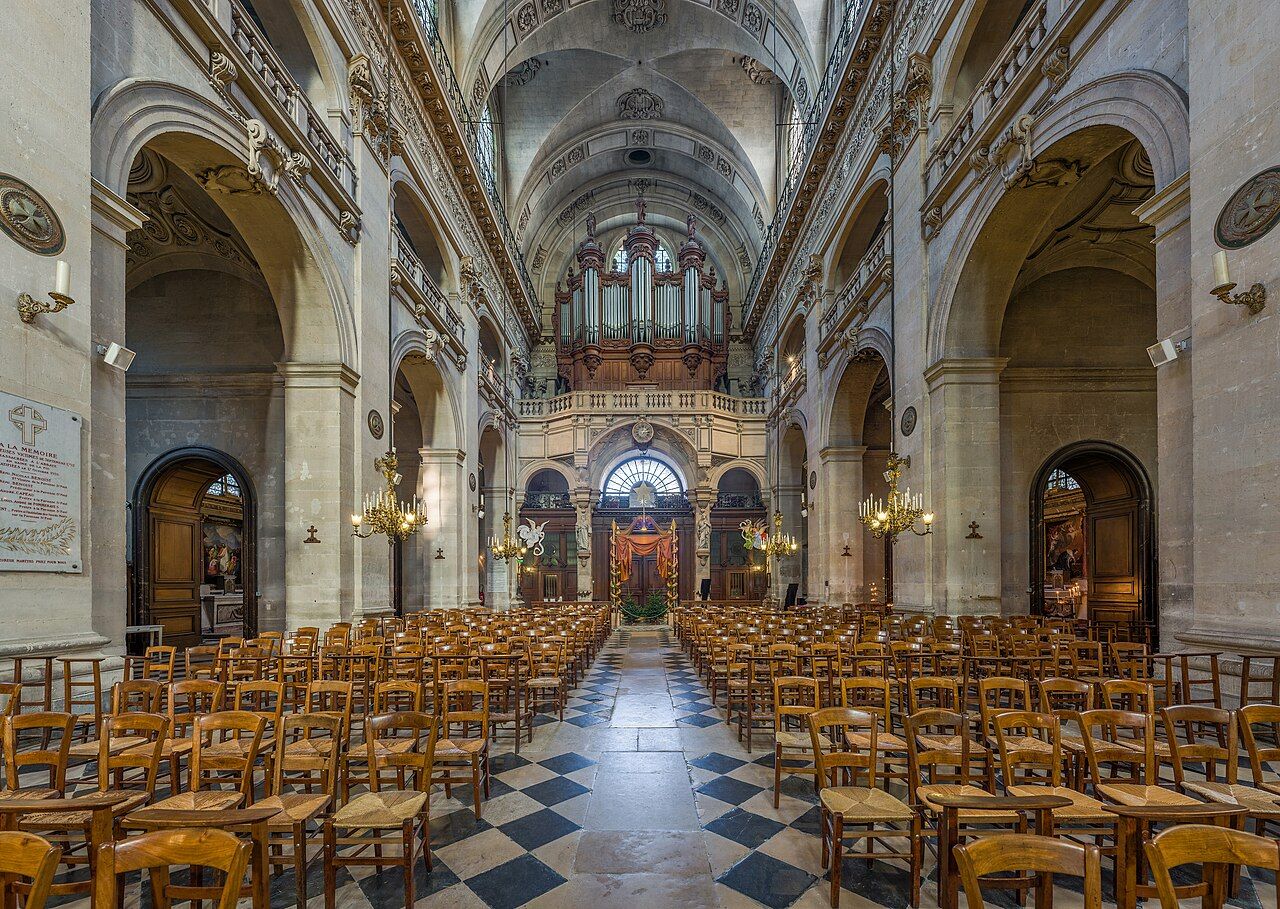
“One of the first large domes built in Paris.”
What does morning reveal?
Saint-Paul-Saint-Louis stands at 99 rue Saint-Antoine. Its address belongs to the street; its façade looks elsewhere. Three tiers of columns follow Roman Baroque models. The design brings another architectural language into Paris.
The street's name remains close to the church's full name. That repetition makes the building difficult to separate from its address. Here, the façade speaks before any interior history begins. Each tier gives the front a measured vertical order. That order feels deliberate against a street-level view. Nothing in the design asks the dome to disappear. The building makes height part of its public face.
The Jesuits built the church between 1627 and 1641. Louis XIII laid its first stone in 1627. Cardinal Richelieu said the first mass in 1641. Those years frame a project shaped by faith and ceremony.
The architects were Jesuit brothers Étienne Martellange and François Derand. Their church gives the street a formal face. Columns rise in three tiers across the façade. Above them, the dome draws the gaze upward.
The dome rises about 55 metres above the church. It was one of Paris’s first large domes. The Roman Baroque arrives here not as an abstraction. It takes shape against the measured line of rue Saint-Antoine.
The contrast is the point, rather than a puzzle. A French street receives a form shaped by Roman Baroque. The façade announces that change in ordered columns. The dome carries it higher, beyond the street’s scale.
Nearby, the antique dealers' courtyards offer another street-side texture. The church remains the more emphatic presence here. Its height makes the architectural argument plainly. Roman Baroque can belong to this Parisian address.
The dome makes Roman Baroque legible above a French street. Its curve gives the church a different measure. The claim is architectural, not merely historical. Stone and height make the arrival visible.
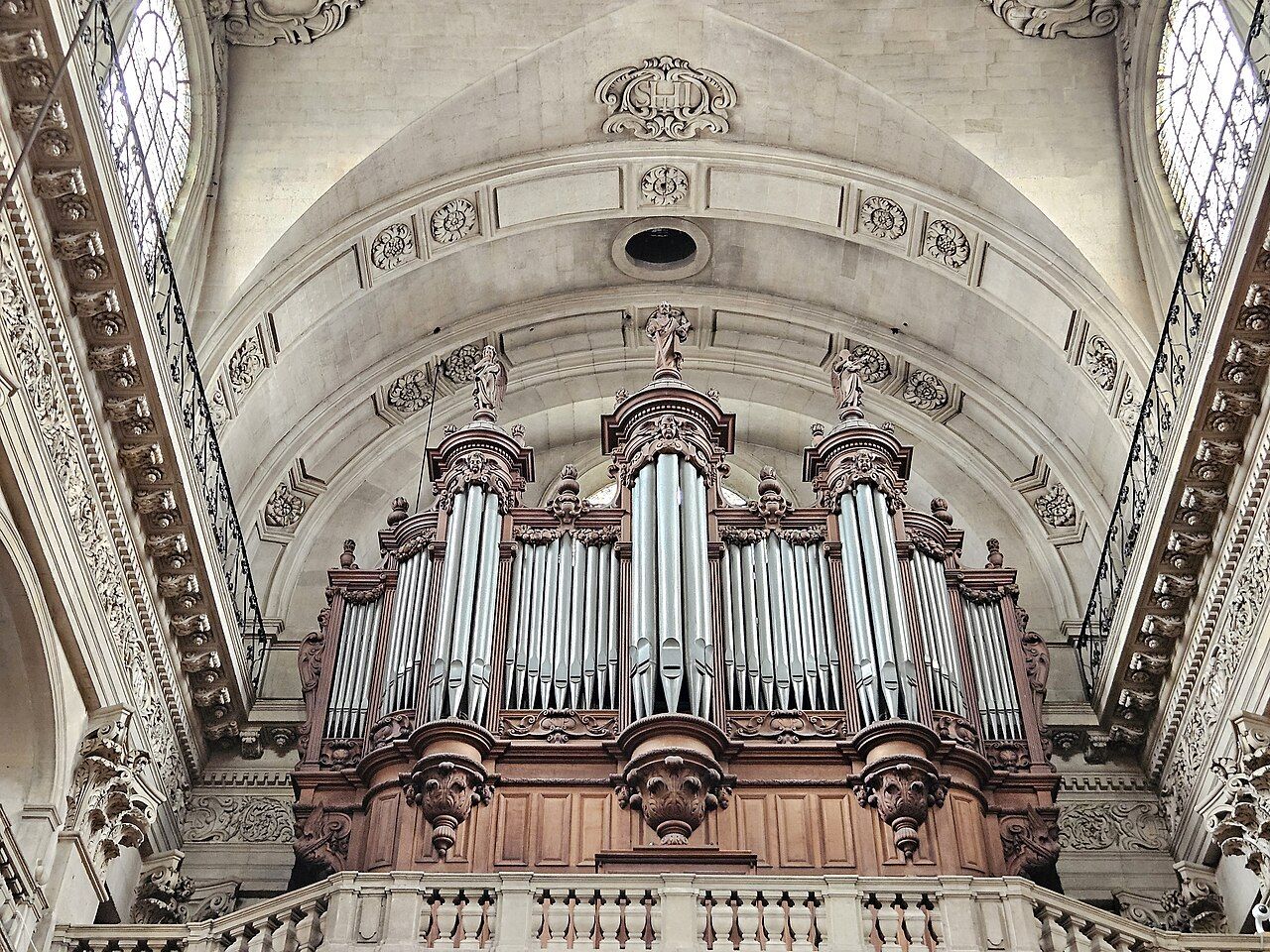
The dome makes Roman Baroque legible above a French street.
What gathers around midday?
Inside, the church keeps several histories in view. The hearts of Louis XIII and Louis XIV rested here. They remained until the Revolution. Royal devotion becomes part of the building’s interior story.
The preacher Louis Bourdaloue gave sermons here in the late 17th century. His presence adds another kind of public voice. The church held prayer, royal memory, and preaching. Its history gathers around more than its dome.
In the transept hangs Eugène Delacroix’s Christ in the Garden of Olives. The painting dates from 1827. Its placement brings a later work into the older church. The transept holds a meeting across periods.
Two holy-water stoups came from giant clam shells. Victor Hugo gave them to the church. Their material is unlike the columns outside. A shell turns a familiar object into something singular.
These objects are not interchangeable pieces of church decoration. Each carries a distinct scale, from royal hearts to shells. Their differences make the interior feel historically crowded. That crowding is quieter than the façade's upward insistence. History here sits beside devotion rather than replacing it.
The details resist a single account of the place. A dome, royal hearts, sermons, and painting remain. So do the shells, given by Victor Hugo. Each belongs to a different register of memory.
The church became the parish church of Saint-Paul-Saint-Louis in 1802. The old church of Saint-Paul had been demolished. A parish name thus carries an earlier church forward. The building’s identity changed, though its history stayed layered.
The former Jesuit house stands next to the church. It is now the Lycée Charlemagne. The neighbouring building preserves another part of the Jesuit presence. The church and its former house remain side by side.
What stays in late afternoon?
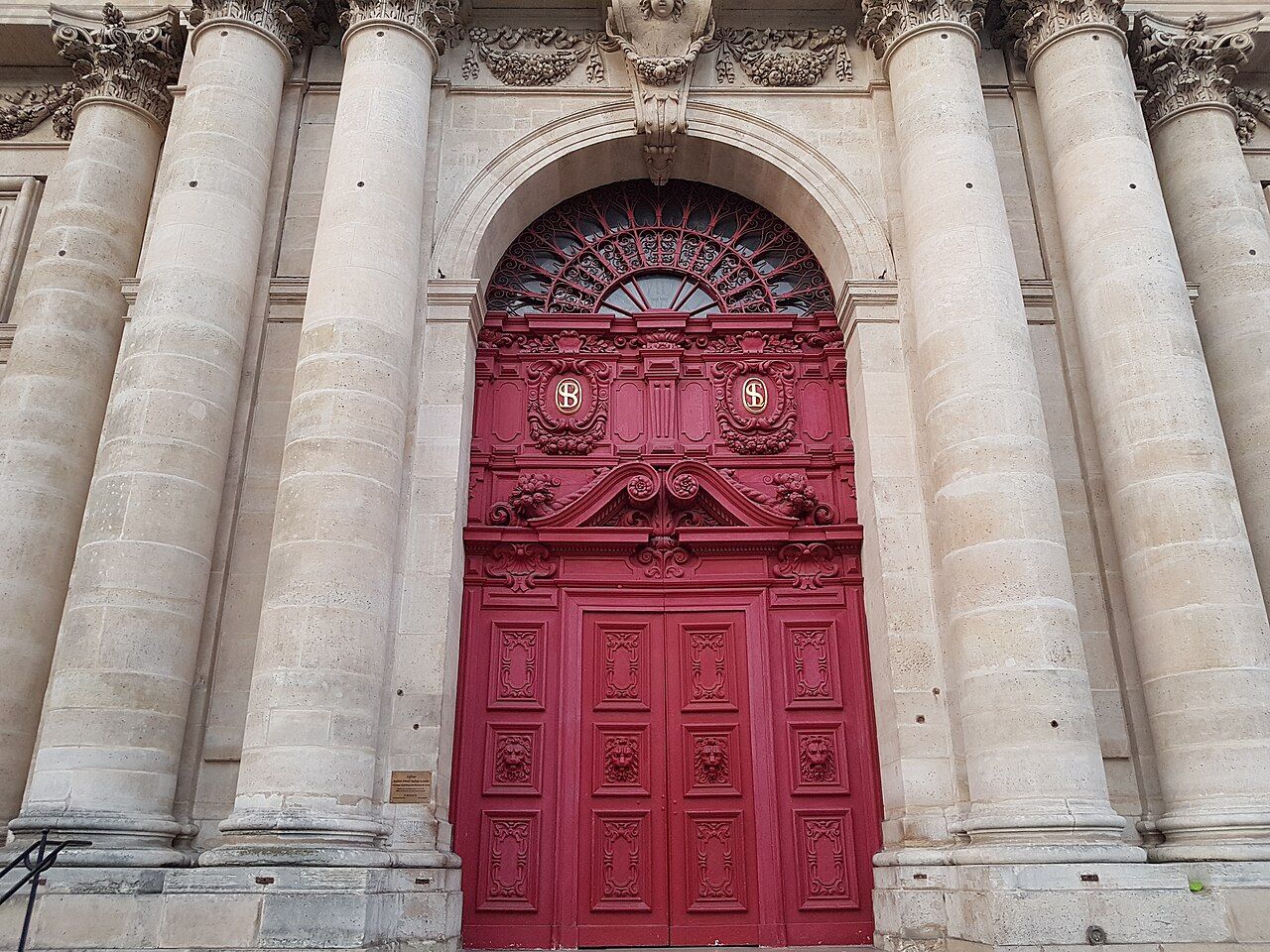
A small side door opens onto the narrow passage Saint-Paul. The opening offers a quieter measure of the church. A great dome rises above; a narrow passage meets its side. The contrast belongs to the same address.
From the passage, the church's mass has another edge. The entrance does not compete with the dome's scale. It offers a smaller pause in the same architectural story. That shift from height to narrowness suits the street. Saint-Paul-Saint-Louis holds both without needing an explanation. Dome above, passage beside it: the contrast remains.
It is tempting to read the church only upward. The dome is its most visible gesture. Yet the side door turns attention lower. The narrow passage gives the building another scale.
Sully's house a few doors east keeps the street’s architectural company. The church’s façade answers with its Roman Baroque order. These nearby forms make the street feel like an argument. Grandeur and close detail share the same route.
Late afternoon leaves the church between its histories. The Jesuit building became a parish church. Royal hearts, a preacher, and a painting remain in its account. The shell stoups bring that history close to hand.
The dome still gathers the eye above rue Saint-Antoine. Below, the narrow passage opens beside the church. The street holds both gestures without choosing between them. One rises; the other slips quietly aside.
At the threshold, the clam-shell stoups wait as holy-water vessels. Their shape recalls Victor Hugo’s gift. Above them, the dome keeps its larger curve. The church closes the day with both scales in view.