The Pletzl
Two kitchens on rue des Rosiers
Ashkenazi breads, Eastern European deli food and North African dishes share rue des Rosiers, shaped by kosher rules and the week’s changing rhythm.
- Arrondissement
- 4e
- Métro
- Saint-Paul
- Period
- 1880s to today
What does morning hold?
Two kitchens meet along rue des Rosiers, without becoming one. The Pletzl’s food carries Eastern European and North African histories. Their flavours share a street, while their traditions keep distinct rhythms.
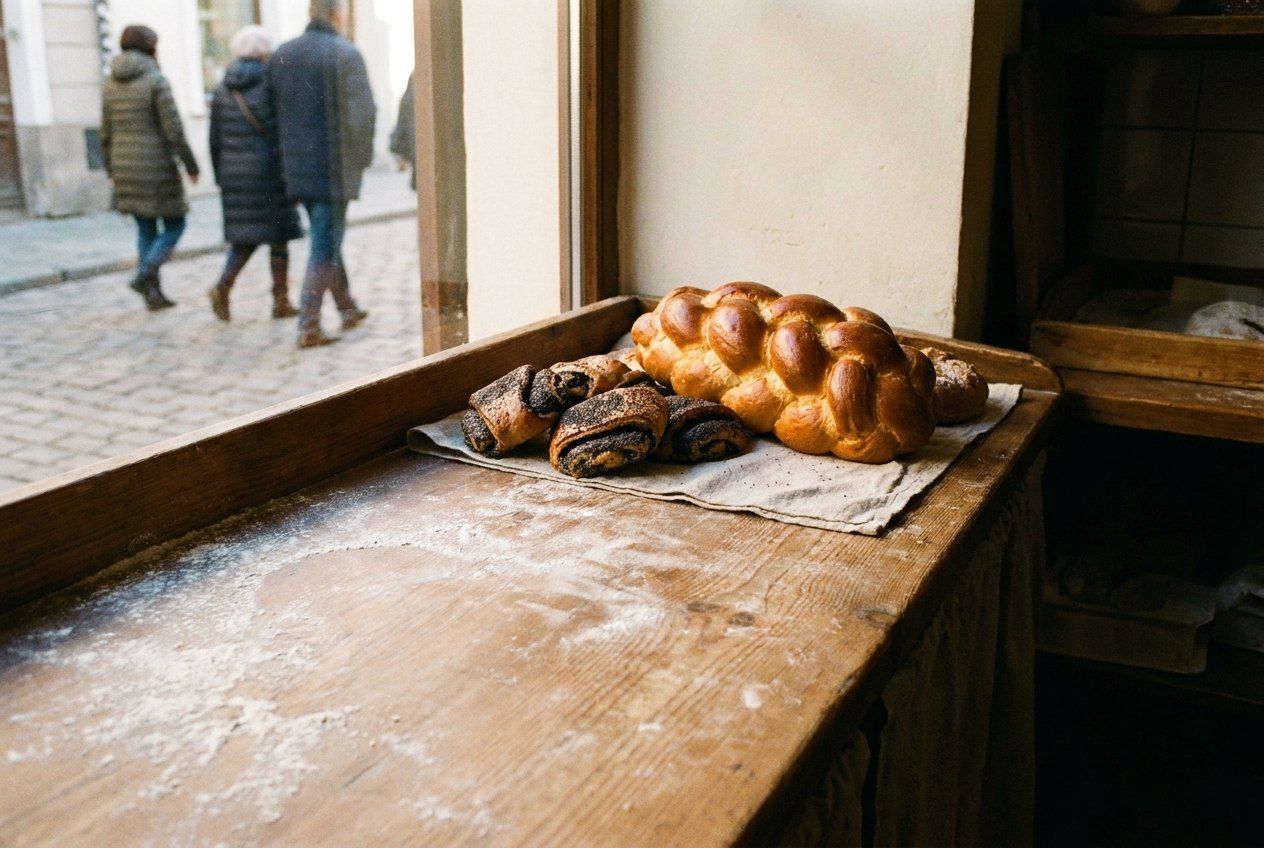
Ashkenazi bakers brought poppy-seed cakes, apple strudel, cheesecake and braided challah. The names make a varied opening, from fruit and seeds to bread. Challah is braided egg bread, eaten on the Sabbath and at festivals. Its place in the week is as important as its shape.
Morning offers a way to consider these foods, not a timetable. Pastries and bread belong to the story without needing one fixed hour. A street’s culinary identity can hold many kinds of eating. Here, the baked goods carry both daily life and observance.
Before Passover, bakeries sell matzah, the unleavened bread eaten during the festival. That change gives the bakery year another rhythm. The bread itself is plain in its description, yet rich in meaning. Food here marks not only origins, but occasions.
Even the covered market of 1615 sets an older market beside these kitchens. The comparison is less about a single menu than shared streets. Food traditions meet in a neighbourhood, without needing to blend into sameness.
What comes to the midday table?
Eastern European immigrants brought pastrami, chopped liver, gefilte fish and pickled cucumbers. The list moves between meat, fish and sharp pickle. It gives the street another register, savoury and unmistakably varied. Each dish carries a different kind of inheritance.
Rules shape the meal as much as ingredients do. Kosher rules forbid mixing meat and dairy. Traditionally, meat delis and dairy shops stay separate. That separation makes the street’s food culture visible in its divisions.
Kosher meat comes from animals slaughtered under the rules of shechita. The rule sits behind the food, not beside it. It is part of how the meal is made possible. The kitchen follows a structure older than any single dish.
the rules of the French baguette offer a different frame for thinking about bread. Here, bread also sits inside religious practice and the calendar. Challah marks the Sabbath and festivals; matzah belongs to Passover. The loaf carries its own measure of time.
Midday holds no single cuisine in charge. Eastern European dishes and kosher practice occupy the same street. The point is not a tidy fusion, but a close arrangement. Separate rules and flavours still make a shared food landscape.
What changes by late afternoon?
Jews from Tunisia, Algeria and Morocco added brik, couscous, grilled merguez and almond pastries. Their arrival broadened the street’s culinary language. The dishes bring another tradition into the Pletzl’s kitchens. The menu grows more varied without erasing what came before.
Falafel in pita became the signature street food of rue des Rosiers from the later 20th century. A pita holds its filling in a compact form. The dish gives the street a recognizable food of its own. It stands beside older dishes, rather than replacing them.
That balance is the story’s quiet centre. Ashkenazi baking, Eastern European deli food and North African dishes remain distinct. Kosher rules shape what can meet on one table. One street can hold difference without smoothing it away.
Many food shops in the Pletzl close on Friday afternoon before the Sabbath and open on Sunday. The week’s rhythm becomes visible in that pause. Friday afternoon draws the shops toward the Sabbath. Sunday brings their doors back into the pattern.
Late afternoon leaves a small scene of its own: a street nearing its pause. Behind the food are breads, rules and journeys, held together without becoming identical. The kitchens share rue des Rosiers, then keep their separate rhythms.