The Pletzl
The Pletzl: three arrivals around rue des Rosiers
A few streets hold successive migrations: from Alsace and Eastern Europe to North Africa, with war and change written into the quarter’s name.
- Arrondissement
- 4e
- Métro
- Saint-Paul
- Period
- 1880s onward
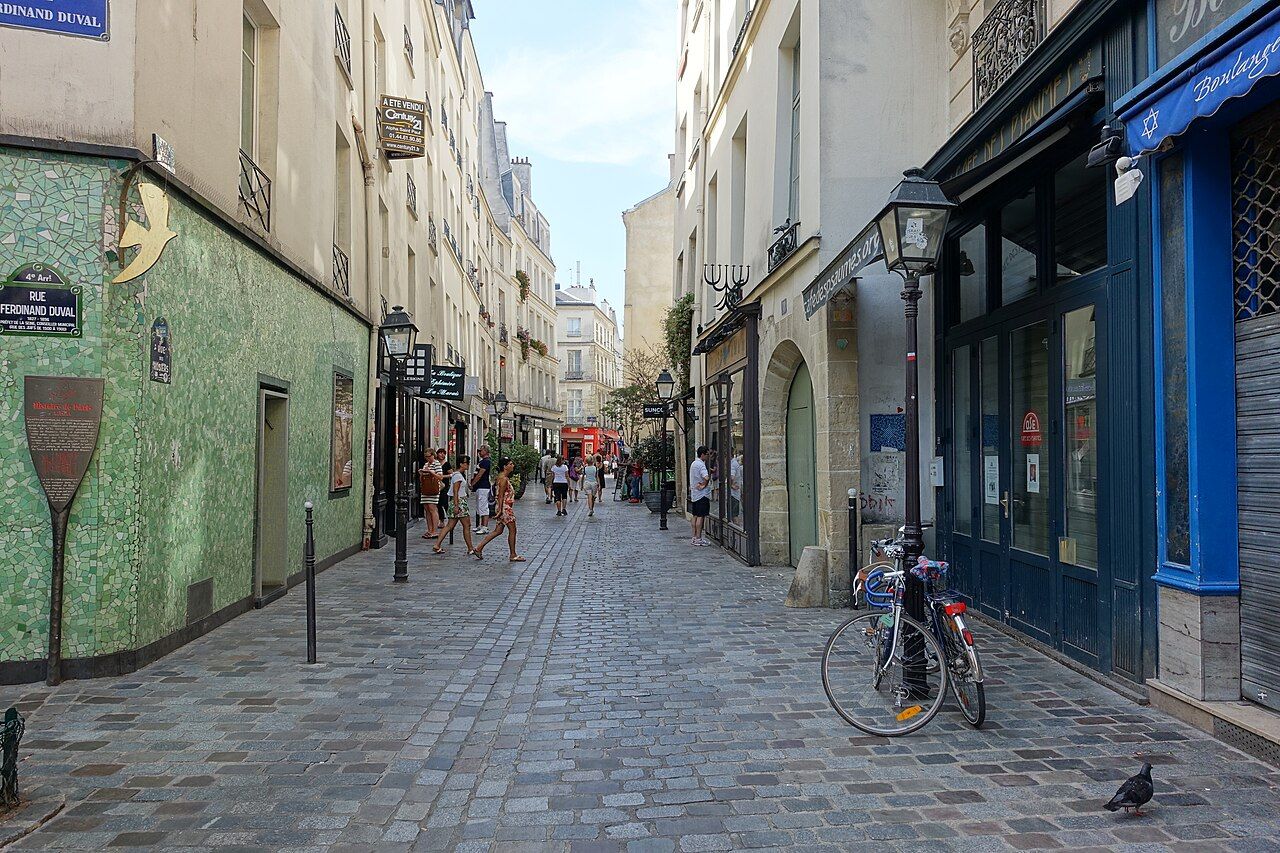
Three arrivals gave the Pletzl its changing voice. Pletzl is Yiddish for ‘little square’. Immigrants gave that name to streets around rue des Rosiers. The name suggests a place gathered tightly together. The streets carry more than one history.
What did morning inherit?
Jewish life in Paris reaches back to medieval times. Jews lived here until the kingdom expelled them in 1394. Charles VI ruled when that expulsion took place. The Pletzl’s name belongs to another chapter, much later.
During the 19th century, Jews from Alsace and Lorraine settled in the Marais. Their arrival came before the quarter became known for Yiddish-speaking immigrants. History moves through these streets in successive layers. One settlement does not erase another.
After pogroms began in the Russian Empire in 1881, many Jews came from Eastern Europe. They settled around rue des Rosiers, rue des Écouffes and rue Pavée. Three street names mark the shape of that movement. The quarter gathered newcomers into a small geography.
A name can hold a square that streets never had. The names of the streets carry their own histories, too. The story behind them continues in where the quarter's street names come from. Here, language and place meet in a name immigrants chose.
By 1914, several thousand Yiddish-speaking immigrants lived in the Pletzl. Their language made a shared presence audible. The number speaks plainly; language gives it texture. A neighbourhood can be counted and still resist becoming only a figure.
What gathered by midday?
Many residents worked in the garment, cap-making, leather and fur trades. Work shaped daily life across the quarter. The trades belong to its history, not simply its passing scenery. Cloth, caps, leather and fur name different kinds of labour.
Between the wars, Yiddish newspapers grew up alongside mutual-aid societies. Small prayer rooms also took root in the quarter. The list suggests more than one kind of gathering. News, help and prayer each made a place among these streets.
The Pletzl was not only a name for settlement. It held institutions formed around language, need and belief. The details are modest in scale: newspapers, societies, prayer rooms. Together, they describe a close-knit life without needing a grand monument.
The synagogue of rue des Tournelles opened in 1876. It is one of the largest synagogues in Paris. Its scale offers a different measure from small prayer rooms. The two forms of worship belong to the same quarter’s story.
Rue des Rosiers is closed to traffic for much of its length. That fact gives the street a particular shape in the mind. The name remains a point of reference for a wider neighbourhood. Its story reaches well beyond one street.
The quarter’s history also has a museum counterpart in the museum of Jewish art and history. The marker of a museum sits beside the everyday names of streets. One preserves and presents; the other keeps history close to ordinary speech.
Food carries another part of the story. North African arrivals brought Sephardi traditions into the Marais. The quarter’s culinary life holds Ashkenazi and Sephardi histories together. Their presence can be followed through Ashkenazi and Sephardi cooking on rue des Rosiers.
What remains by late afternoon?
During the German occupation, many Pletzl residents were arrested. The roundup of 16 and 17 July 1942 brought especially many arrests. The dates interrupt any easy account of continuity. A neighbourhood’s history includes what was taken from it.
That rupture belongs beside the earlier arrivals, not apart from them. Before the occupation, Yiddish newspapers and mutual-aid societies had grown. Afterward, the streets still carried a history shaped by migration and loss. No neat phrase can make those events equivalent.
After Algerian independence in 1962, Jews from North Africa settled in the Marais. They brought Sephardi traditions into streets already marked by earlier migrations. The quarter changed again, without losing the layers beneath. Another language of belonging entered the same small geography.
The sequence is not a tidy handover from one community to another. The facts describe arrivals, work, institutions, arrest and change. Each belongs to the story of these streets. Together they make the Pletzl larger than its name suggests.
Since the 1990s, many old family shops on rue des Rosiers have given way to fashion boutiques. That change is visible in the street’s own history. The old shops remain part of its account, even as the street changes around them. Rue des Rosiers holds past and present in the same name.
A name can hold a square that streets never had.
By late afternoon, the Pletzl reads as several histories, not one. Its name recalls immigrants; its streets carry different arrivals. The quarter’s story moves from medieval Paris through war and further migration. What else can a few streets hold, without closing?