Churches
Saint-Gervais: music and tragedy behind the façade
A Gothic church, the first classical façade of its kind in Paris, and the Couperin organists meet beneath a history marked by music and loss.
- Arrondissement
- 4e
- Métro
- Hôtel de Ville
- Period
- 1494-1621
1494: the present Gothic church began, though its story reaches farther back. The parish is among the Right Bank’s oldest. Saint-Gervais is dedicated to Gervasius and Protasius, two early Christian martyrs of Milan. That dedication sets a long memory beneath the church’s later history. Its story moves through devotion, architecture, music and catastrophe. Each layer remains close to the others.
How should the façade be read?
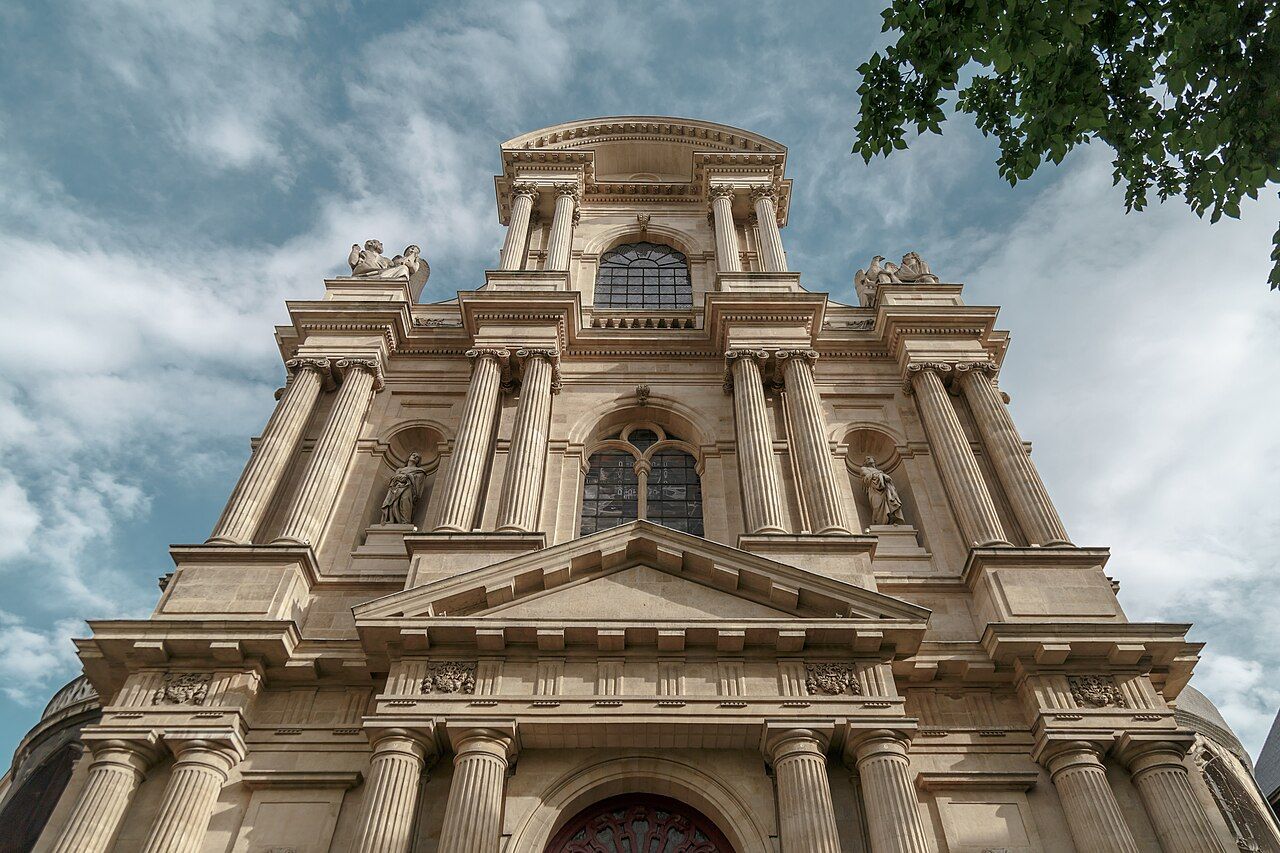
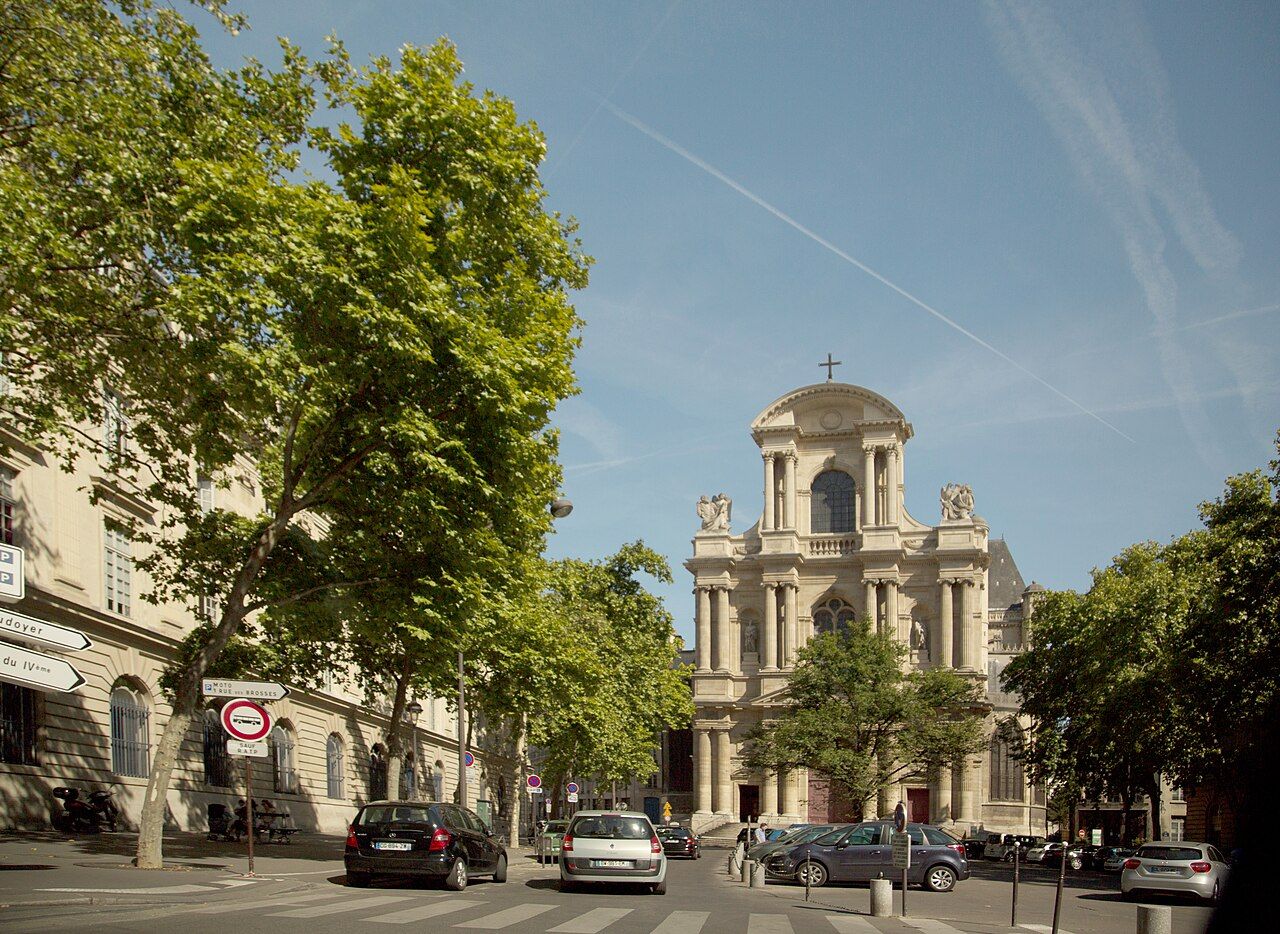
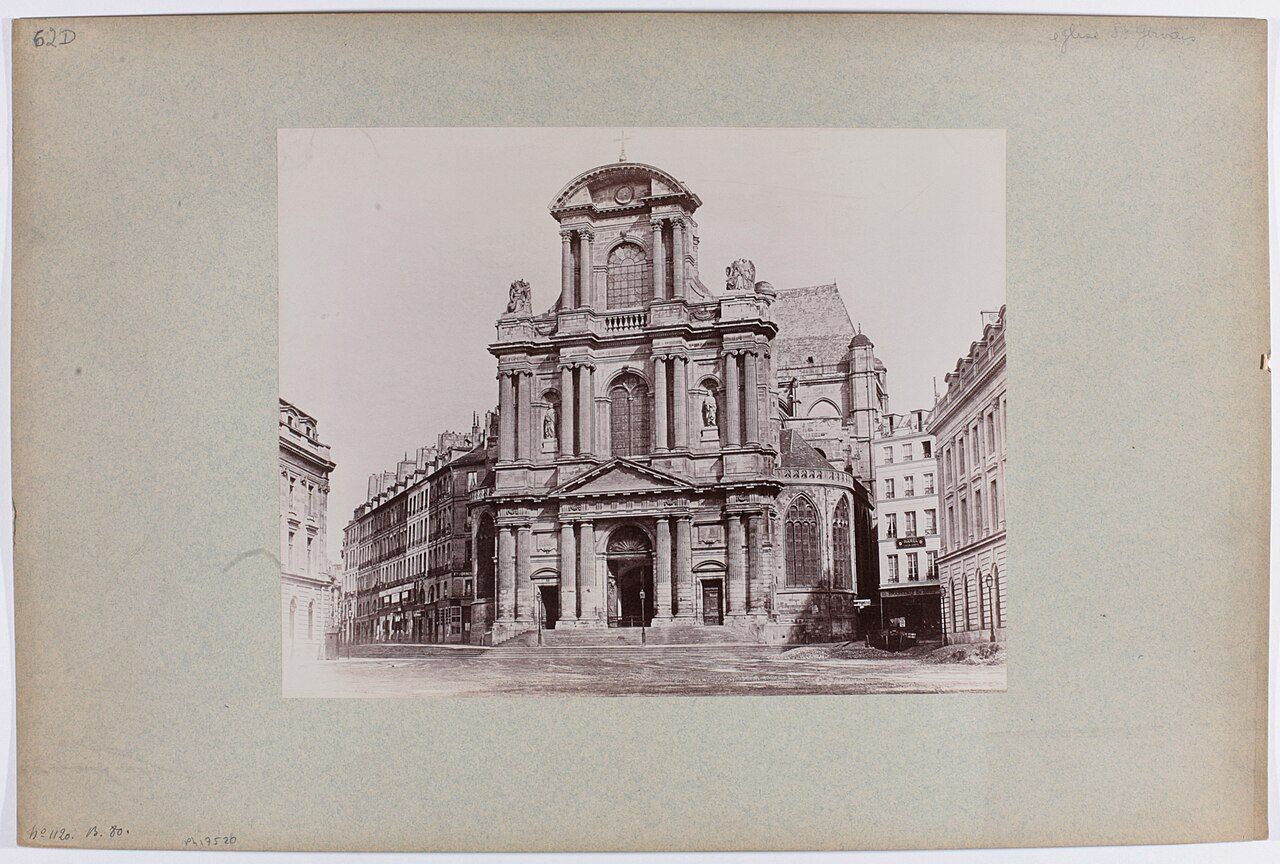
First, take in the façade as a stacked composition. Doric, Ionic and Corinthian orders rise one above another. Built between 1616 and 1621, it was the first façade of this kind in Paris. Its form announces a different architectural language, set against the church’s Gothic body. Three classical orders give the front a firm, deliberate cadence. The contrast is not a break from the church’s history. It is another chapter set plainly against the older stone.
Then hold its authorship lightly. The design is attributed to Salomon de Brosse or Clément Métezeau. The uncertainty belongs to the story, not a flaw in it. The façade remains a confident piece of work, its orders giving the entrance a measured rhythm. Its authorship stays open between two names. The visible arrangement, by contrast, is clear: order above order, composed across the front.
Move inward, and the Gothic church takes over. Begun in 1494, it was completed in the 17th century. The long span joins an early beginning to a later finish. Stone and shadow give the building a quieter register than its ordered front. The church does not resolve that difference. Gothic forms and classical composition remain together, each keeping its own voice.
Look toward the Lady Chapel, where the vault draws attention upward. Its flamboyant Gothic ribs gather around a large hanging keystone. The work was completed in 1517. The suspended centre makes the ceiling feel both intricate and unexpectedly direct. Above, the stone gathers into a single emphatic point. The chapel offers a close study in how one detail can hold the eye.
Where does the music gather?
Next, find the church’s musical thread in the organ. Parts of the instrument date from the 17th century. It is not simply an object behind the church’s history. Its continuing presence gives that history a sound-shaped centre, even when the room is quiet. The surviving parts bind the instrument to an earlier century. They make music here feel less like an added theme than part of the building’s own account.
The Couperin family held the post of organist here from 1653 to 1826. François Couperin, the best known of the family, became organist in 1685. Those dates make music part of the church’s long occupation, rather than a passing chapter. The family’s name still seems to gather around the instrument. Across those years, the post links generations to one place. The church’s musical history has a particular address, not merely a famous name.
Then lower the gaze to the carved choir stalls. Their 16th-century misericords show trades and scenes from daily life. Small carvings bring ordinary work into a sacred interior. Their detail offers another kind of music: not heard, but held in wood and patiently shaped. The scenes widen the church’s human scale. Beside the organ and its family history, familiar work appears in carved form.
What does the church remember?
On Good Friday, 29 March 1918, a shell from a German long-range gun struck the church during a service. The impact killed 91 people. That sentence changes the scale of the building’s history. Music, worship and sudden violence meet here without becoming the same story. A service was under way when the shell hit. The date belongs to the church’s history as sharply as its stones and organ do. The number gives the loss a terrible precision.
Here, music and tragedy remain close without resolving each other.
Here, music and tragedy remain close without resolving each other.
How does the story continue outside?
Since 1975, the church has been served by the Monastic Fraternities of Jerusalem. The present tense matters here: Saint-Gervais is not only an archive of earlier lives. Its old forms continue to hold a living religious presence, with the past close but not sealed away. The church’s history therefore has no single final register. Its inherited music, architecture and memory remain beside ongoing religious life.
Outside, an elm tree on the square recalls the elm under which justice and debts were once settled. The tree gives that memory a plain, rooted shape. The church’s history reaches into public life, where obligation and judgement once gathered beneath its branches. The square holds that older association in the tree’s image. A living form stands for an earlier place of settlement and decision.
The church’s surroundings keep other histories within reach. Its story brushes against the old square of strikes and executions. Beyond the apse, the timber-framed houses behind the apse offer another edge to the same urban past. And the city’s wider pattern extends toward an hour on foot to the royal square.
Saint-Gervais holds several kinds of time together: Gothic work, ordered stone, organ music, carved daily life, and grief. None cancels the others. The façade sets one language against another. The organ carries a family’s long association, while the shell marks a moment of devastating loss. Outside, the elm recalls older dealings with justice and debt. The church remains difficult to reduce to a single story. What can a church keep sounding after silence enters?