Edges & walks
The Arsenal library, from cannon to books
A royal site for cannon and powder became a library, a Romantic salon, and a home for French literature and theatre history.
- Arrondissement
- 4e
- Métro
- Sully-Morland
- Period
- 1599-1934
“Casting cannon and storing powder beside the Seine.”
How does a gunpowder site become a reading room?
Begin with the Arsenal as a working royal site. From the 16th century, it stood beside the Seine. Its work was casting cannon and storing powder. That purpose sets the story’s first measure: force, supply, river. The Arsenal does not begin as a reading room. It begins as a place for weapons and powder.
Next, place Sully inside that military history. He lived at the Arsenal as Grand Master of the Artillery from 1599. Painted ceilings and panelling from his apartments survive in the building. They keep his residence present within the later library. The contrast with the duke's town house is useful: here, Sully’s story begins amid artillery.
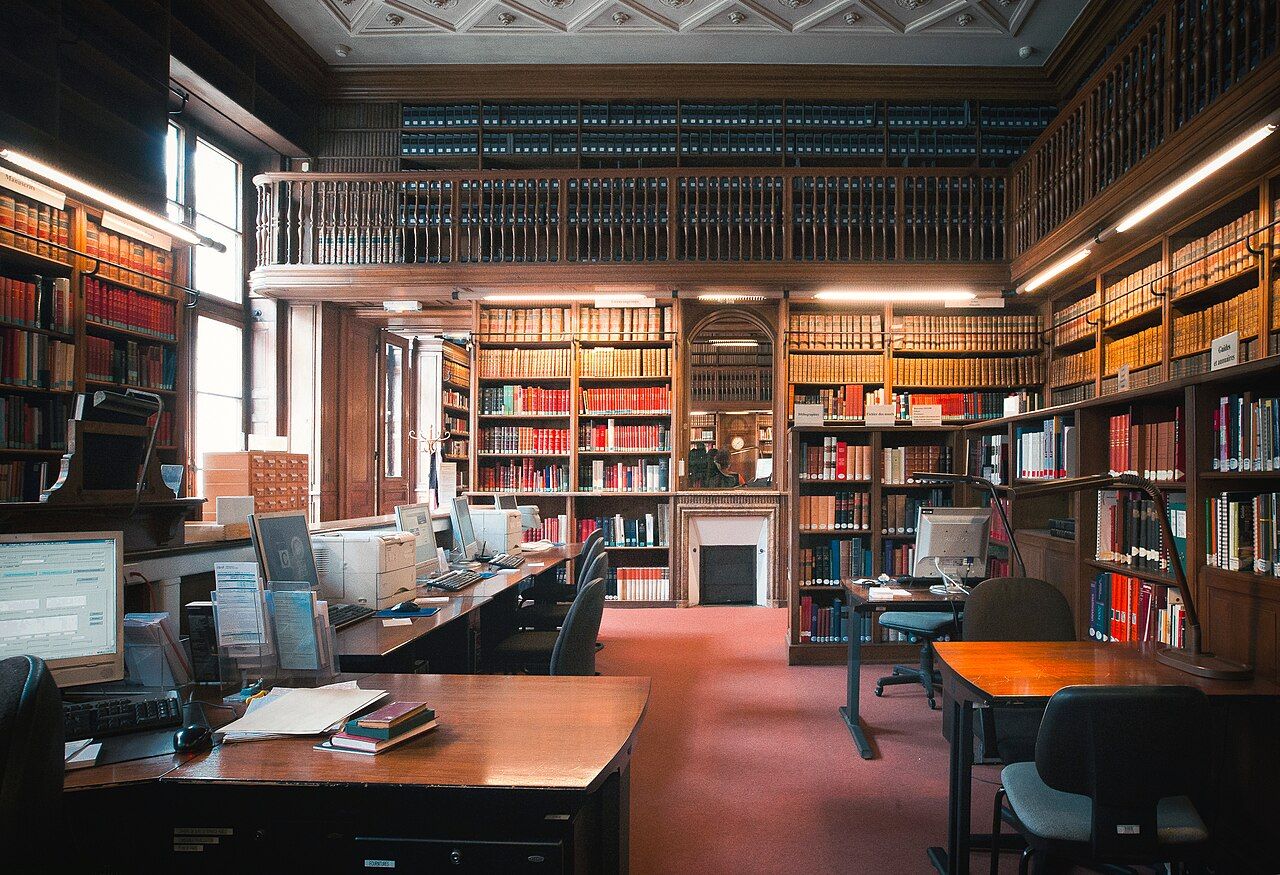
Then follow the change in purpose. The Marquis de Paulmy began assembling a great library at the Arsenal from 1757. The collection grew within a place made for casting cannon and storing powder. That shift is the story’s hinge. The old royal site gained a new centre of gravity: books, assembled over time.
The building’s earlier life does not disappear. The surviving ceilings and panelling keep its domestic history in view. A library arrives, but the Arsenal’s past remains part of the room.
Move forward to the library’s change of ownership. The Count of Artois, brother of Louis XVI, bought Paulmy’s library in 1785. The Arsenal library opened to the public in 1797. These dates mark a passage from private assembling to public reading. The powder store has not become a library in one gesture. Its new purpose takes shape through ownership, collection, and access.
Now read the Arsenal as a place of company. Charles Nodier became librarian in 1824 and held a Romantic salon there. Victor Hugo, Alfred de Musset, and Alexandre Dumas attended. A library here was more than a store of books. It also became a setting for literary gathering. That change feels especially striking beside the site’s first work: cannon and powder.
Include the archives in the sequence. The library holds the archives of the Bastille prison, rescued after 1789. The documents bring another history into the Arsenal’s rooms. The link is not simply military purpose turning literary. The prison’s records also found a home within this changing institution. The Arsenal gathers histories of power, confinement, and writing.
Here, the story reaches beyond the building itself: the prison whose archives it keeps. The phrase joins place and collection without making them identical.
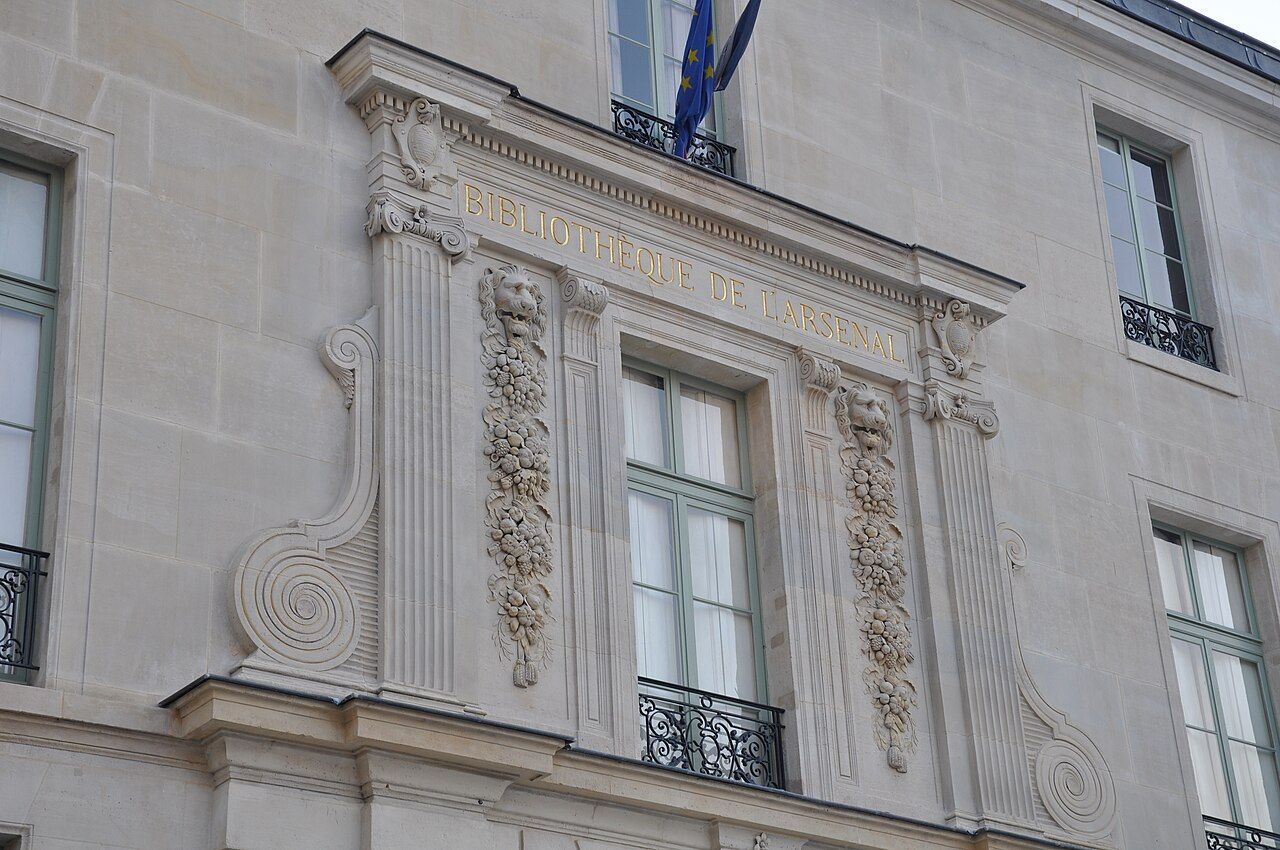
Finish with the library’s present institutional place. Since 1934, the Arsenal library has been part of the Bibliothèque nationale de France. It is particularly rich in French literature and the history of the theatre. That collection gives the former royal site a clear later life. Its sequence runs from powder and cannon to books, archives, and literary company.
The change is not a neat erasure. Sully’s painted ceilings and panelling survive, while the library carries its own history. What does a reading room keep from a place built for powder?