Edges & walks
How does the southern Marais unfold on foot?
From Saint-Gervais to Place des Vosges, a two-kilometre walk follows the quarter’s oldest half, past a medieval wall, courtyards and a royal square.
- Arrondissement
- 4e
- Métro
- Hôtel de Ville to Chemin Vert
- Period
- 13th-17th century
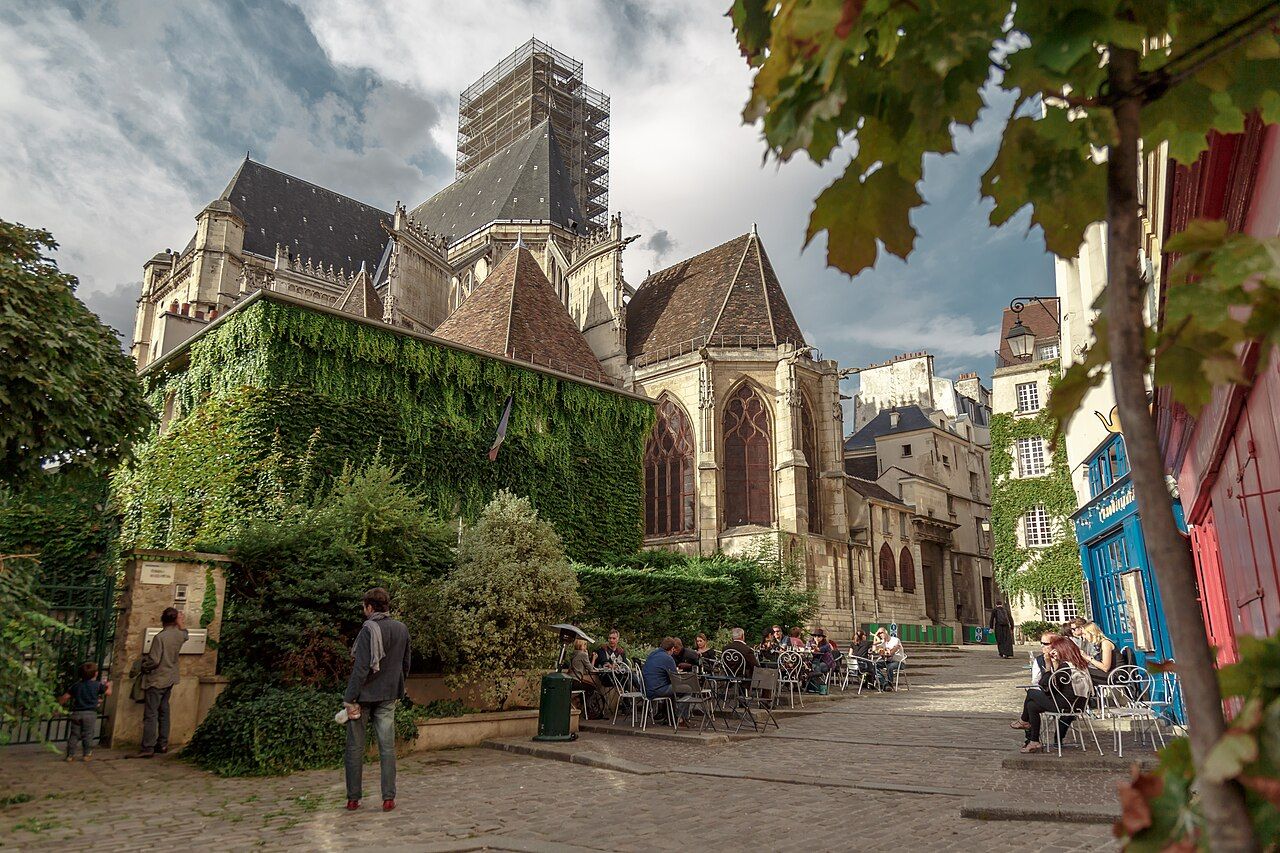
“A walk from the Hôtel de Ville to Place des Vosges through the southern Marais covers about 2 kilometres.”
Morning begins behind the Hôtel de Ville, at Saint-Gervais. The walk crosses the southern Marais, following its oldest half. The distance is short; the layers make it feel longer.
The walk crosses the southern Marais, following its oldest half.
Rue des Barres slopes down towards the Seine. From there, the Gothic apse of Saint-Gervais comes into view. The street draws the eye downhill, then holds it briefly. Stone, slope and church make a compact opening scene.
Saint-Gervais, the church of the Couperins, starts the route. Its apse stays in mind as the walk turns east. The change is modest, but the streets keep changing their pace. The quarter unfolds without asking for grand gestures.
Rue de l’Hôtel-de-Ville leads east past the Mémorial de la Shoah. The walk keeps moving, with the street carrying its direction. Here, the route’s history feels close to the ordinary act of walking. Each turn brings another layer into the same short stretch.
At the corner of rue du Figuier and rue de l’Hôtel-de-Ville stands the Hôtel de Sens. The building marks a pause without stopping the route. Its corner position gathers the two streets together. The walk passes beside it, then continues northward.
The Hôtel de Sens makes an especially clear hinge. Behind it, the route turns towards the medieval city wall. Rue des Jardins-Saint-Paul runs north beside the old boundary. The wall changes the walk’s texture, bringing a longer history close.
a surviving stretch of the 1190s wall runs alongside the street. Its presence gives the route a firm, quiet edge. The walk follows that edge rather than rushing past it. A narrow passage of time sits inside this city walk.
Passages from rue des Jardins-Saint-Paul lead into the courtyards of the Village Saint-Paul. The route slips from street into courtyard, then back again. That small change matters: the walk becomes less linear for a moment. Footsteps soften, and the surrounding walls close in.
The courtyards offer a pause within the route’s steady northward movement. Their entrances open from the same street beside the wall. The walk can wander through them, then find its way onward. The southern Marais keeps alternating between passage and enclosure.
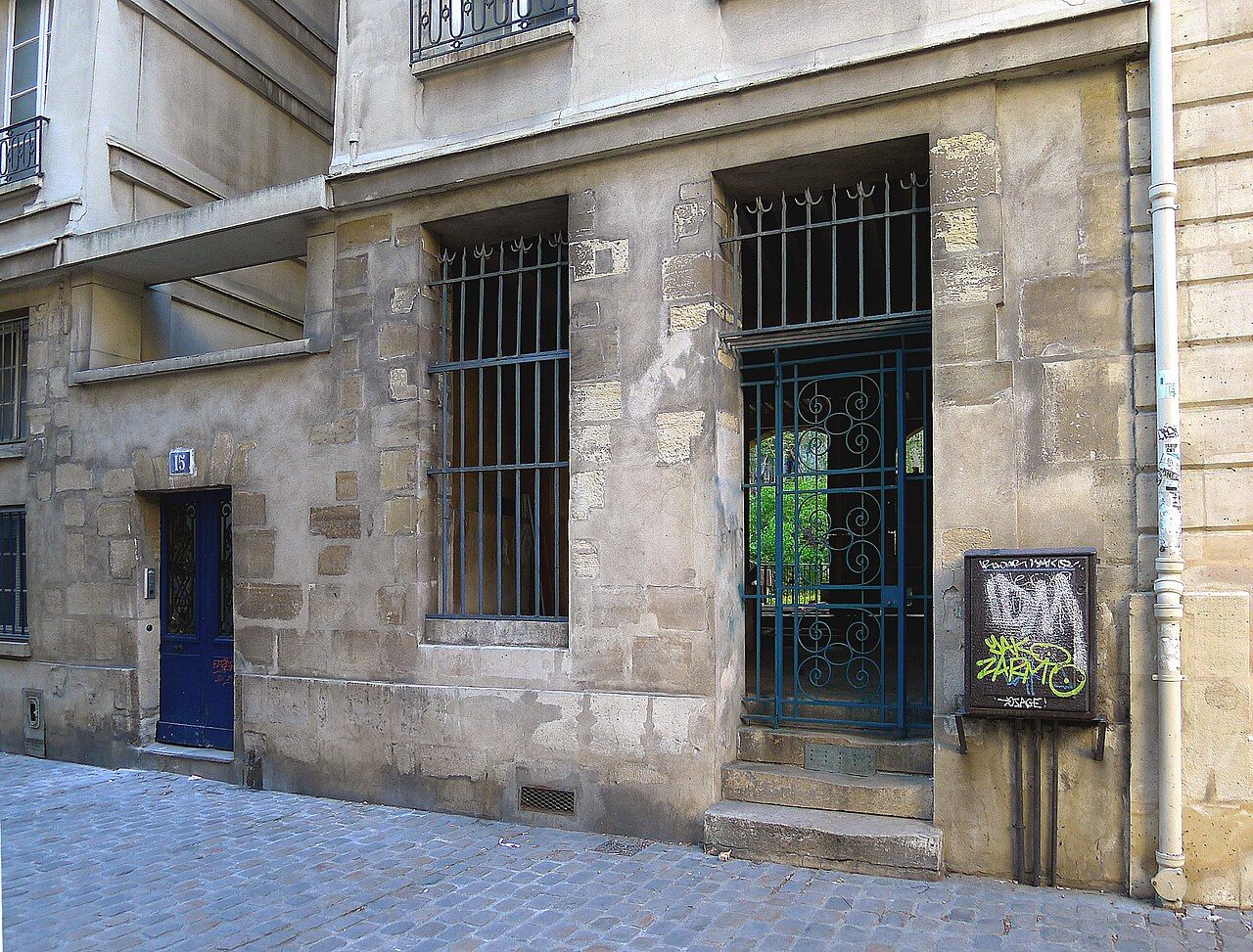
By midday, Saint-Paul station sits near the middle of the route. It is on Métro line 1, run by the RATP. The line was the first of the Paris Métro. It opened on 19 July 1900, and the station marks the route’s midpoint.
The station brings another kind of history into the walk. Its place in the route is practical, but not only practical. The medieval wall lies behind; the Métro belongs to another layer. Both occupy the same short passage through the quarter.
From here, the route crosses rue Saint-Antoine. On the other side stands the domed church of Saint-Paul-Saint-Louis. Its dome becomes the next clear marker, replacing the wall’s long line. The route changes character again, street crossing opening onto church.
The walk does not need a long detour to make that shift felt. Rue Saint-Antoine is crossed, and the church stands beyond it. The dome gives the eye somewhere to settle. The route keeps its measured pace, moving towards the square.
From rue Saint-Antoine, the courtyard and garden of the Hôtel de Sully lead through a passage. That passage enters Place des Vosges, making the approach feel gathered. Street, courtyard and garden form a sequence rather than separate destinations. The walk arrives by moving through them.
The route is flat, and a slow walk with stops takes about an hour. That leaves room for the small transitions to matter. The morning’s first slope gives way to wall, courtyard and passage. By evening, the same distance feels shaped by many different thresholds.
Place des Vosges gathers the walk beneath its arcades. The square holds the route’s ending without making the earlier streets disappear. Saint-Gervais, the Hôtel de Sens and the wall remain close in memory. The final passage leaves the whole stretch joined together.
the end of the route under the arcades arrives gently after the Hôtel de Sully. The walk has crossed only about two kilometres. Yet its changes of street and enclosure keep unfolding. The square offers an ending, though the route’s layers remain open.
At evening, the arcades hold the last view of the day. Behind them, the route runs back through streets and courtyards. Its oldest half has appeared in one connected stretch. What else would the same walk reveal another day?