Edges & walks
What does the northern Marais keep?
A three-kilometre passage through old stone, quiet streets, a garden pond and the market, ending at the Hôtel Salé.
- Arrondissement
- 3e
- Métro
- Arts et Métiers to Saint-Sébastien-Froissart
- Period
- 1407-17th century
What begins at the priory?
About three kilometres link Arts et Métiers and the Picasso museum. The northern Marais seems quieter, older, and less announced.
The walk begins beside the priory, where stone sets a measured pace. the aircraft in the priory church shifts the route into a stranger register.
Old forms and unexpected ones share the same close streets. Nothing here needs a grand entrance to hold attention.
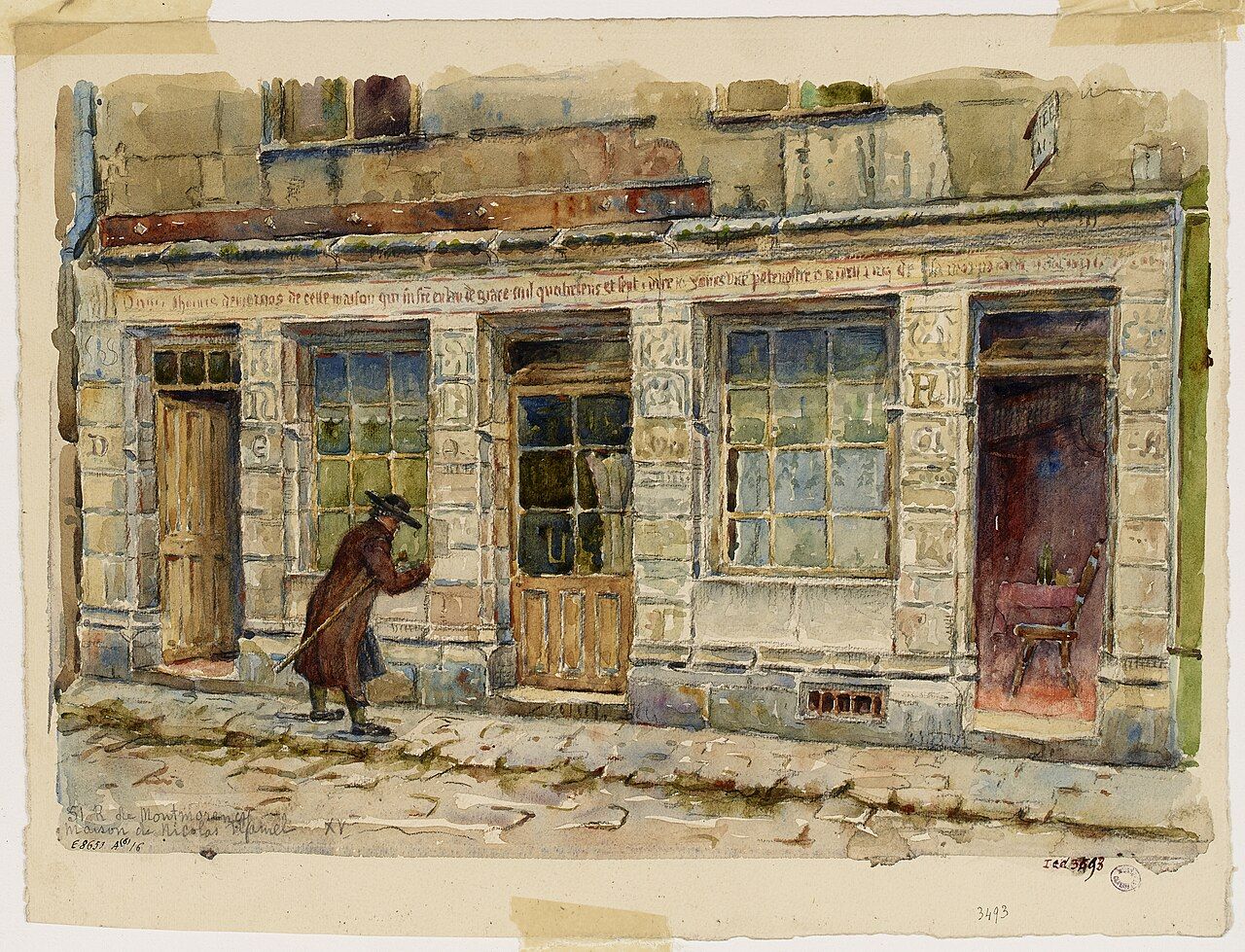
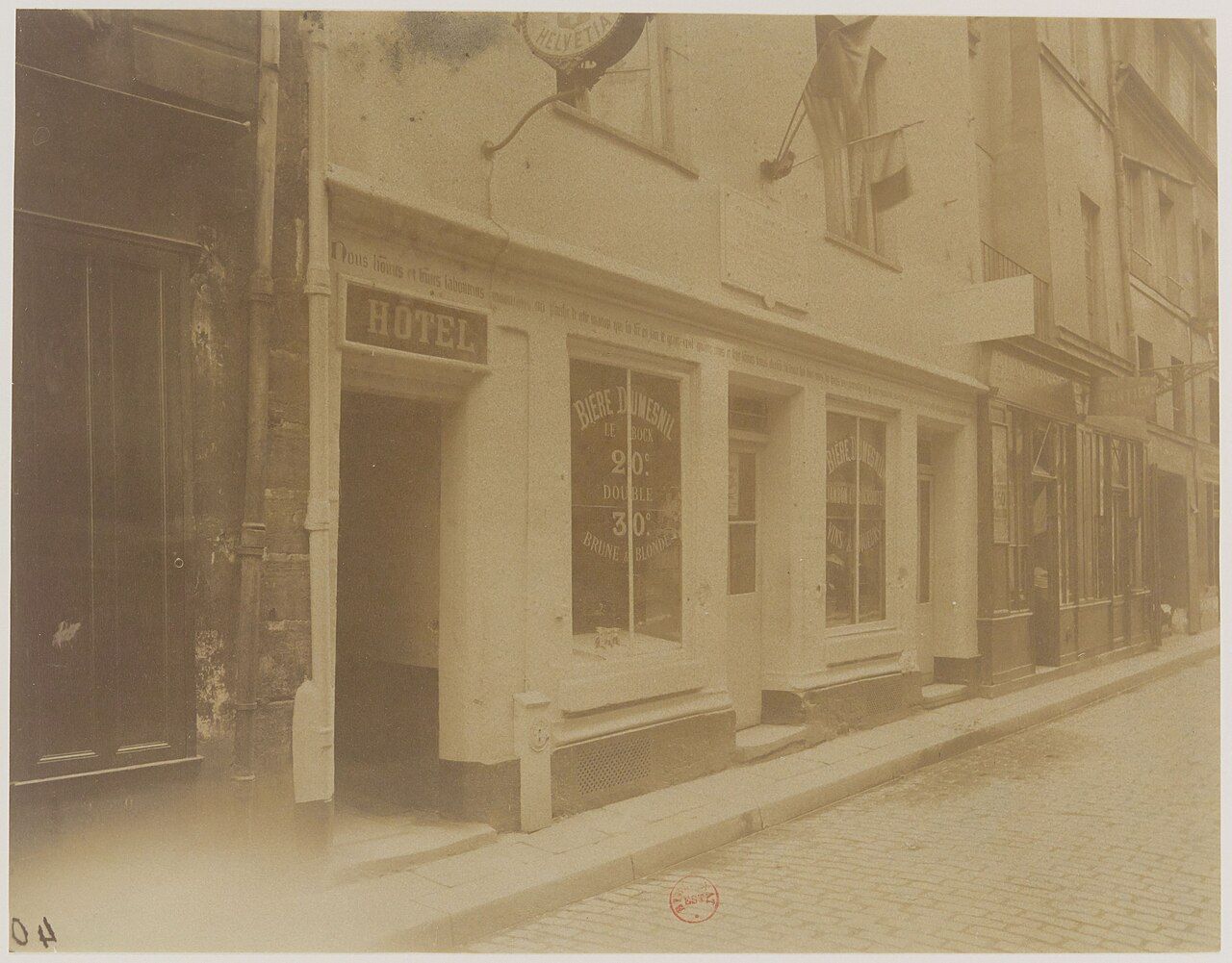
The morning moves into rue de Montmorency, toward number 51. The house there was built in 1407 for Nicolas Flamel.
It is the oldest dated stone house in Paris. Its age sits plainly in the street, without any show of distance.
Carved inscriptions cross the façade, asking lodgers to pray for the dead. The words make the house feel less like a monument.
They bring the past down to the scale of a doorway. Stone carries its message quietly, while the street keeps moving.
Nearby, 3 rue Volta complicates the idea of oldness. Its half-timbered front was long thought medieval, but dates to 1644.
The façade can suggest one age, while the record gives another. Here, the northern Marais resists easy readings of its own past.
Rue au Maire runs between rue Volta and rue Saint-Martin. It passes through the old Chinese quarter of Paris.
The street’s name and its changing façades invite a slower look. Even a short stretch can hold more than one history.
The northern streets keep many small houses from the 17th century. Craftsmen and merchants built them, close to daily work.
Their scale makes the neighbourhood feel lived-in, not staged. Small doors and narrow façades quietly outlast larger statements.
By late morning, the route opens onto Square du Temple. The change is simple: more sky, more green, more room.
What gathers around the Temple?
Old trees stand around a pond and a cascade of rocks. Water sounds out a softer rhythm beneath the leaves.
The 3rd arrondissement town hall overlooks the square. Its presence frames the garden without making it feel formal.
Across rue Perrée, the iron market hall of the Carreau du Temple faces the square. Metal gives the view a harder edge.
Garden shade and ironwork sit opposite each other, street-width apart. The contrast gives this pause its own kind of balance.
The vanished tower of the Temple belongs to another layer. the vanished tower of the Temple leaves absence as part of the neighbourhood’s shape.
The square holds what remains visible: trees, water, rock, and open air. Around it, the past is not always so easy to see.
After the garden, rue de Bretagne leads east. The gate of the Marché des Enfants Rouges marks its passage.
There is no need to hurry past the threshold. The market’s name alone gathers the street into a different mood.
The route continues south along rue Charlot from rue de Bretagne. These are among the quietest streets of the Haut-Marais.
The quiet feels particular, not empty. Footsteps and distant street sounds have room to settle between façades.
The north keeps its age in small, stubborn houses. Their modest scale is part of the walk’s best view.
The north keeps its age in small, stubborn houses.
Rings of old stone and quieter lanes make a gentle counterpoint. The neighbourhood seems older than its unassuming streets first suggest.
Its histories do not line up neatly, nor should they. A timbered façade can mislead; an inscription can speak plainly.
The day continues south, leaving the square and market behind. Rue Charlot keeps the walk close to its smaller details.
Where does the walk end?
Rue de Turenne passes Saint-Denys-du-Saint-Sacrement. a temple-fronted church of the 1830s brings a distinct façade into the route.
The church meets the street with a composed, formal face. Its shape changes the pace again, from garden quiet to stone geometry.
By afternoon, the walk has crossed several kinds of age. Some are carved into stone; others depend on close attention.
The final stretch reaches rue de Thorigny and the Hôtel Salé. The building is home to the Picasso museum.
After narrow houses and street corners, the ending feels deliberate. The walk arrives at a museum without losing its street-level scale.
What stays is not one single portrait of the neighbourhood. It is a sequence of small shifts, each held close.
The priory, the old houses, the square, and the market remain distinct. Together, they make the northern Marais feel quietly layered.
Evening draws the streets back into their quieter register. Stone, iron, water, and worn façades settle into the same view.
Which part of the walk keeps its hold after the day ends?