Hôtels particuliers
Hôtel Amelot de Bisseuil: Figaro and the secret arms trade
A carved wooden door fronts a mansion with two names, Beaumarchais’s play, and secret shipments bound for American revolutionaries.
- Arrondissement
- 4e
- Métro
- Saint-Paul
- Period
- 1657-1660
How does the house reveal its story?
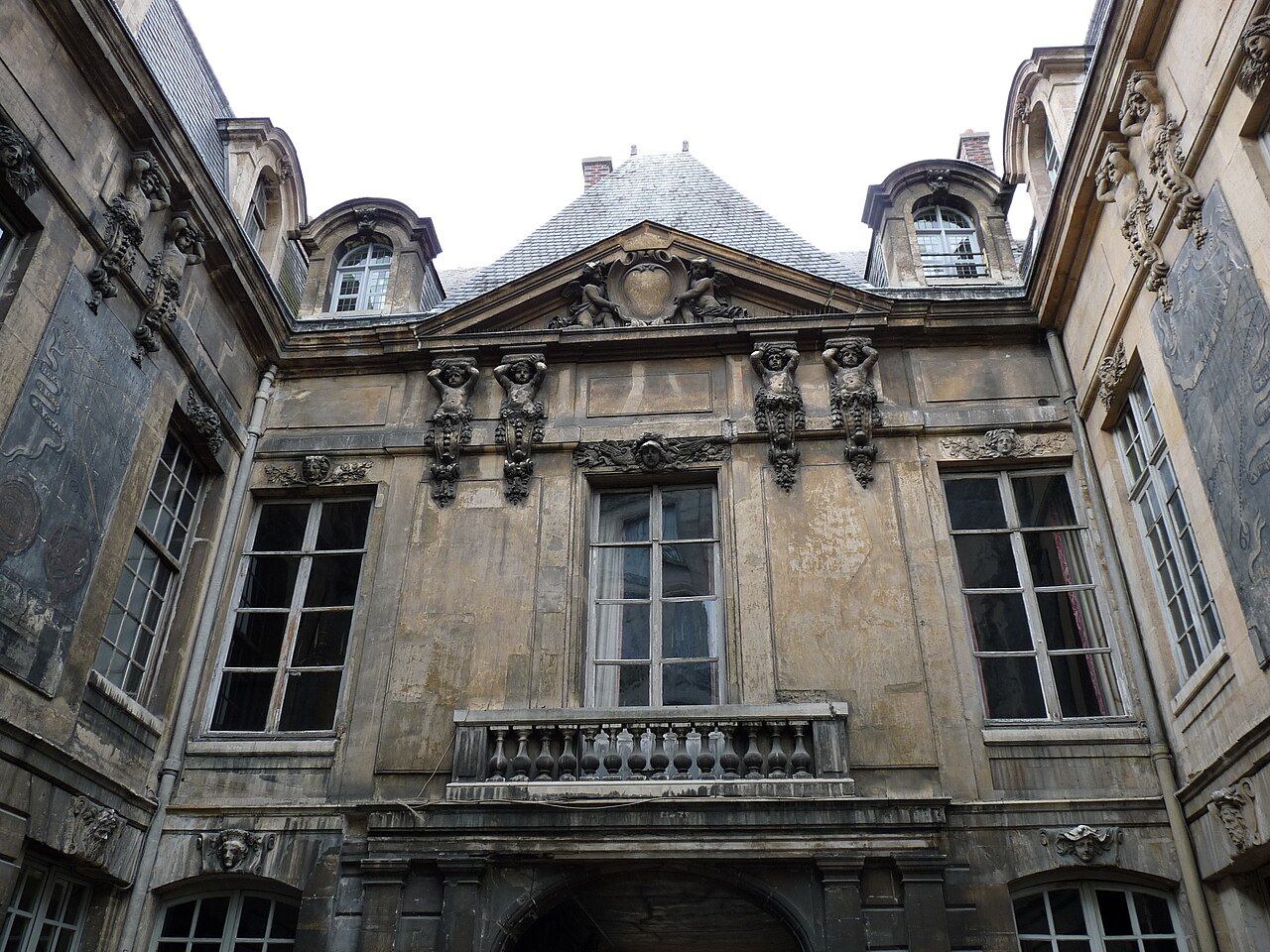
1657–1660 marks the building interval for this mansion. Jean-Baptiste Amelot de Bisseuil commissioned it for himself. At 47 rue Vieille-du-Temple, the house stands on the long street of the Templars' road. Pierre Cottard was its architect, a spare fact beside the ornament. Its monumental carved wooden carriage door closes the street front. The threshold gives the whole account a hard beginning.
First, hold the house’s two names together. It is also known as the Hôtel des Ambassadeurs de Hollande. The Hôtel des Ambassadeurs de Hollande name gives the mansion another public identity. One name belongs to its patron; another marks its nickname. Both gather around the same carved entrance. The door is monumental, carved, and made of wood. Its weight turns arrival into a pause.
The house sits behind a typical carriage gate, its street front closed by carved wood. The doorway holds attention before the story opens. No flourish is needed to make its scale felt.
Next, place Beaumarchais inside the house. He lived there from 1776. His stay joined writing to a secret trade. He wrote The Marriage of Figaro while living there. The play was first performed in 1784. Writing and performance mark separate chapters of the same work. The house keeps both parts close in the telling.
Then follow the less public thread. From the house, Beaumarchais organized secret shipments of arms and supplies. Their destination was the American revolutionaries. The mansion’s account now shifts from rooms to movement. Arms and supplies passed through a history attached to this address. A carved entrance fronts that quieter, more urgent story. The contrast gives the house its sharpest edge.
Finally, return to the door and its present standing. The house is a classified historic monument. It remains in private hands. The street front still closes behind monumental carved wood. The Hôtel des Ambassadeurs de Hollande name, the play, and the secret shipments converge here. The doorway makes a small closing scene: carved wood facing the street, with the story held behind it.