Museums
Musée Carnavalet, Paris inside the Marais
Two joined mansions hold the city’s history, from Neolithic canoes to Proust’s bedroom, with the Revolution and centuries of Parisian life between them.
- Arrondissement
- 3e
- Métro
- Saint-Paul
- Period
- 1548 to today
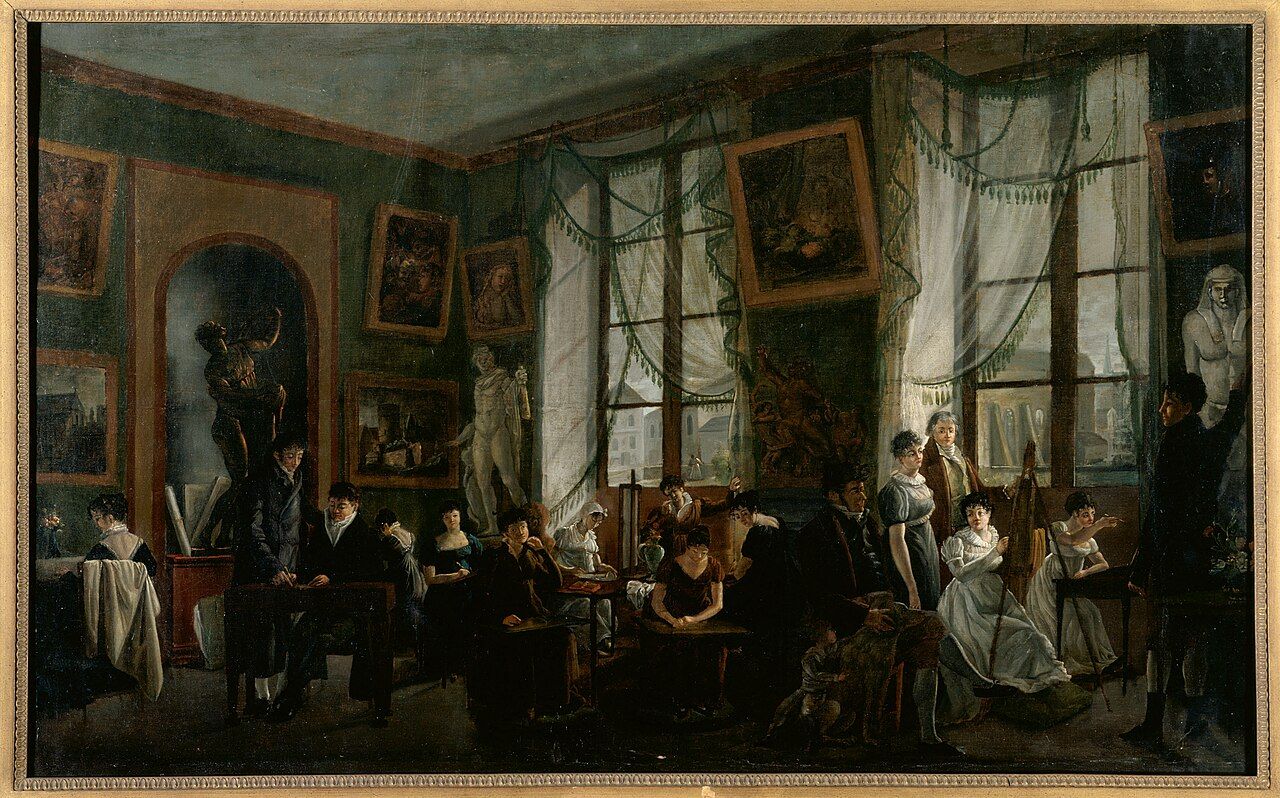
“the museum of the history of Paris”
What does morning reveal?
The Musée Carnavalet begins with a house, then opens outward. Its subject is a city; its first frame is architectural. The museum opened in 1880 inside the Hôtel Carnavalet. That house began in 1548, among Paris’s oldest Renaissance houses. Its stones hold the opening note, before the collections begin. Even the address seems to contain a small argument: a mansion made for private life now gathers a city’s memory.
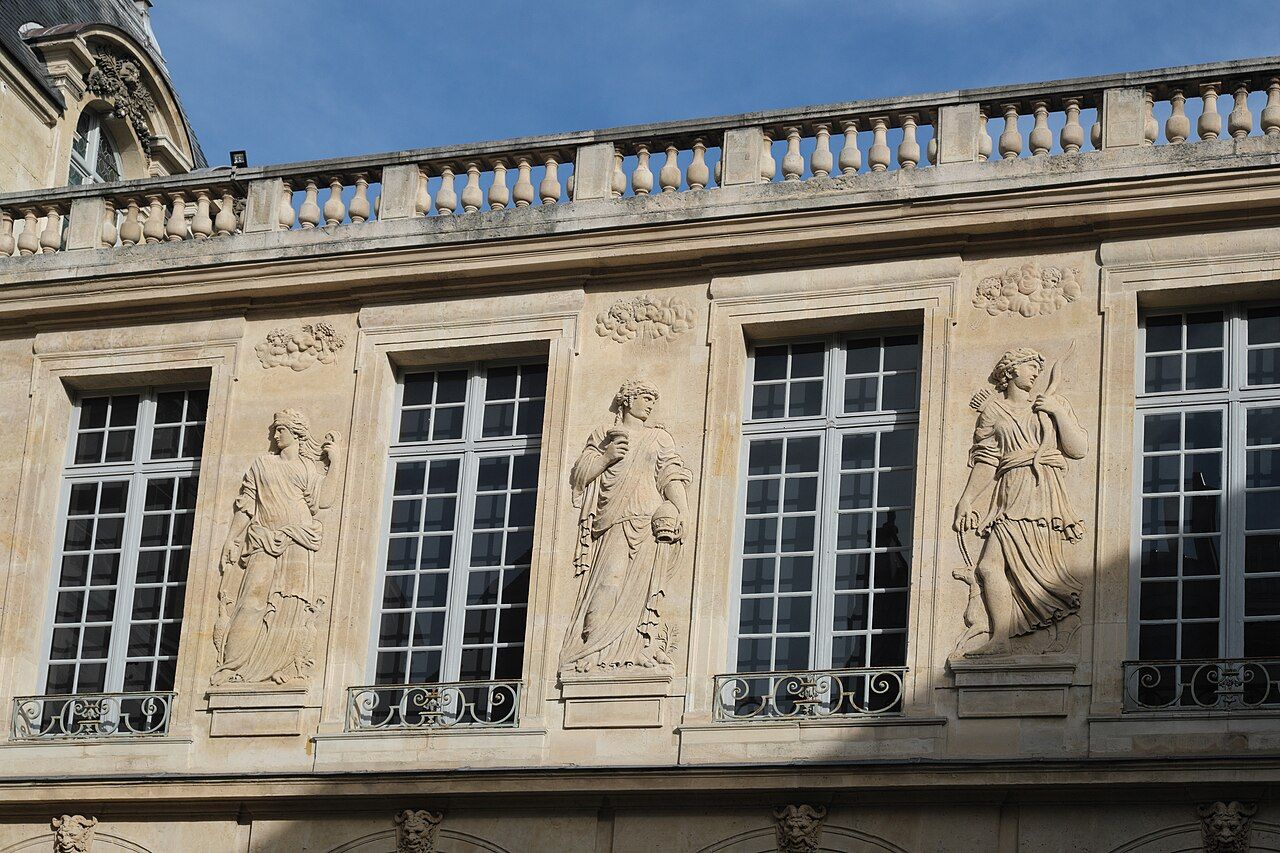
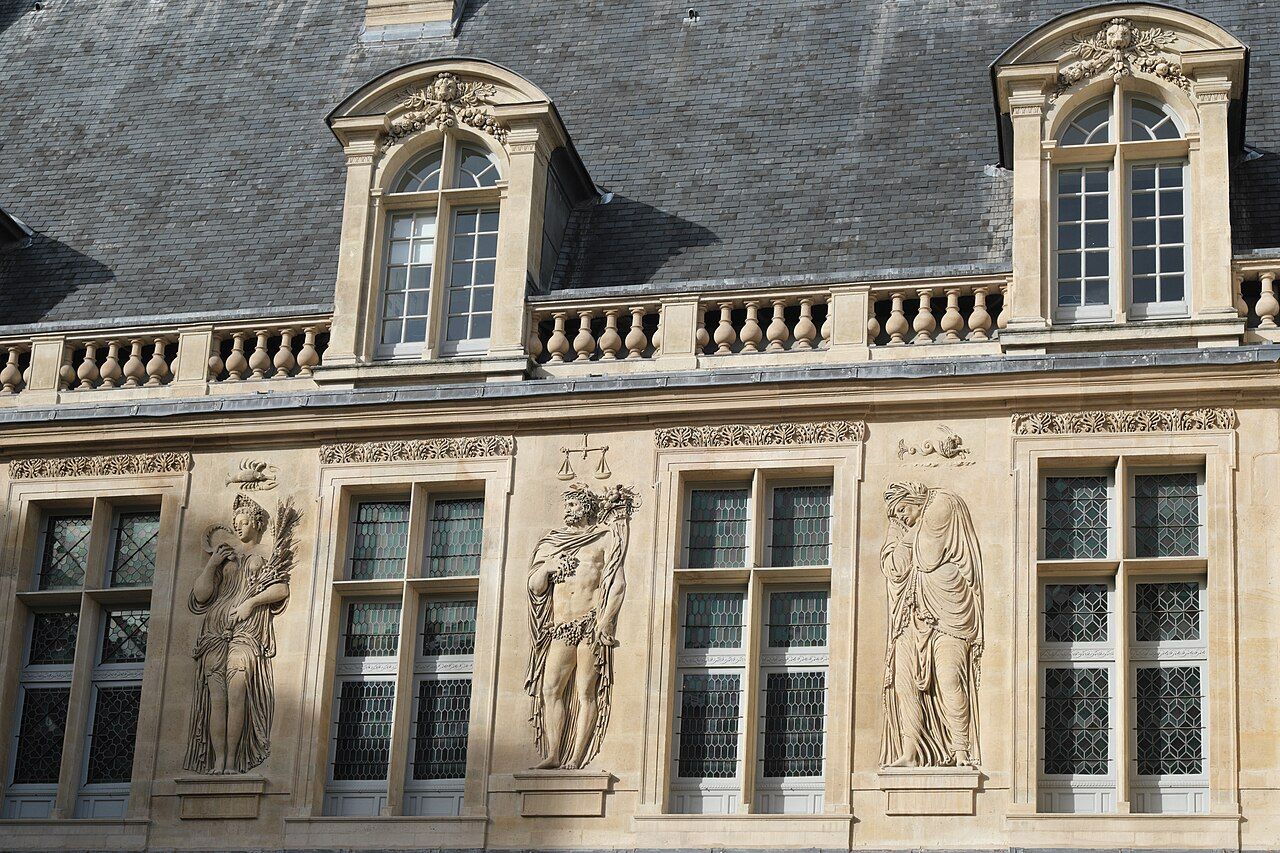
The main courtyard gives that argument a composed shape. Reliefs of the four seasons are attributed to the workshop of Jean Goujon. Their carved surfaces lend the courtyard a quiet, measured presence. The seasons make time visible without explaining it. Here, the museum’s history feels built into the walls. The city does not arrive as a map alone; it comes through objects, rooms, and stone.
François Mansart remodelled the Hôtel Carnavalet around 1660. Later, Madame de Sévigné rented the house from 1677 until her death in 1696. She wrote many of her letters there. The rooms therefore carry more than a sequence of dates. They hold a change of use, and a life spent writing within these walls. The mansion is not merely a container for Parisian history. It belongs to that history itself.
That doubleness suits a museum devoted to the city. The Hôtel Carnavalet stands as an old Parisian house, while its collections reach beyond the private scale. The courtyard’s carved seasons offer a pause between those ways of looking. A visitor can read the building as an object, then turn toward the larger story gathered inside. The effect is less like entering a timeline than entering a conversation between rooms and city.
The Marais also keeps the historical library on rue Pavée in its architectural conversation. Here, the neighbouring Hôtel Le Peletier de Saint-Fargeau widened the museum’s setting. The museum expanded into that mansion in 1989. Two houses now hold the history of Paris together. Their joined presence gives the city an intimate scale, without making its history feel small.
What begins at midday?
The collections start with Neolithic dugout canoes found at Bercy in the 1990s. Their presence resets the sense of scale. Paris begins here before the familiar city, before its streets become a subject of memory. The canoes are simple in form, but their long passage into a history museum feels striking. A city’s story can start with something made to move across water.
That beginning gives the museum’s later rooms a wider horizon. The objects do not need to stand for every age at once. Each can hold a piece of the city’s changing life. The movement from canoes to carved stone, furniture, and reconstructed interiors makes history tangible. It also keeps the story close to human hands: shaping, furnishing, writing, and remembering.
A reconstructed jeweller’s shop interior designed by Alphonse Mucha in 1901 brings another kind of detail. The reconstruction preserves a designed interior inside the larger account of Paris. Its purpose here is not simply decoration. It shows how a room, too, can carry history. The city’s past is gathered through interiors as well as objects, and this shop gives that idea a vivid form.
Here, Paris becomes a collection without becoming small. That is the museum’s useful tension. The city’s long history is held in rooms, but the rooms do not reduce it to a tidy summary. They let a carved stone sit beside a remembered interior, and a personal object beside public upheaval. The scale shifts; the subject remains Paris.
The Revolution rooms make that change especially clear. Their model of the Bastille is carved from one of the fortress’s own stones. The object carries a remarkable closeness to the event it represents. It is a model, but also part of the material it depicts. The Revolution comes through as an image and as stone, held together in one small form.
The model points toward the fortress on the eastern edge, while remaining stubbornly material. Paris’s history here is neither distant nor abstract. A fragment can stand for a larger structure, without pretending to replace it. The Revolution rooms give that distinction weight. Their model makes the city’s past feel touchable, then leaves the mind with the larger fortress beyond it.
What remains in late afternoon?
Marcel Proust’s bed and bedroom furniture appear in a reconstruction of his room. The scene shifts from civic upheaval to private space. Furniture gives the room its shape; reconstruction gives absence a form. The museum places a bedroom within the history of Paris, not outside it. A city is also made from the rooms where people slept, wrote, and stayed.
The room’s quiet scale makes a useful counterpoint to the model of the Bastille. One object compresses a fortress; another rebuilds a private interior. Both turn fragments into ways of imagining what cannot be wholly present. The museum’s reach depends on these shifts. Its story moves between the broad city and the particular room, never settling entirely on either.
The Hôtel Carnavalet began in 1548, and the museum opened there in 1880. Expansion came in 1989, into the neighbouring Hôtel Le Peletier de Saint-Fargeau. After a renovation of about four years, the museum reopened in 2021. Those dates give the houses another history: buildings become a museum, then grow, then reopen. The Paris within them keeps changing shape.
Exhibitions and opening hours are posted on carnavalet.paris.fr. The museum’s permanent collections hold the longer view, from the Neolithic canoes to the reconstructed bedroom. Between those points, the city appears through carved seasons, letters, a designed shop, and revolutionary stone. Two joined mansions do not contain all of Paris. They offer something quieter: a way to feel its many scales meeting indoors.
Late afternoon leaves the mind with those rooms rather than a single conclusion. The seasons remain carved in the courtyard. Beyond them, the city’s history keeps opening outward, stone by stone, room by room.
Here, Paris becomes a collection without becoming small.