Hôtels particuliers
Hôtel de Rohan, where cardinals met Apollo’s horses
Four bishops, carved horses and painted monkeys turn a cardinal’s house into a playful family story.
- Arrondissement
- 3e
- Métro
- Rambuteau
- Period
- 1705-1750
Four cardinals lived here in turn, all bishops of Strasbourg. The house gives that church family an unexpectedly playful face. Morning begins at 87 rue Vieille-du-Temple, where the story meets the old road to the Temple. Rank is present, but never alone. Something lighter keeps slipping into view.
What did the family build?
The Hôtel de Rohan was built from 1705 for Armand-Gaston-Maximilien de Rohan, bishop of Strasbourg and later cardinal. Pierre-Alexis Delamair designed it alongside the neighbouring Soubise house, for the same family. The two houses begin as a shared family project. Their closeness lends the story a doubled quality, as if one house answers another. Nearby stand the rococo salons of the Soubise princes, another part of that family history.
Across the 18th century, four Rohan cardinals occupied this house in turn. Each was also a bishop of Strasbourg. The succession gives the building a clerical gravity, but not a single fixed mood. A family can hold rank and still make room for play. Here, that contrast becomes the day’s clearest thread.
What waits above the stable door?
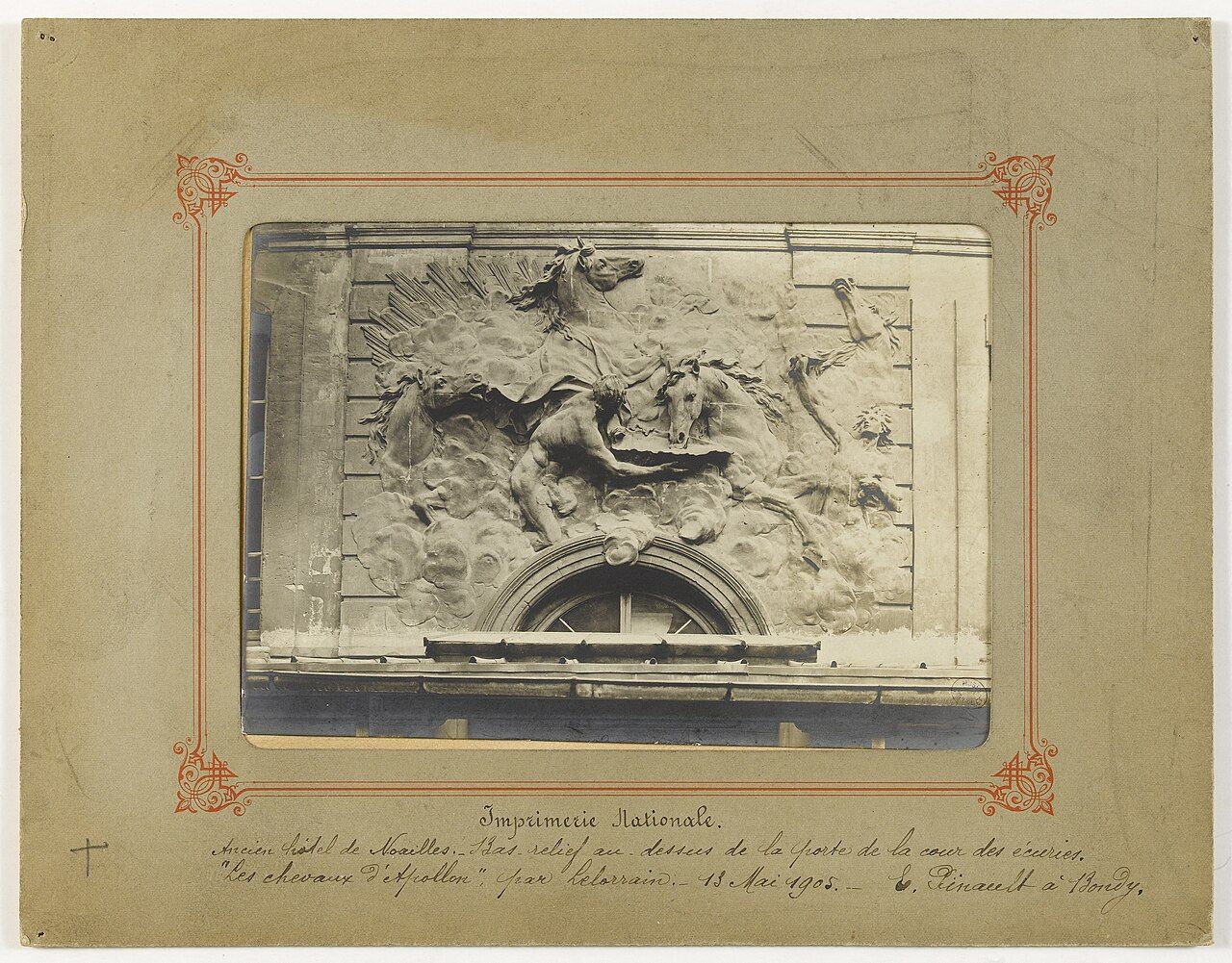
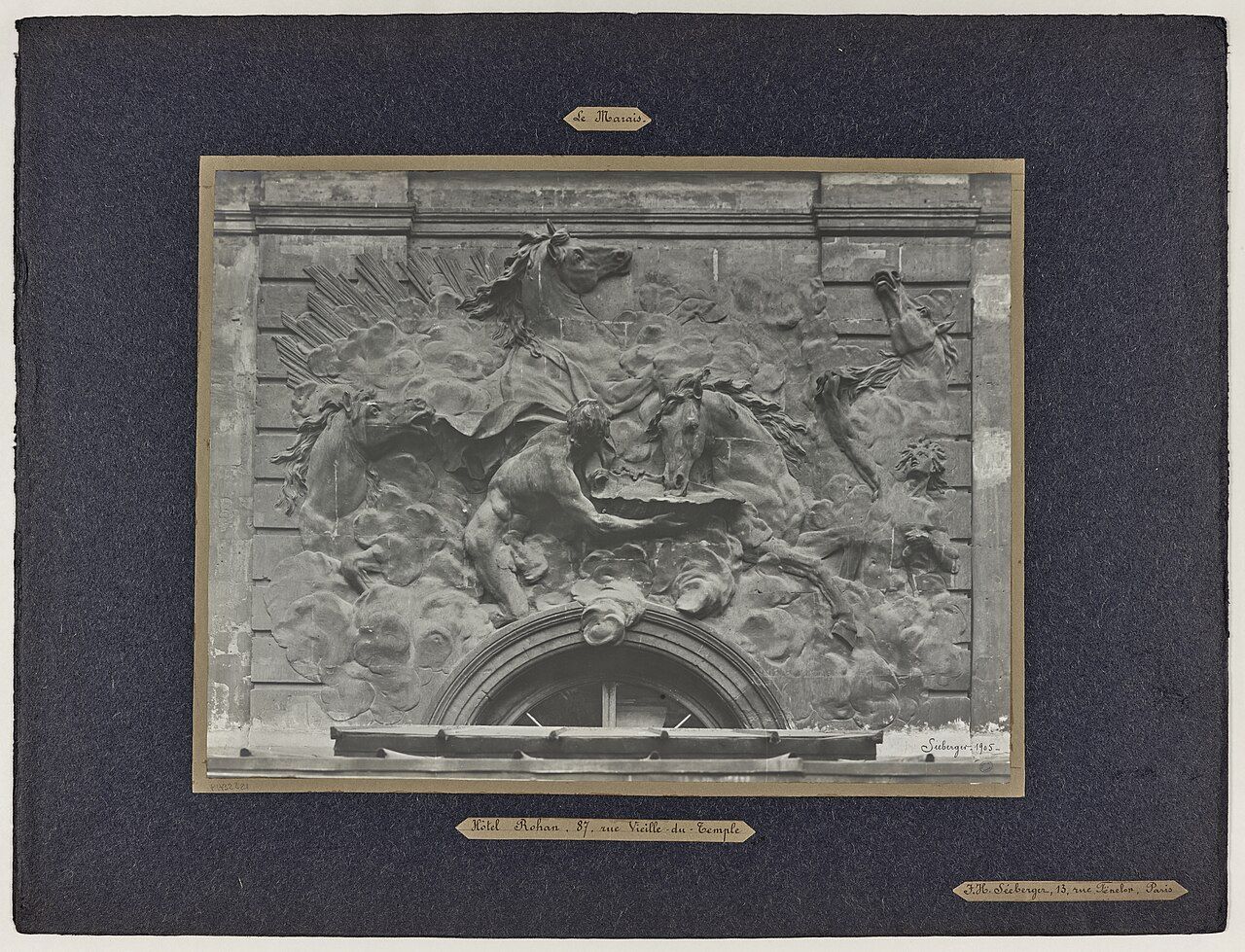
By midday, attention turns to the former stables. Over their door sits the relief called the Horses of Apollo. Robert Le Lorrain carved it in the 1730s. The horses bring movement to a house shaped by office and ceremony. Their presence feels almost theatrical, a burst of myth above a working entrance. The title carries grandeur; the doorway keeps the scene grounded.
The relief makes a fitting pause before the smaller surprise indoors. The Cabinet des Singes is a small room painted around 1750 by Christophe Huet. Its monkeys wear clothes and take on human roles. The joke is plain, yet not slight. A church family’s house holds a room where people’s manners become animal theatre. By afternoon, the solemn face of the place has loosened.
How did the house change hands?
The last cardinal to live here was Louis-René de Rohan. In 1785, he was disgraced in the Affair of the Diamond Necklace. The family’s long residence ends with scandal rather than quiet withdrawal. That turn gives the house another register: ceremony, comedy, then public disgrace. The history refuses to settle into one stately pose.
In 1808, the state bought the house and installed the Imperial Printing Office there. The printing works left in the 1920s, and the house passed to the national archives. The rooms’ story therefore keeps changing its terms. A cardinal’s residence becomes a place of printing, then an archival home. The day moves onward through those changes, without making them feel like a clean break.
What remains when evening comes?
The Rohan garden joins the Soubise garden behind the two houses. Evening gathers the story back into that shared ground. The houses began together, and their gardens remain connected. The horses, monkeys, bishops and printers all belong to different chapters, yet none erases the others. The family’s playfulness survives beside its weightier history. What else might such a house have made room for?