Churches
Saint-Nicolas-des-Champs, the Marais’s north-west gate
A chapel for priory servants became a parish church, its Gothic nave extended across centuries and its Renaissance portal facing rue Saint-Martin.
- Arrondissement
- 3e
- Métro
- Arts et Métiers
- Period
- 15th-17th century
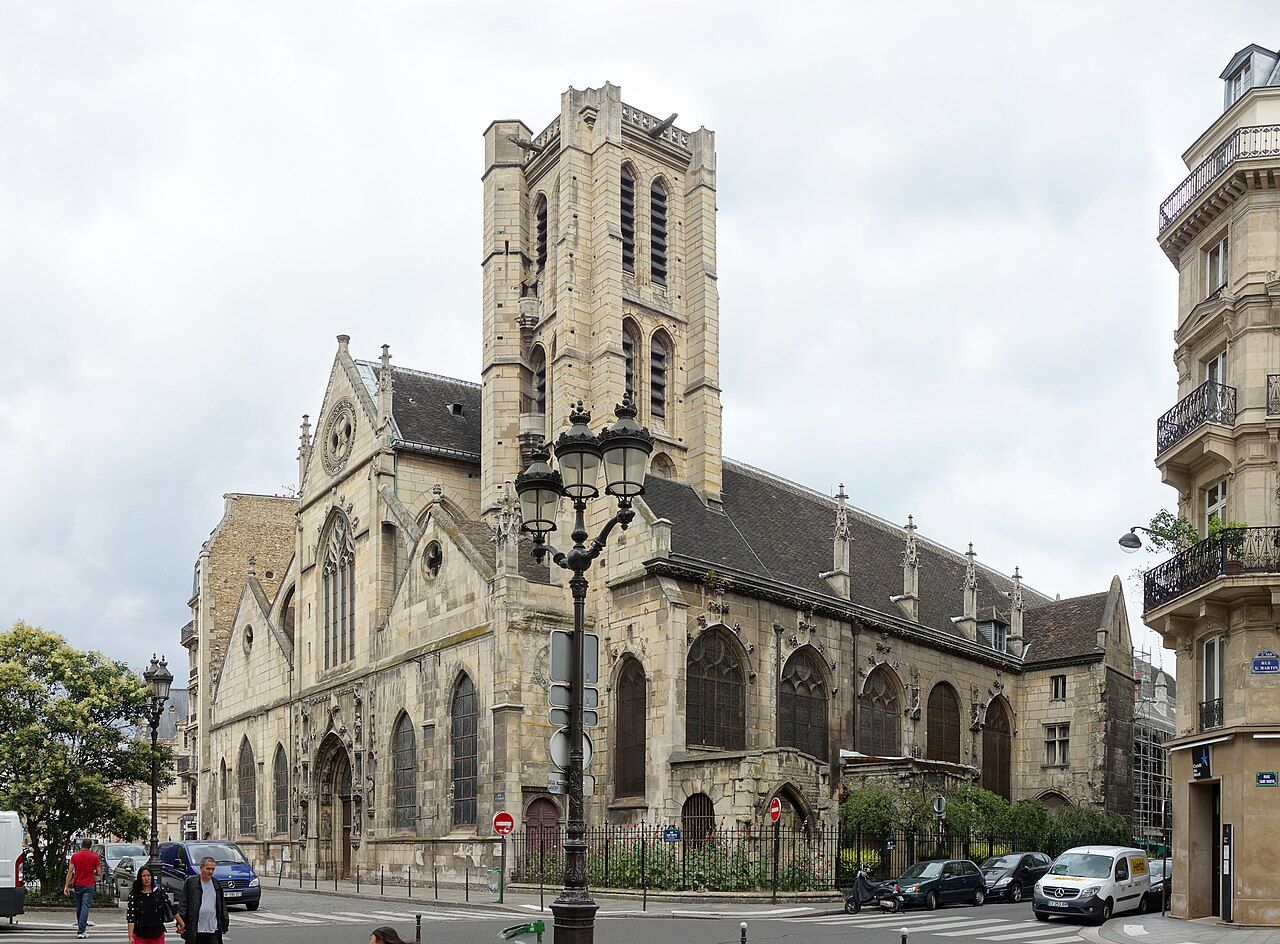
15th-century stone begins the route through Saint-Nicolas-des-Champs, on rue Saint-Martin. The church’s story opens at the Marais’s north-west gate.
How does the church become a threshold?
Start with its first purpose: a chapel for the priory’s servants and tenants. The church began beside the priory of Saint-Martin-des-Champs, serving people connected to its daily life. That beginning makes this more than a monument encountered from the street. It was a place of worship for a working community, before becoming the parish church that stands here now. The north-west gate is not only an approach into the Marais. It is also a passage between the priory’s history and the neighbourhood’s later life.
Follow the Gothic nave through its changing scale. Its earliest part dates from the 15th century. The nave gained length first in the 16th century, then again in the 17th. Those additions matter: the building did not arrive fully formed. Its shape accumulated over time, as the parish church grew beyond the chapel that began it. Here, the route is measured less by distance than by layers. Each century leaves the story with another turn.
Turn attention to the south portal, a Renaissance work from 1581. Its design is based on plans by Philibert Delorme. The portal gives the church a distinct architectural threshold, set against the earlier Gothic nave. That contrast is the point: different periods meet without cancelling each other. The doorway makes the passage visible, from the street’s movement into the church’s more measured interior. The building’s history becomes legible in its changing forms, not in one single style.
Move inward towards the high altar and Simon Vouet’s paintings. The altar is framed by his works, including an Assumption of the Virgin. Their place around the altar makes painting part of the church’s structure, not a separate episode. The eye follows the framing towards the central work. The interior gathers its attention there, after the street-facing portal and the long nave. It is a quieter kind of arrival: architecture and painting brought together around one focal point.
Let the neighbouring stories widen the view. The church stands next to the Musée des Arts et Métiers, the museum of inventions in the old priory. Their proximity keeps the priory and parish histories side by side along rue Saint-Martin, with no need to separate their stories. The priory’s history remains close, even as the church carries its own parish story. how the marsh was drained offers another way to read the district’s changing ground. The humanist Guillaume Budé and philosopher Pierre Gassendi were buried here. The organ case ranks among Paris’s grandest, spanning the 17th and 18th centuries. Each detail keeps the church open to another route.
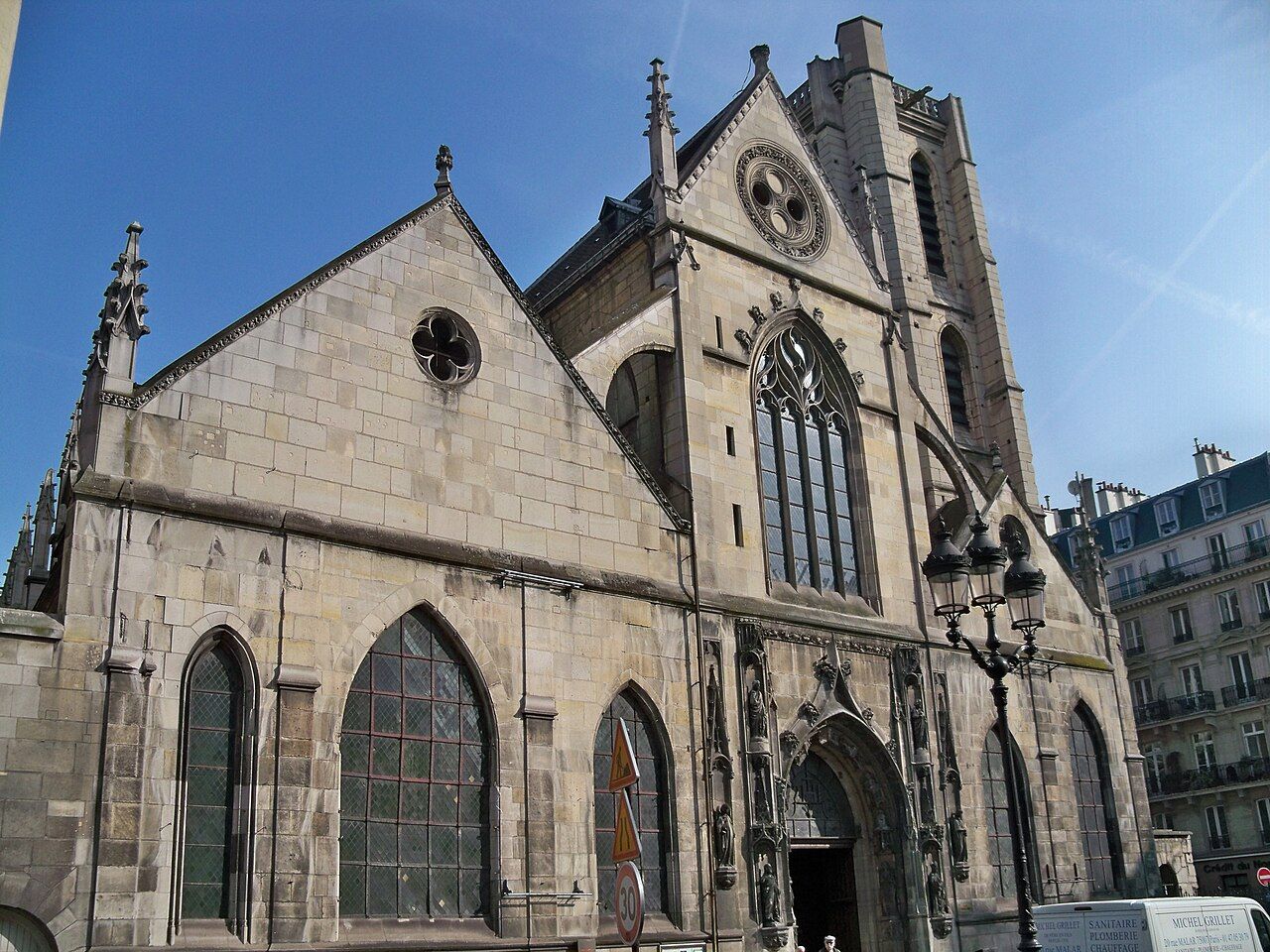
Rue Saint-Martin keeps its place beside the church. The portal holds the threshold; the nave carries the older story forward. At this north-west gate, the route pauses between street, parish, and priory.