Churches
Temple du Marais: Mansart’s chapel of changing faith
A round nave, a raised dome, and Fouquet below trace a chapel’s passage from Visitation convent to Protestant church.
- Arrondissement
- 4e
- Métro
- Bastille
- Period
- 1632-1634
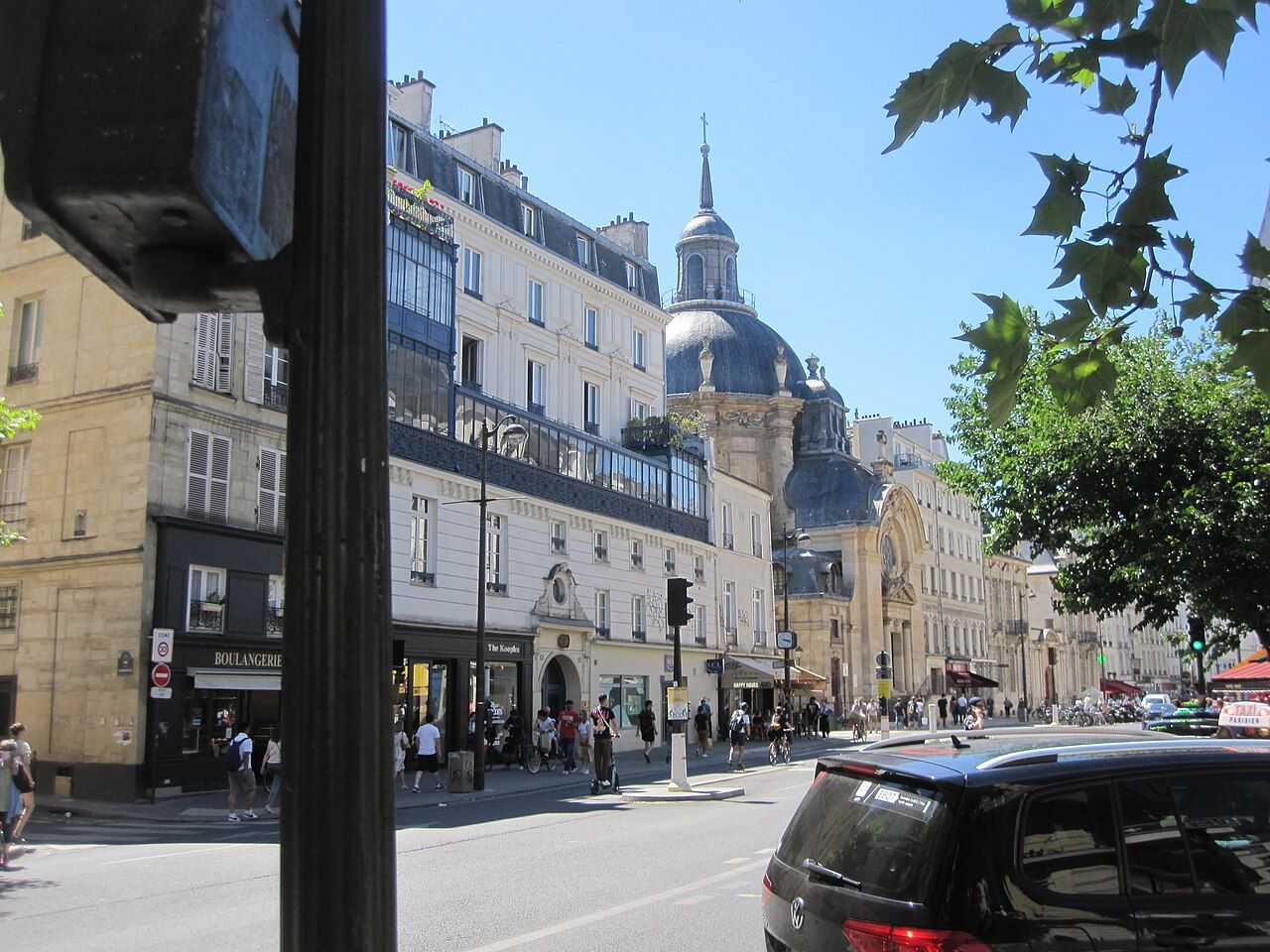
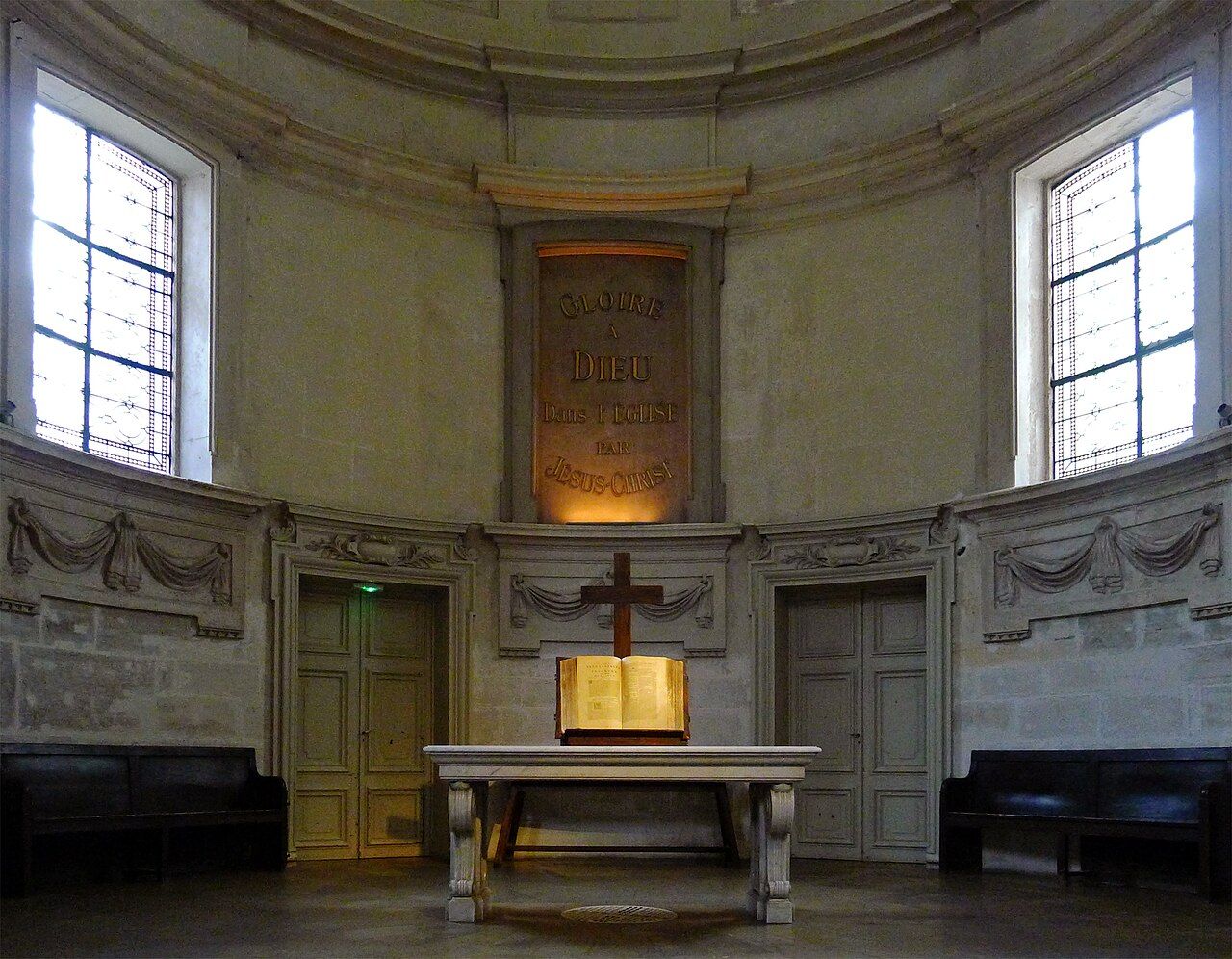
“A round nave under a dome raised on a drum.”
The Temple du Marais stands at 17 rue Saint-Antoine. Morning puts its shape before the story of change. François Mansart designed the chapel between 1632 and 1634. Those years mark one of his early works. The building began as the chapel of the Visitation Sainte-Marie convent. That beginning still governs how the room reads.
The Visitation order began in 1610, founded by Francis de Sales and Jane Frances de Chantal. Its chapel gathered that religious purpose beneath a dome. The round nave makes a different impression from a long, straight room. The eye turns around, then rises. A drum lifts the dome above the nave, giving the interior its defining form.
This is not just a story of architecture. The same chapel has held different faiths, without losing its original shape. Its history sits beside the site of the stormed fortress, another marker of change. Even the building’s quiet geometry carries a sense of duration. The stone does not explain the years; it holds their sequence.
What does midday hold beneath the dome?
By midday, the chapel’s uses come into sharper focus. It was built for the Visitation nuns, then became something else. The convent closed during the Revolution. The chapel was given to the Reformed Church in 1802. Since then, it has been a Protestant church.
That change feels striking because the room remains so legible. A convent chapel became a Protestant church, but the dome still gathers the space. The building’s form does not belong to only one moment. It carries the imprint of its design and the facts of its later life. Each use rests alongside the one before it.
Below, the crypt holds Nicolas Fouquet, Louis XIV’s disgraced finance superintendent. His burial brings another kind of history into the chapel. A powerful figure rests beneath a room shaped for religious devotion. The contrast is quiet, not theatrical. Above and below, the building keeps distinct stories close.
Another architectural comparison is the church with the first classical façade. The Temple du Marais draws attention inward, toward its round nave and raised dome. Its classification as a historic monument marks the building’s lasting place. That status belongs to a structure shaped by several lives.
What remains in the late afternoon?
Late afternoon gives the story room to settle. The chapel began within a convent, under Mansart’s early design. The order’s founders belonged to its first purpose. The Revolution closed the convent, and a later transfer changed the chapel’s faith.
Nothing in that sequence requires the building to become a symbol alone. It remains a particular room: round nave, drum, dome. The crypt holds Fouquet below. The Protestant church continues above. Those layers make the building feel less like a monument to one past than a place carrying several.
At the end of the day, the dome still gathers the eye. The chapel’s history moves from convent to church, from one faith to another. Beneath that curve, the crypt keeps its own silence. Above, the round room holds its shape, and the late day draws to a close.