Churches
A temple front on rue de Turenne
Saint-Denys-du-Saint-Sacrement brings a Greek temple façade to a street named for a 17th-century marshal, with Delacroix’s Pietà inside.
- Arrondissement
- 3e
- Métro
- Saint-Sébastien-Froissart
- Period
- 1826-1835
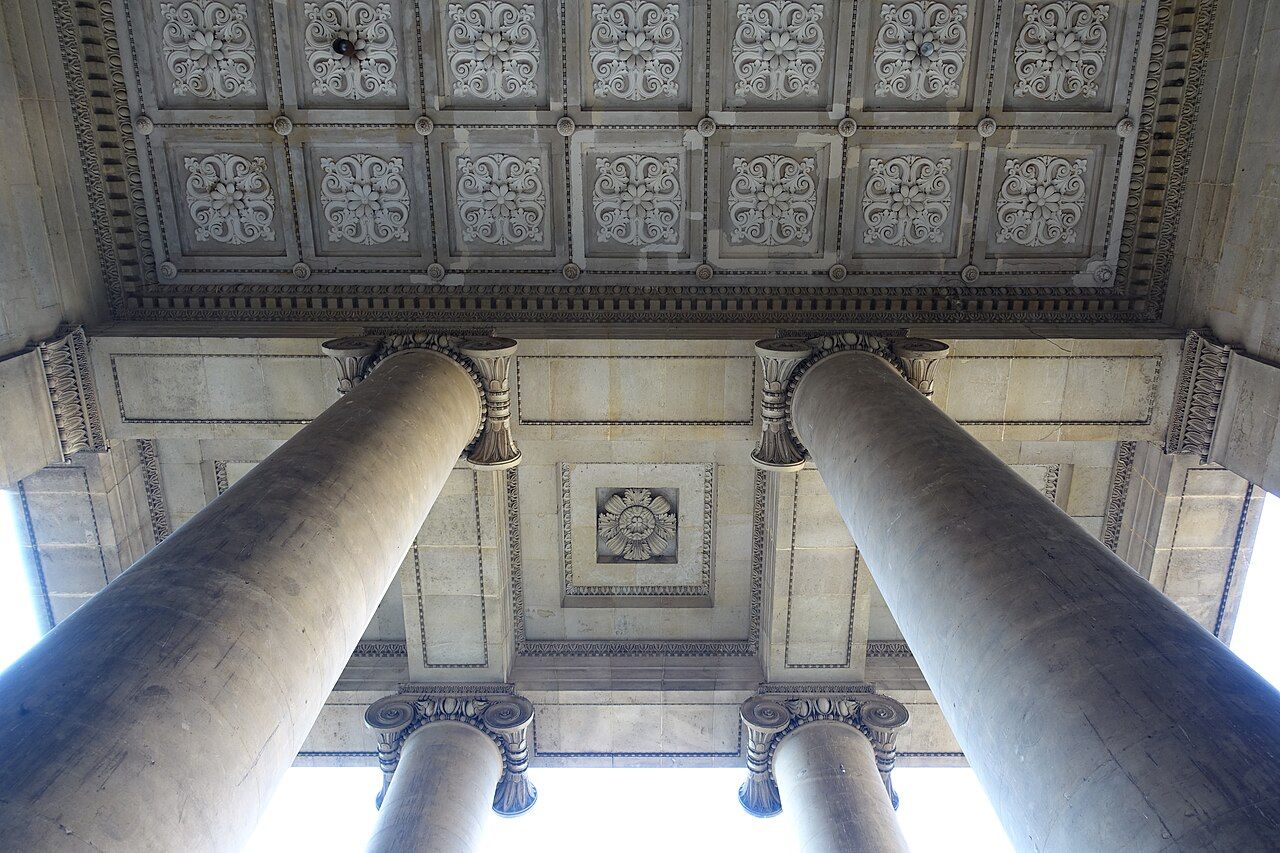
1826-1835: a church takes shape in a quarter carrying older history. Saint-Denys-du-Saint-Sacrement stands at 68 bis rue de Turenne. Its dates make a striking counterpoint to the street’s name. Marshal Turenne lived here in the 17th century.
What does morning bring into view?
The façade gives the first answer, without needing ornament. Its Greek temple front rests on Ionic columns. The effect is measured, formal, and distinctly composed. The street’s older name meets a newer architectural language.
Étienne-Hippolyte Godde built the church between 1826 and 1835. Its site had held a convent of Benedictine nuns. They belonged to the Holy Sacrament. The church’s name carries that earlier presence forward.
Here, the contrast does not need explaining away. A 17th-century street and a later church share one address. Their histories meet along rue de Turenne. The meeting feels more revealing than any tidy period label.
What changes by midday?
Inside, the nave takes the form of a basilica. Above it, a coffered barrel vault gives the space definition. The words describe structure, but also a change in feeling. The temple-like exterior yields to a different order.
The church moves from its clear front into depth. A nave, a vault, and a side chapel shape that passage. Nothing here asks the façade to explain everything. The interior gives the building another voice.
That shift is the church’s quiet argument. It belongs to a quarter whose past remains close by. Its design does not imitate the street’s earlier century. It occupies the same setting on its own terms.
What remains in the late afternoon?
A Pietà painted by Eugène Delacroix in 1844 decorates a side chapel. The painting draws the story towards a single, concentrated work. Its placement makes the chapel part of the church’s larger sequence. The building’s history gathers around that encounter.
The name Delacroix also points beyond this church. The comparison continues with the Delacroix at the Jesuit church. Here, the Pietà belongs specifically to a side chapel. That setting keeps the work within the church’s interior rhythm.
Rue de Turenne names Marshal Turenne, who lived there in the 17th century. The street keeps that name beside Godde’s church. The centuries share a view without becoming the same story. That tension gives this address its particular shape.
For a wider passage through the quarter, the northern Marais by foot offers another frame. Saint-Denys-du-Saint-Sacrement holds its place within that larger walk. Its temple front, basilica nave, and Delacroix remain distinct. Each answers a different part of the same address.
The church stands between an older street-name and newer form. Its façade speaks first; the nave changes the register. The side chapel leaves the last impression with Delacroix. What else might this quarter hold between its centuries?