Museums
Machines in the priory at Saint-Martin-des-Champs
A passage through inventions, a Gothic church and the former priory that houses the Musée des Arts et Métiers.
- Arrondissement
- 3e
- Métro
- Arts et Métiers
- Period
- 1794 onward
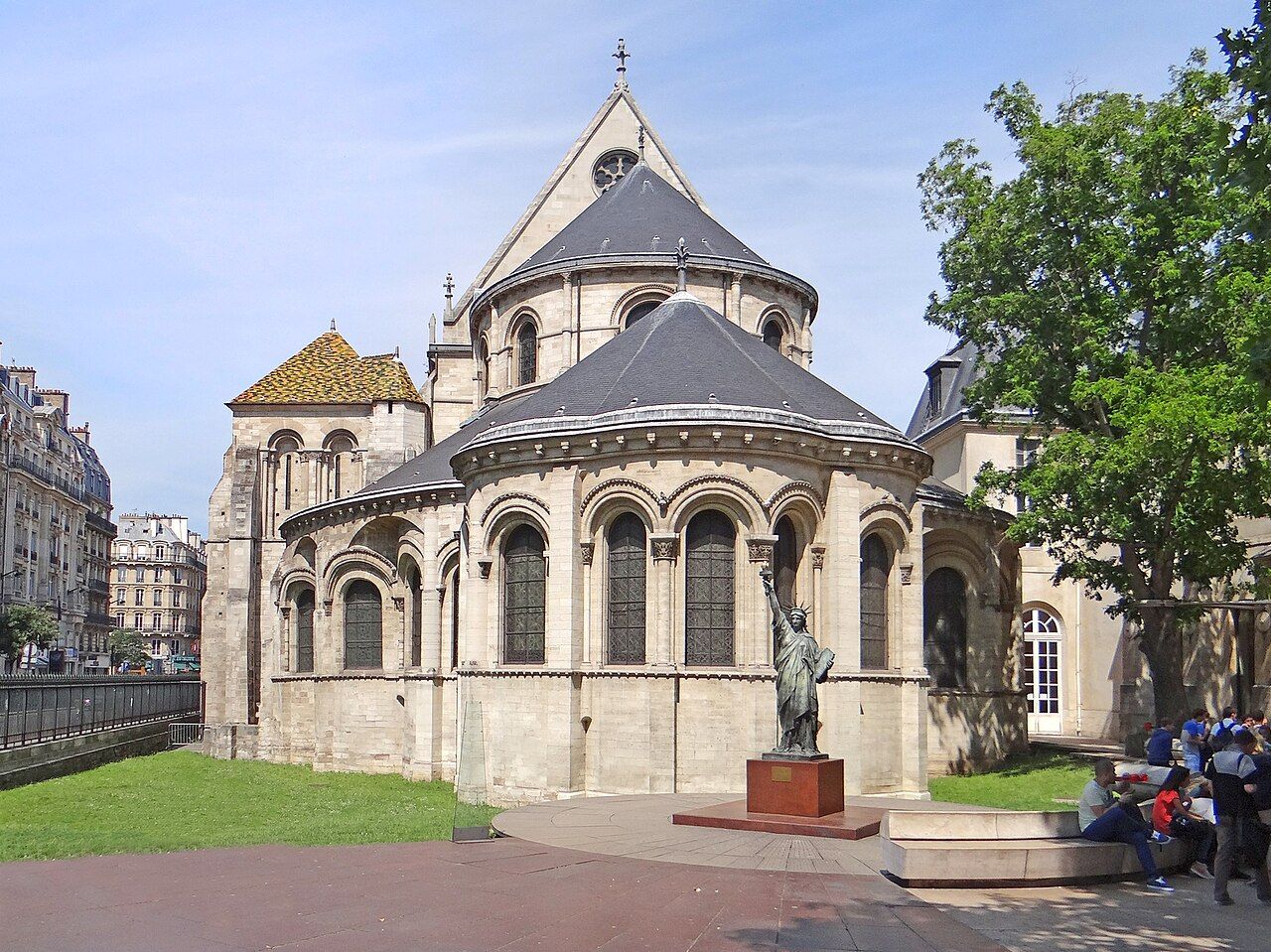
1794 marks the founding of the Conservatoire national des arts et métiers. It began on the proposal of Abbé Henri Grégoire. The Musée des Arts et Métiers occupies the former priory of Saint-Martin-des-Champs. Its address is rue Réaumur, in the 3rd arrondissement. At the north-west edge of the Marais, machines meet monastic stone. The museum is among the world’s oldest science and technology museums. That long ambition sits inside a place built for another purpose. The contrast is not a footnote; it sets the whole day’s pace.
What does the morning place inside the priory?
The morning begins with an unlikely pairing: monastery and invention. The old priory is not merely a backdrop for machinery. It gives machines a scale beyond their own working parts. A room built for religious life now holds objects shaped by calculation, experiment and flight. The setting makes progress feel less like a straight line. Past and future share the same walls, without quite agreeing.
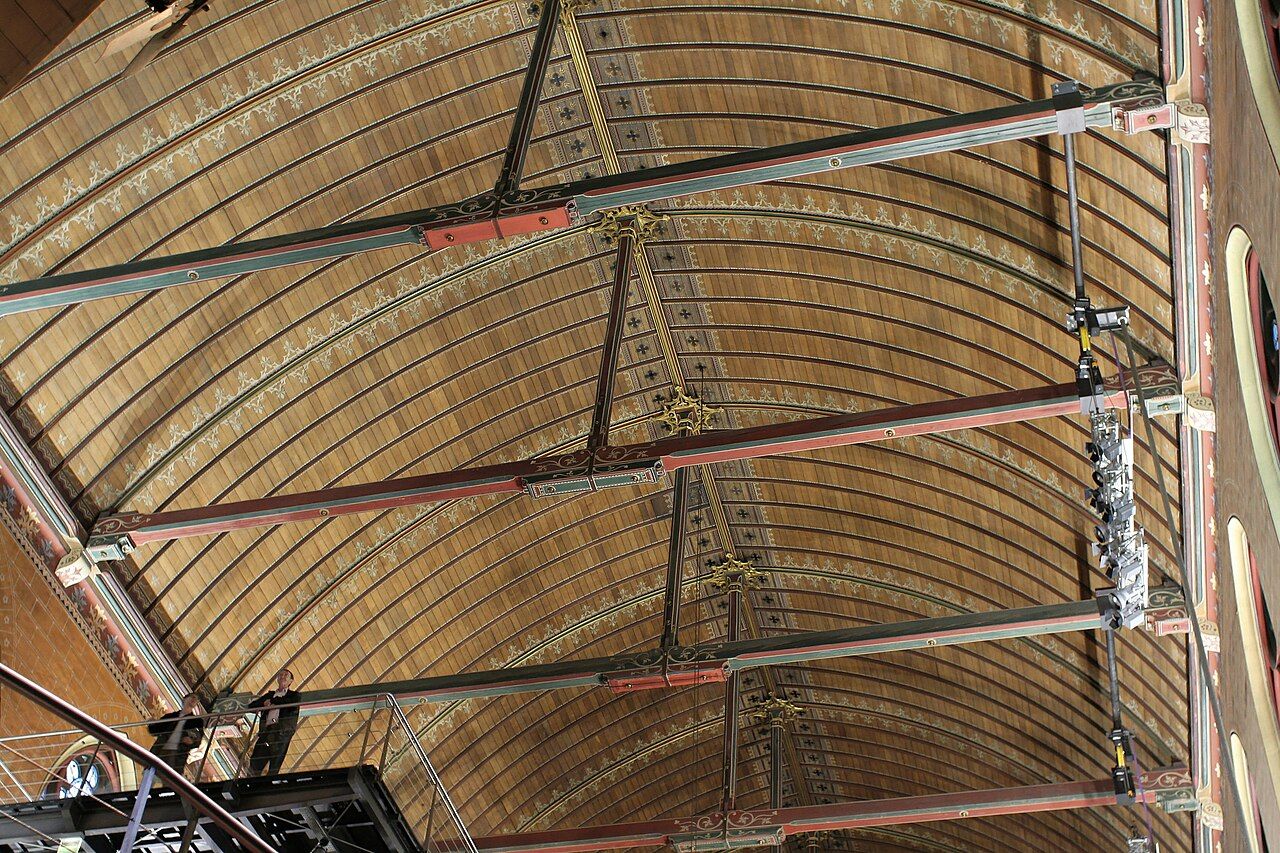
The former priory church sharpens that encounter. A Foucault pendulum swings inside it, drawing a measured line through the space. Nearby in the church, Clément Ader’s Avion III hangs overhead. This flying machine dates from 1897. Its suspended form makes the church’s height part of the exhibit. The machine seems caught between invention and departure. The church makes invention feel less like escape than suspension.
The church makes invention feel less like escape than suspension.
That sentence holds because the church keeps its own weight. The pendulum moves; the old religious structure remains. Together, they resist an easy story about machines replacing what came before. Here, invention does not erase the priory. It enters the priory and changes the terms of looking.
The museum’s wider collection keeps that conversation moving. Calculating machines made by Blaise Pascal in the 17th century are on display. Instruments from the laboratory of the chemist Antoine Lavoisier are also kept here. They bring different kinds of thought into view: calculation, experiment, motion. The objects make ideas tangible, while the old rooms make those ideas feel oddly grounded.
What changes by midday?
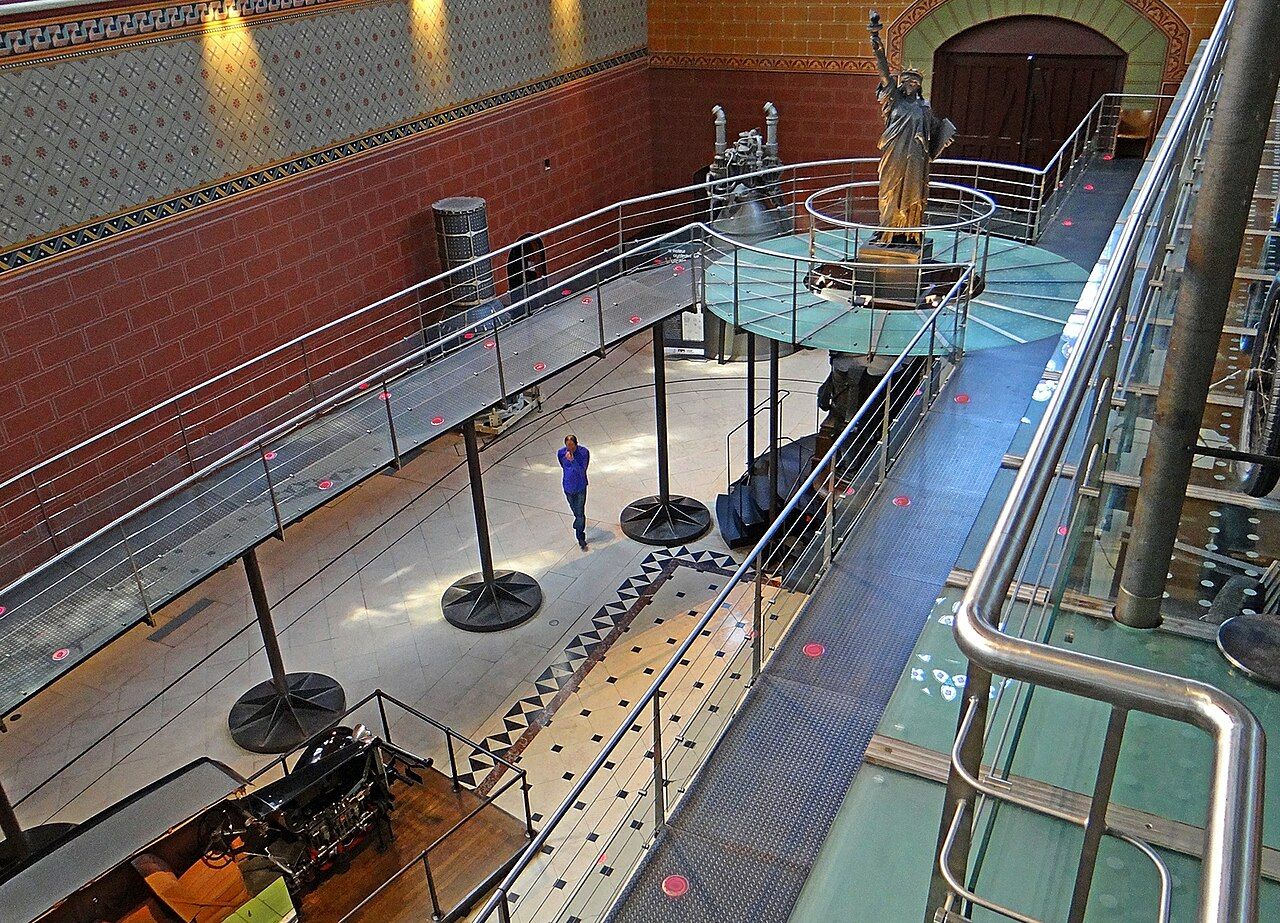
By midday, the church still holds the strongest image. An aeroplane hangs where the eye expects a different kind of grandeur. Its presence turns the old church into a place of suspended possibility. The Avion III is not the collection’s only aircraft. The Blériot XI monoplane belongs to the collection too. It is the type that first flew across the English Channel in 1909.
The distinction matters: one aircraft hangs in the church, while the other belongs to the collection. Both make flight part of the museum’s story. The dates are far apart from the priory’s medieval life. Yet the museum lets these times sit together, without flattening their differences. The result is not a tidy timeline. It is a series of encounters, each with its own measure.
Outside the museum, a small bronze copy of Bartholdi’s Statue of Liberty stands. Its scale offers a quiet counterpoint to the aircraft inside. The copy stays small; the symbol it carries is familiar by name. Even here, the museum gathers objects that hold more than their material form. A bronze figure and a flying machine ask for different kinds of attention.
The priory’s other surviving purpose is quieter. Its 13th-century refectory, attributed to Pierre de Montreuil, is now the Conservatoire’s library. The change is practical in one sense, but the room’s former use remains legible in its name. A refectory once served a community; a library gathers knowledge. The shift feels fitting beside a museum devoted to invention.
The neighbouring church sits beside this old religious complex: the priory's parish church next door. Its presence keeps the setting from becoming a single museum room. The priory belongs to a larger pattern of religious buildings and streets. That edge gives the visit its particular balance: concentrated displays, then the wider neighbourhood beyond.
What remains in the late afternoon?
Late afternoon brings the story back to the street. The museum stands on rue Réaumur, while its past reaches into church, refectory and priory. The collection does not ask for a single mood. A calculating machine, laboratory instruments and aircraft belong to different kinds of curiosity. Their shared address makes the differences more interesting, not less.
Nearby, the Arts et Métiers station on Métro line 11 carries another machine-age image. In 1994, it was clad in copper to resemble the inside of a submarine. The design came from comic artist François Schuiten. Copper gives that idea a visible surface: the station turns travel into an imagined vessel. The museum’s machines and the station’s submarine-like interior echo one another without becoming the same thing.
The day’s route can continue through a loop starting at the priory, carrying the old foundation into the surrounding streets. The museum’s programme is published at arts-et-metiers.net. The museum remains a place where inventions meet a medieval frame, rather than escaping it. What other kinds of futures can an old priory hold?