From marsh to Malraux
Rambuteau and the street that widened the Marais
Opened in the late 1830s, rue Rambuteau linked the Marais with Les Halles; later works largely skirted the quarter, leaving much of its old plan intact.
- Arrondissement
- 3e and 4e
- Métro
- Rambuteau
- Period
- 1830s-1870s
“Colonnes Rambuteau.”
What did the morning reveal?
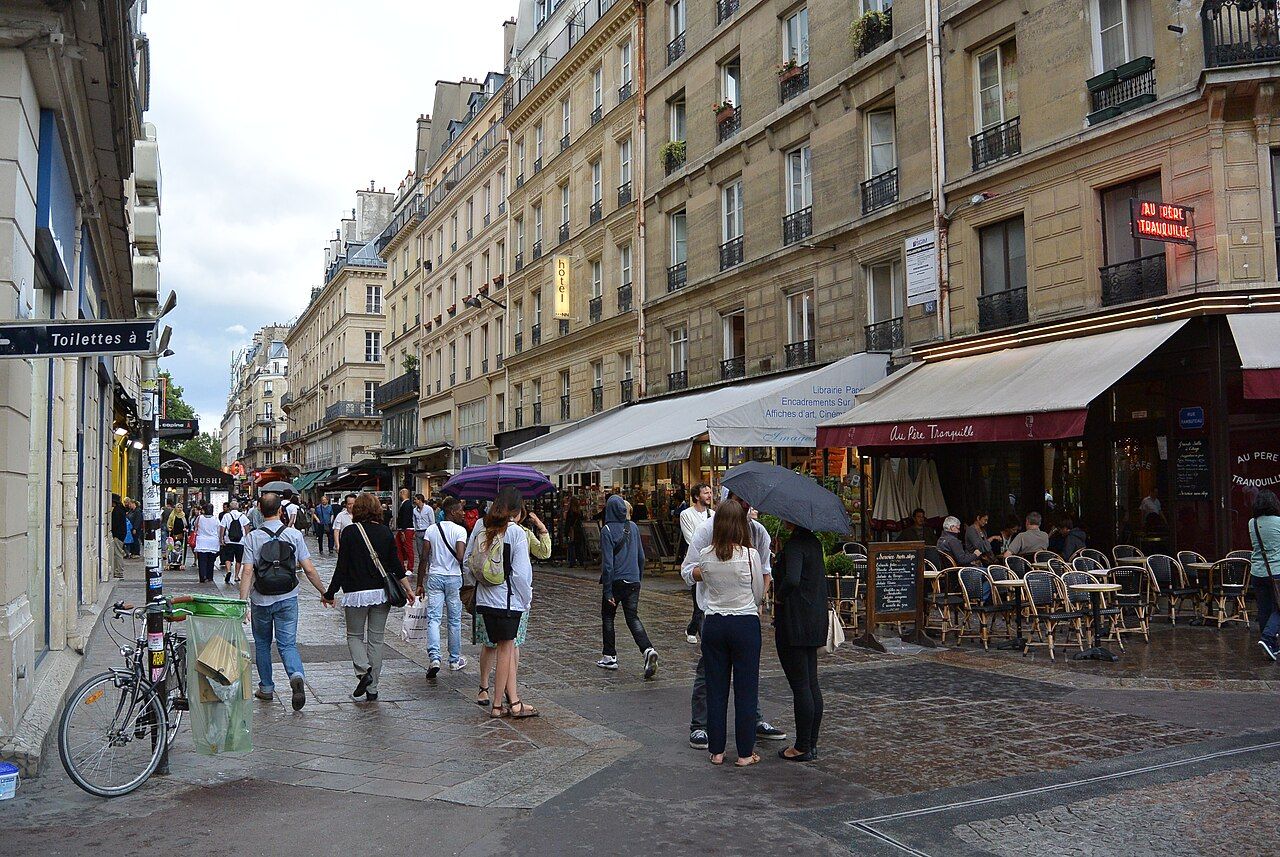
Morning starts with a street that refuses the old narrowness. Rue Rambuteau opened in the late 1830s, cutting through the Marais. Its purpose was plain: linking the quarter with the central markets of Les Halles.
Claude-Philibert de Rambuteau was prefect of the Seine from 1833 to 1848. The new street carried his name, and a striking width. At about 13 metres, it was broad by old Paris standards. Its open span feels like an argument made in stone.
The street’s name sits within a wider change in public space. Rambuteau also introduced public urinal columns, nicknamed colonnes Rambuteau. Their name keeps his imprint unusually close to street level. The enamel plaques of the 1840s give the street another layer to read: the enamel plaques of the 1840s.
What did the afternoon leave untouched?
By midday, the street’s broad cut meets an older pattern. The contrast matters more than any grand claim of renewal. Across the north, the older street plan of the north holds its own character.
Haussmann’s works arrived later, in a different scale of change. In the 1850s, rue de Rivoli extended east along the Marais’ southern edge. In the 1860s and 1870s, boulevard Henri-IV ran from the Seine to the Bastille.
Those works mostly went around the Marais rather than through it. The quarter kept most of its 17th-century street plan. That survival came less from protection than from being left alone. A few broad cuts make the untouched fabric easier to notice.
At the southern edge, rue de Rivoli marks one such incision. Farther off, boulevard Henri-IV carries another line toward the Bastille. The old quarter is not sealed from change; its edges tell otherwise. Still, its streets retain a shape that newer works largely spared.
What remains by evening?
By evening, rue Rambuteau ends beside a later landmark. The Centre Pompidou opened in 1977, just west of the Marais. It stands at the end of the street, joining one public gesture to another.
The day closes on that meeting of scales: one broad street, an older web. The old plan survives not as a single untouched scene, but in its turns. Rue Rambuteau holds its width; the quieter pattern begins around it. The quarter keeps both lines in view, and lets the contrast linger.