From marsh to Malraux
When the mansions became workshops
A working history of the Marais, from mansions divided piece by piece to crowded workshops, wholesale trades and courtyards changed by restoration.
- Arrondissement
- 3e and 4e
- Métro
- Arts et Métiers
- Period
- 1790s-1960s
“The old houses filled with work.”
What began in the morning?
Morning is the first measure in this history. After the Revolution, many Marais mansions changed hands. Some were confiscated, sold or rented out piece by piece. The old houses began to hold different lives.
In the 19th century, workshops, warehouses, schools and small flats filled them. A mansion no longer stood apart from ordinary work. Its rooms became part of a busy, changing quarter. The parts of an earlier order still matter: the parts of a noble town house.
Jewellery, clock-making, bronze casting and metalwork gathered here. So did the garment trades, concentrated in the Marais. The work had many materials and measures. Metal, cloth and small mechanisms shared the same quarter.
The range mattered because work took several forms. Some trades centred on jewellery and clock-making. Others involved bronze casting, metalwork or garments. These trades shared the old houses with warehouses, schools and small flats. The quarter’s working life did not belong to one craft.
What crowded the day at midday?
Midday belongs to the courtyards, where space kept changing. Gardens and courtyards were built over with sheds. Extra floors followed, making more room for work. Open ground gave way to added surfaces and uses.
That pressure was practical, not decorative. Each shed and floor answered a need for room. Work moved into the spaces the old houses offered. The courtyard became another part of the working arrangement.
By the late 19th century, the Marais was one of Paris’s most crowded quarters. The phrase carries more than a count of people. It suggests a neighbourhood pressed into close use. Houses, workshops and small flats shared limited space.
In the 20th century, the Haut-Marais took on another trade. Wholesale business centred on leather goods, bags and textiles. The district’s working life kept changing shape. Goods and materials joined the older concentration of craft.
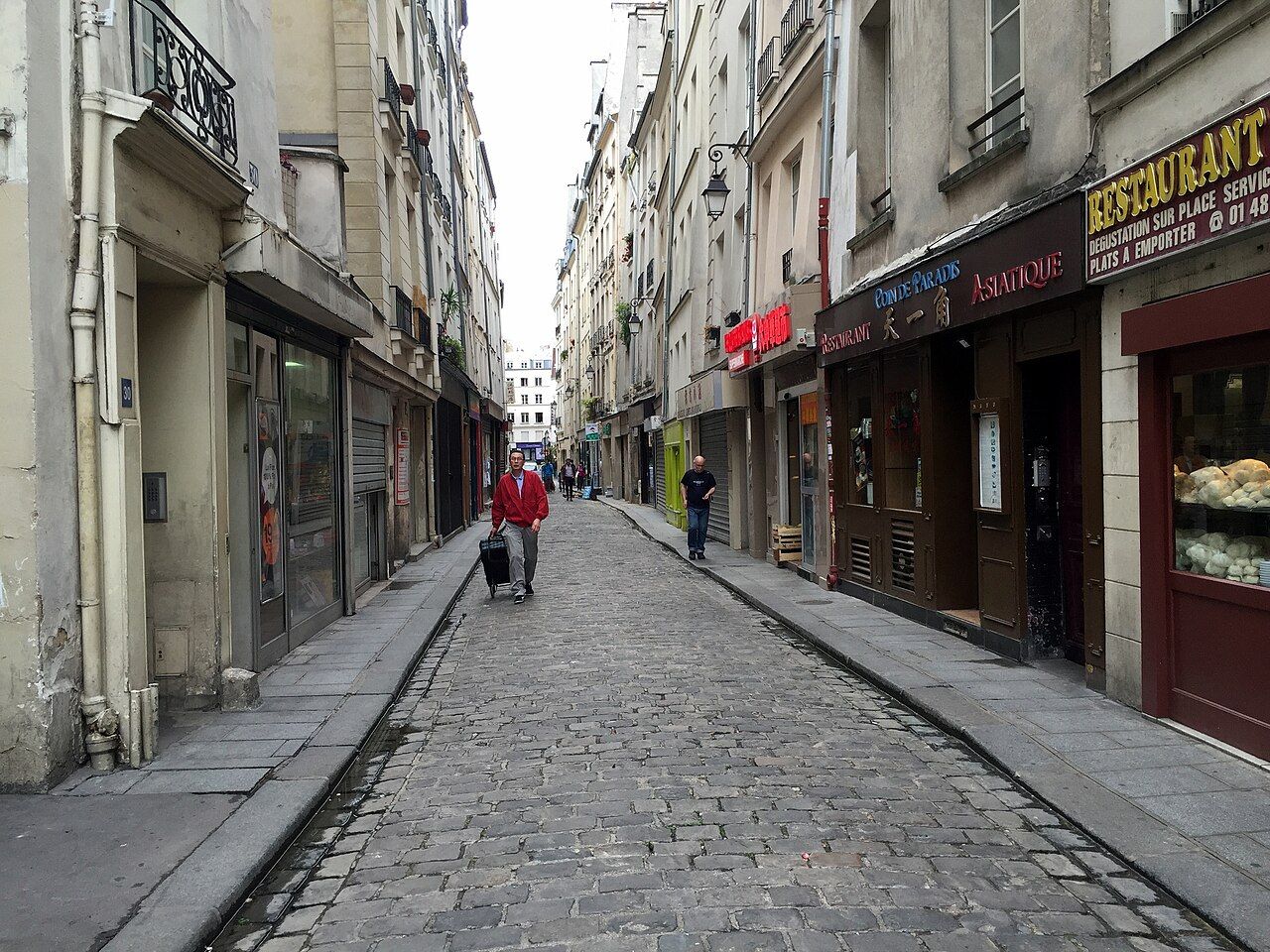
In the 1920s and 1930s, the first Chinese community in Paris settled near Arts et Métiers. Its first homes gathered around rue au Maire. Many settlers came from the region of Wenzhou. Their descendants still run wholesale trades in the area.
These histories sit beside one another without becoming identical. Craft and wholesale trade both left their mark. One filled courtyards with making; the other carried goods. The Marais held both kinds of work.
What does late afternoon leave behind?
Late afternoon turns toward the change brought by restoration. Craft workshops remained in Marais courtyards until the late 20th century. Restoration pushed most of them out. The courtyards had held work for generations; their working use began to recede.
The later chapter meets the 1962 law that changed everything. Before restoration, the old houses had been occupied, divided and adapted. Their courtyards bore the marks of that long working life.
Morning began with mansions changing hands. Midday filled their yards and rooms with trades. Late afternoon finds a quarter altered by restoration. What does a courtyard remember when its work leaves?