From marsh to Malraux
The Templars’ enclosure and its vanished tower
A walled town once occupied this part of Paris. Its keep held Louis XVI; later, a square and public garden took shape on the site.
- Arrondissement
- 3e
- Métro
- Temple
- Period
- 1150-1808
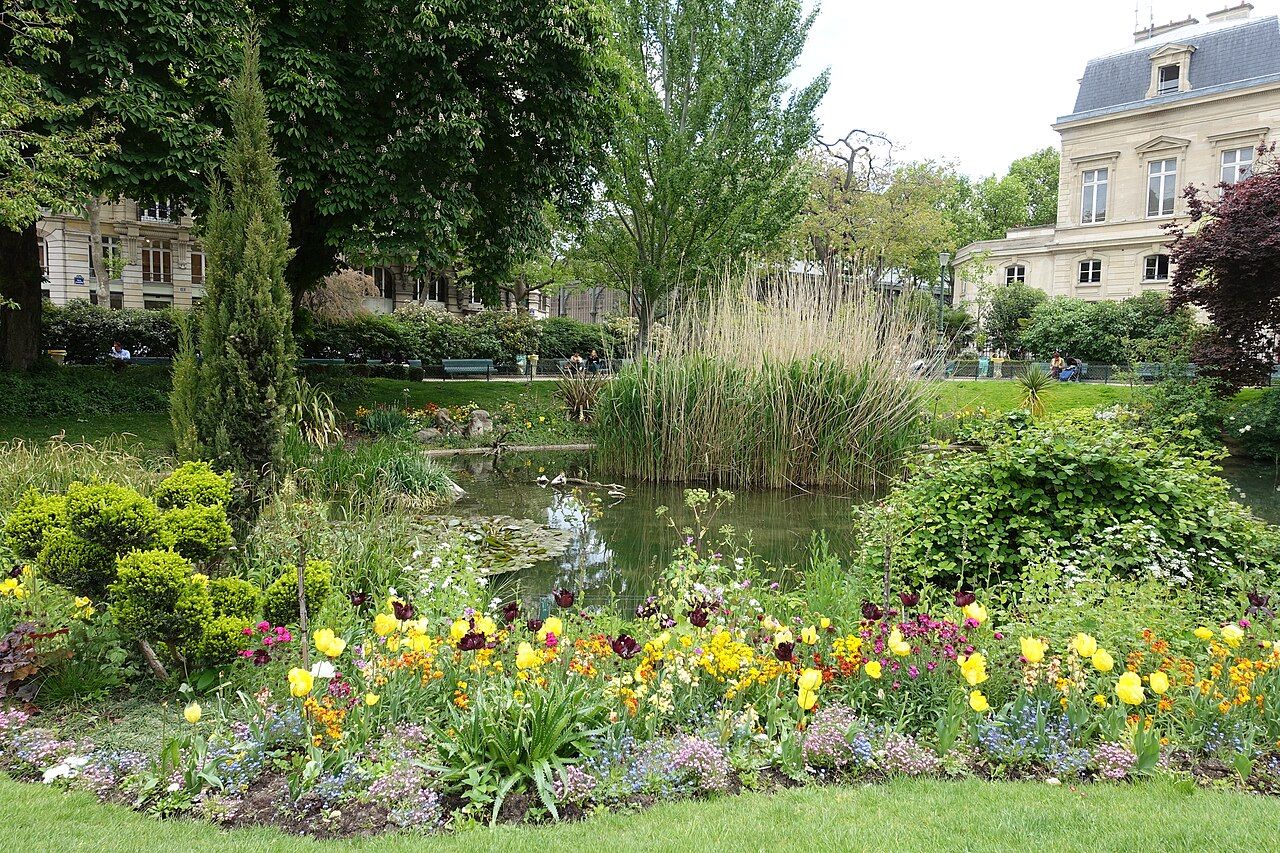
13 October 1307, Philip IV had the Templars of France arrested. Morning opens now in Square du Temple, where another kind of enclosure holds the view. A public garden occupies part of the old site, though its history reaches beyond its borders. The square feels less like an ending than a surface laid over time.
What stood here before the square?
The Knights Templar set up their Paris house north of the city in the mid-12th century. The house grew into the Enclos du Temple, a walled enclosure with its own church, houses and gardens. It became a town within the city, with a life organized behind walls. The walls marked separation, while the church and houses made that separation inhabited.
A great square keep, finished with corner turrets, rose inside the enclosure in the 13th century. It gave the place a centre as well as a boundary. The keep belonged to a larger arrangement of houses, gardens and church. Now the garden asks the eye to imagine that scale without showing it.
The old names still carry the enclosure into the surrounding city. Rue du Temple recalls it, as does rue Vieille-du-Temple. The Carreau du Temple carries the same memory in its name. The the market hall named after the Temple keeps that past legible in ordinary speech.
By midday, the town’s old freedoms come into view. Craftsmen working inside the enclosure were free of Paris guild rules. That freedom drew many artisans there, giving the enclosure a working population. The walled place was not only a religious house or a stronghold. It held trades, homes and gardens, all gathered within its boundary.
The ground beneath this story has its own earlier change. The site belongs to the drained ground of the old meander, a phrase that gives the landscape a longer memory. The enclosure arrived on ground already shaped by water and alteration. Each layer makes the vanished town harder to reduce to a single outline.
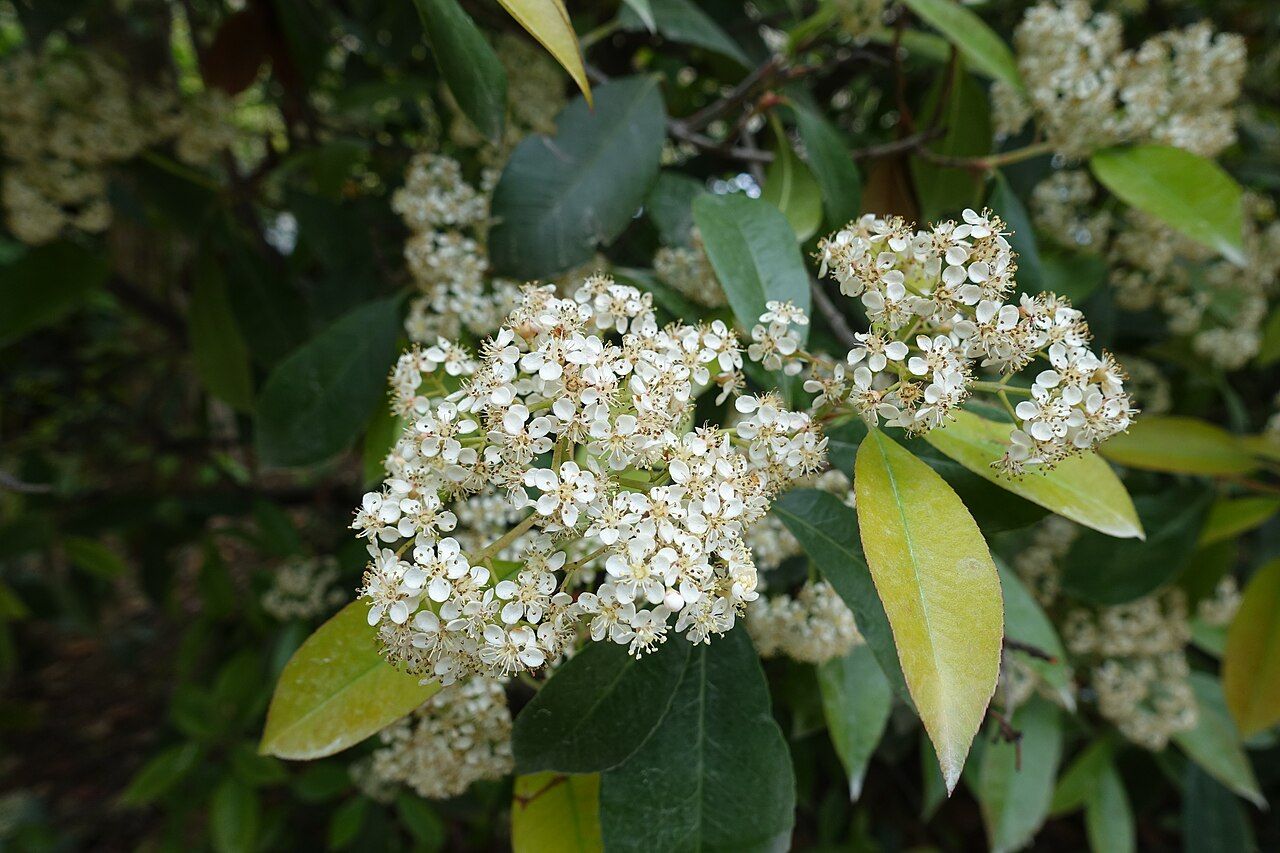
When did the tower become a prison?
Philip IV’s arrest of the Templars marked a change in their fortunes. The order was suppressed in 1312. Jacques de Molay, its last Grand Master, was burned in Paris in 1314. The Temple enclosure passed to the Knights Hospitaller. A place once held by one order now belonged to another.
Afternoon brings the tower’s later story into focus. Louis XVI and his family were imprisoned in the Temple tower from August 1792. The great keep had outlasted its original purpose and its first custodians. Its heavy shape now contained a royal family, changing the meaning of confinement.
Louis XVI left the tower on 21 January 1793 for his execution. The date turns the tower’s history sharply outward, beyond its walls. What had once stood within an enclosure became part of a national upheaval. The tower remained in place after that departure, but its meaning had changed.
The keep’s square form and corner turrets belong to an earlier century. The prison story attached itself to those same stones. History rarely clears its old meanings away before adding new ones. Here, the tower accumulated them until its presence itself became politically charged.
Napoleon ordered the tower demolished in 1808 to stop it becoming a royalist shrine. Its absence was deliberate, not accidental. The enclosure had already changed hands, and the tower had carried several histories. Demolition tried to prevent one more kind of memory from gathering around it.
What remains after the keep disappears?
By evening, the garden has replaced the keep in the mind’s view. Square du Temple was laid out on part of the site in 1857. Its design included a pond, a cascade and large trees. The square made a public space from ground once enclosed by walls.
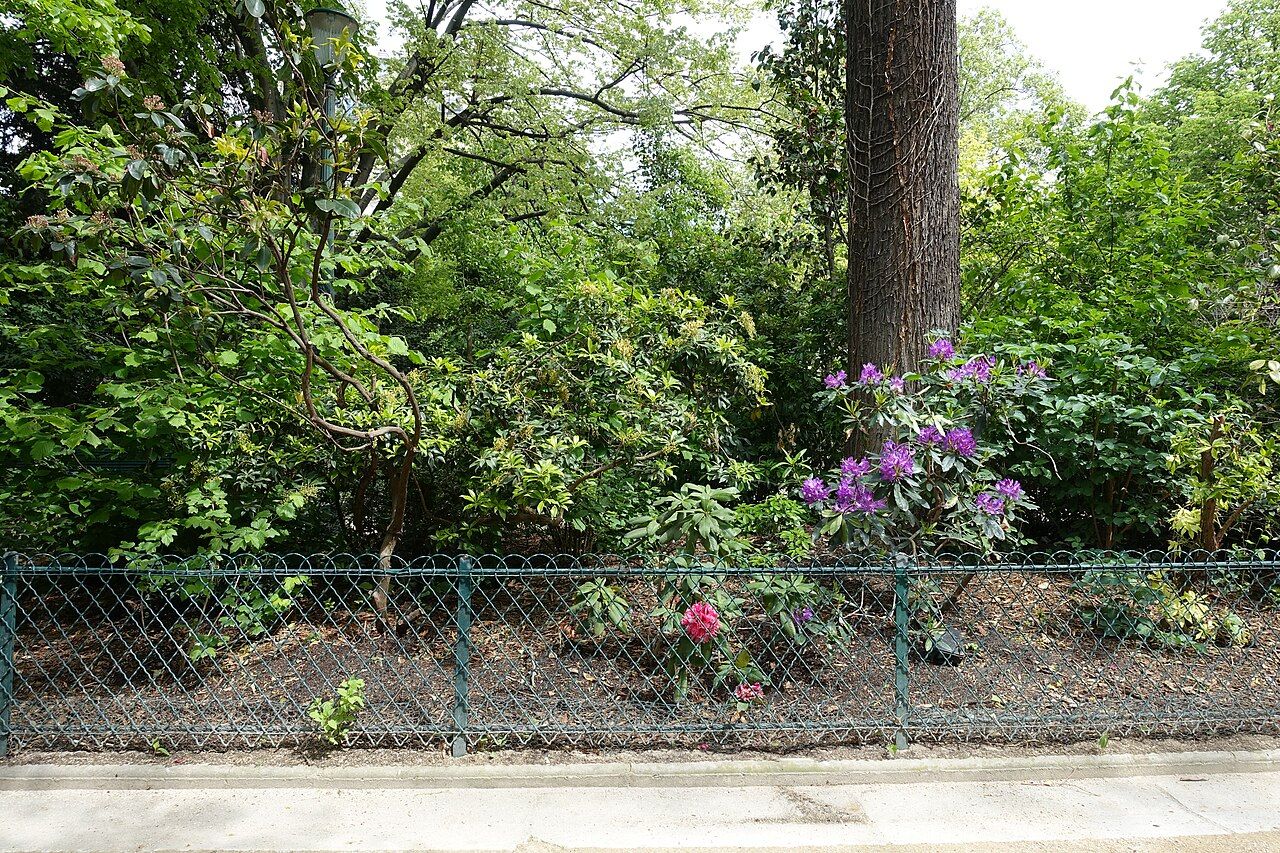
The pond and cascade give the garden a quieter measure than the tower’s story. Large trees bring another scale, rooted where the enclosure once stood. These features belong to the square’s making, not to the medieval town. Their presence turns a place of confinement into a place open to the city.
The old enclosure cannot be recovered by following names alone. Rue du Temple and rue Vieille-du-Temple point toward it, while the Carreau carries its name onward. The names are small surviving handles on a much larger vanished place. They keep the Temple present without restoring its walls or its keep.
The square holds more than one version of the site. It was a house north of the city, then an enclosure, then a prison and a cleared space. The public garden is not the old town made gentle. It is a different use of the ground, carrying traces without repeating them.
The square keeps its name, but not its former walls.
The square keeps its name, but not its former walls.
Evening settles the story into a smaller view. A pond, a cascade and large trees belong to the square now. The tower survives here through dates, names and remembered uses, not stone. The enclosure’s boundary has vanished, while its name still crosses the neighbourhood.
The old town once stood inside the city, yet apart from it. Now its site joins the city as a garden and square. The Templars’ enclosure is gone, but its names remain in daily passage. What other histories can a square hold without showing them?