Museums
Victor Hugo’s years on Place des Vosges
Morning, midday and late afternoon trace the rooms where Hugo lived with his family, began a novel and made a life before exile.
- Arrondissement
- 4e
- Métro
- Chemin Vert
- Period
- 1832-1848
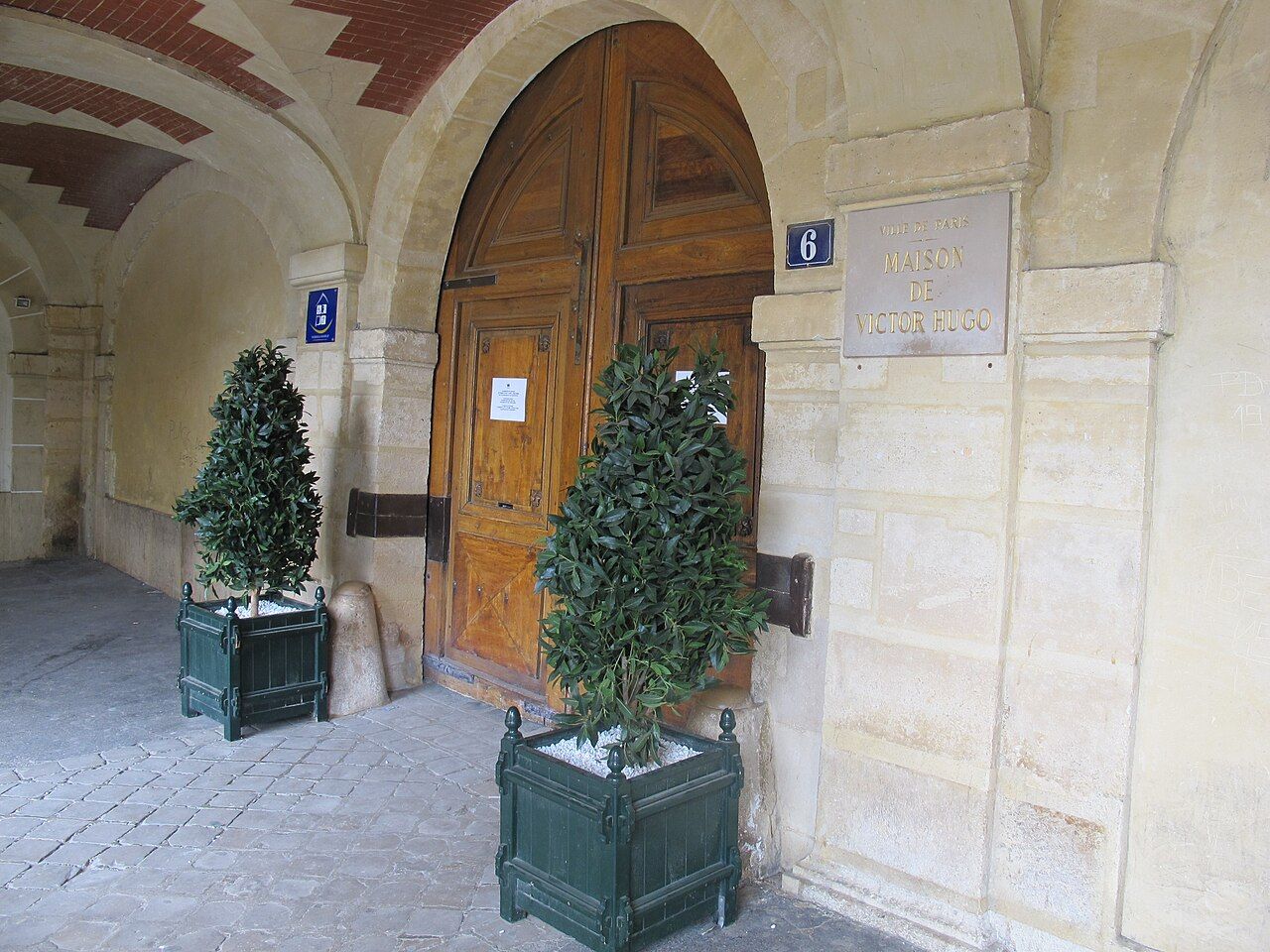
“A second-floor apartment.”
What holds the morning?
Morning begins at 6 Place des Vosges, inside the Hôtel de Rohan-Guéménée. Victor Hugo rented its second-floor apartment from 1832 to 1848. He lived there with his wife Adèle and their four children. Sixteen years gather inside that span, before exile carried his story elsewhere.
The rooms make a household visible without explaining it away. Family portraits and furniture hold the domestic scale. Hugo’s ink drawings bring his own hand into view. Together, these things keep the apartment close to daily life, rather than distant reputation. The feeling is quieter, and more compelling, than a grand account.
The house belongs to the thirty-six houses of the square. Yet its rooms draw attention inward, toward the particular family that lived here. The square remains around the story, but the apartment gives it a human measure.
What changes by midday?
By midday, the writing comes forward. Hugo began the novel that became Les Misérables while living in this apartment. That beginning sits among the portraits, furniture and drawings, not apart from them. A work of such reach started within an ordinary family address.
The museum opened in 1903, founded through a gift from Hugo’s friend Paul Meurice. The gift made these rooms available as a place of memory. Its meaning rests in that movement: a friend gave the house’s story a continuing form. The rooms still hold the objects close to the life they suggest.
The same city body, Maisons de Victor Hugo, also runs Hauteville House, Hugo’s home in exile on Guernsey. The name joins two houses across a change in circumstance. Here, the story is the years before exile; there, its later home. The contrast gives this apartment a sharper edge.
The larger map includes the island where Baudelaire later lived. That phrase brings another life into the frame, without displacing Hugo’s own. His years on the square remain distinct: family, rooms, drawings, and a novel beginning.
What lingers in late afternoon?
Late afternoon turns toward the room built from elsewhere. A Chinese drawing room, designed by Hugo for Juliette Drouet’s house on Guernsey, is rebuilt in the museum. Its presence gathers the two addresses into one room. The design belongs to another house, yet it stands here again.
That return complicates a simple account of home. The apartment holds Hugo’s years with Adèle and their children. The rebuilt room carries his design from Guernsey into the museum. Neither cancels the other. Instead, the rooms let the years before exile sit beside what followed.
There is no need to make the objects speak loudly. Ink, portraits and furniture already give the rooms their texture. The square’s houses press the story into a shared setting; the apartment keeps it intimate. The museum’s beginnings, too, came through friendship rather than grandeur.
By late afternoon, the apartment feels less like a pause in Hugo’s life than a whole stretch of it. A family lived here. A novel began here. Later, the rooms became a museum through a friend’s gift. What, in these rooms, still feels unfinished?